
India’s 7,500-kg Bunker Buster Missile Sparks Alarm in Pakistan
India’s New Bunker Buster Missile Raises Strategic Tensions in South Asia
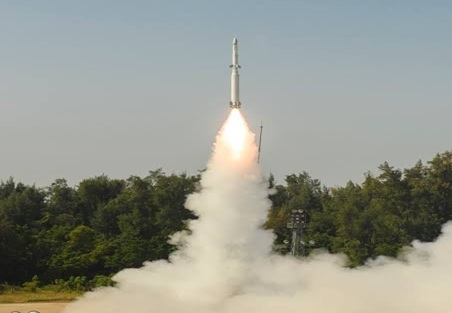
A powerful new missile under development by India has provoked alarm in Pakistan. Designed to destroy underground bunkers, this 7,500-kg missile is based on the Agni-V platform and can penetrate up to 80–100 meters into the ground. The missile is being developed by India’s Defence Research and Development Organisation (DRDO) and, according to experts, marks a significant shift in India’s conventional strike capabilities.
This weapon, unlike the nuclear-capable Agni-V, will carry a massive conventional warhead. Though it may have a reduced range of around 2,500 km, the deep-penetration power it offers makes it a major asset for targeting command-and-control centers, missile storage facilities, and hardened underground bunkers.
According to Indian defense analysts, the missile’s development represents a strategic effort to counter heavily fortified enemy positions without resorting to nuclear strikes. This could provide India with greater flexibility in high-stakes conflict scenarios.
Pakistani Expert Warns of “Dangerous Shift” in Doctrine
Pakistan, however, is not reassured. Writing in Dawn, Rabia Akhtar—Dean of Social Sciences at the University of Lahore—warned that the development of such a missile could dangerously blur the lines between conventional and nuclear warfare in the region.
In her words, “Nothing’s safe anymore.” She argued that a missile capable of wiping out command-and-control bunkers might inadvertently target nuclear infrastructure, raising the risk of miscalculation and escalation during a crisis.
Akhtar added that Pakistan’s early warning systems may struggle to differentiate between a nuclear-armed Agni missile and its conventional counterpart. This confusion could lead to an overreaction, especially in moments of heightened tension.
Moreover, the missile’s potential to neutralize deeply buried strategic assets presents a direct challenge to Pakistan’s deterrence capabilities.
India May Be Following Global Trends in Deep-Strike Capability
Several Indian defense commentators suggest that New Delhi’s push for a conventional bunker buster is influenced by recent international developments. Earlier this year, the United States reportedly used similar weapons—GBU-57 Massive Ordnance Penetrators—against Iranian nuclear facilities at Fordow and Natanz.
This action likely reinforced the utility of non-nuclear deep-strike capabilities. Indian planners appear to be taking notes, aiming to ensure that heavily fortified enemy targets are no longer safe havens.
Two variants of the missile are reportedly under development:
- One to strike surface targets using airburst detonation
- Another to drill deep underground before exploding
Such capabilities closely mirror US military doctrines, which prioritize powerful, conventional means to neutralize critical threats without escalating to nuclear warfare.
Strategic Implications for Regional Balance
If operationalized, India’s 7,500-kg bunker buster would rank among the most formidable conventional missiles globally. Its capacity to neutralize hardened underground targets without invoking nuclear retaliation could redefine India’s approach to strategic deterrence.
However, Pakistan sees this as a threat that may shift the entire military balance in the region. According to Akhtar, the missile could encourage India to adopt a more aggressive posture in the event of a standoff, increasing the risk of rapid escalation.
Indian analysts, on the other hand, argue that this development enhances deterrence. By holding high-value enemy targets at risk with conventional force, India can dissuade adversaries from initiating conflict without crossing the nuclear threshold.
While New Delhi has not officially commented on the new missile, its existence and capabilities have already sparked intense debate about the future of South Asian security dynamics.