
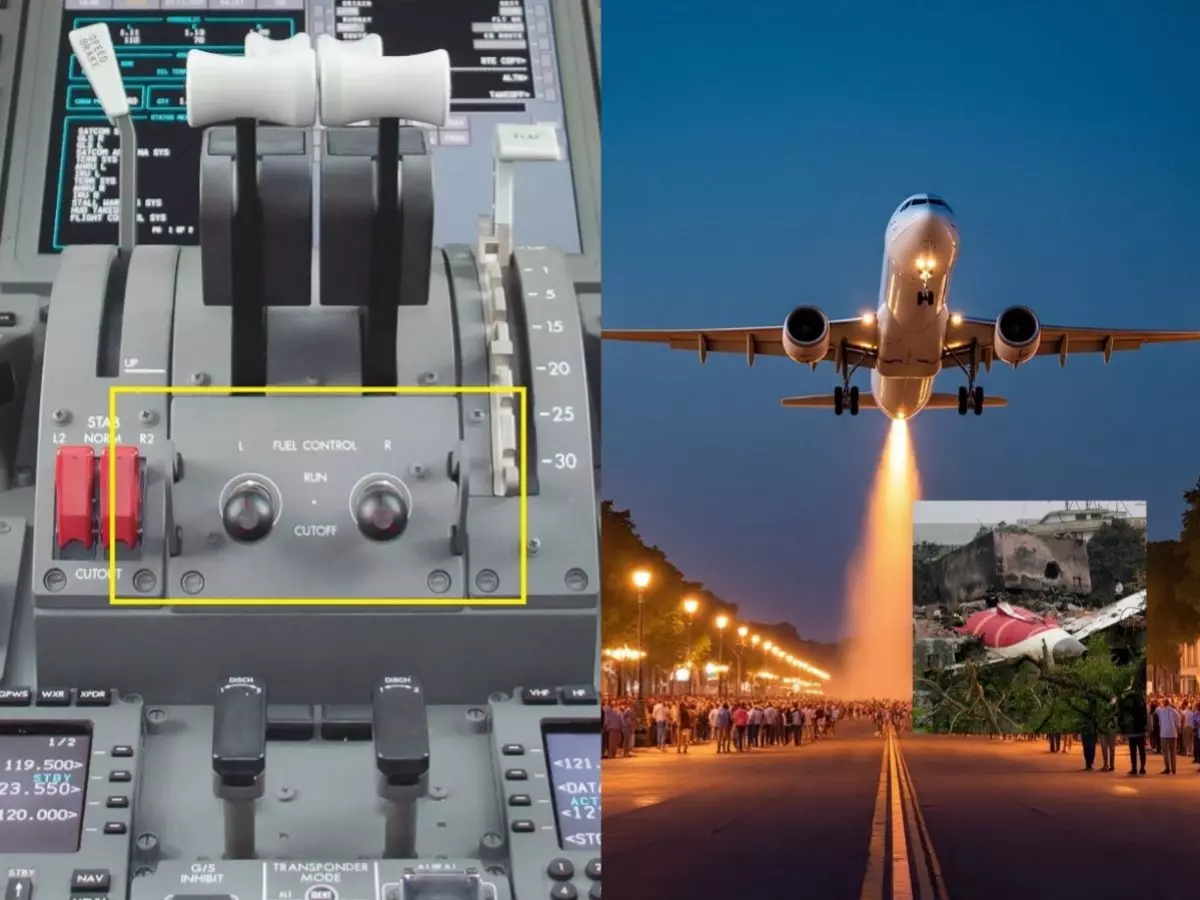
Fuel Cutoff or Fatal Flaw? Air India Flight 171 Crash Under Global Scrutiny
Just over a month after Air India Flight 171 plunged into a tragic descent near Ahmedabad, new findings have thrust the disaster back into the spotlight. A preliminary investigation released by India’s Aircraft Accident Investigation Bureau (AAIB) has uncovered a chilling detail: both of the Boeing 787 Dreamliner’s fuel-control switches were manually set to “cutoff” just seconds after takeoff — an action that caused both engines to fail mid-air.
The discovery has triggered intense global media interest, widespread speculation, and sharp disagreements among aviation authorities about whether the fatal decision was a result of human error or a technical failure.
Flight into Silence: What the Black Box Revealed
The cockpit voice recorder captured the moment the aircraft lost thrust. According to sources cited by The Wall Street Journal, one pilot can be heard urgently asking, “Why did you cut off?” — a phrase that has now become a key piece of the investigative puzzle.
American aviation officials suggest this could indicate that the captain may have deliberately flipped the fuel switches, citing the pilot’s calm demeanor even as the aircraft began losing altitude rapidly. However, the Indian AAIB has strongly condemned the leak, calling the interpretations premature, irresponsible, and deeply disrespectful to the ongoing process.
Both pilots perished in the crash along with 226 passengers, leaving no firsthand account of what occurred in those final 32 seconds.
Technical Failure Still Possible
While many reports are focusing on the possibility of pilot error, investigators are also looking closely at whether a technical issue might be to blame. One area of concern is the plane’s electronic engine control system, which manages fuel flow and engine response.
Experts are examining whether a faulty sensor or software glitch might have mistakenly triggered the shutdown — or made it appear as if someone had manually switched off the fuel. In past cases, similar Boeing 787s have shown that under rare conditions, incorrect settings or signals could cause serious confusion in the cockpit.
An official from the AAIB said, “The switches were turned off, but we’re still investigating whether that was a pilot’s action or a result of a system problem.”
Mounting Pressure, But Few Answers
As families demand clarity and lawmakers raise questions about oversight, Air India has remained largely silent. The Ministry of Civil Aviation has pledged transparency, but pressure is growing for faster public updates and full disclosure of flight maintenance records.
In the meantime, rumors and headlines continue to swirl — fueled in part by viral media reports and conflicting interpretations of the flight data.
What is clear, however, is that the tragedy of Flight 171 is no longer just about a single crash. It has become a global test of aviation accountability, trust in safety systems, and the thin line between human action and machine failure.