
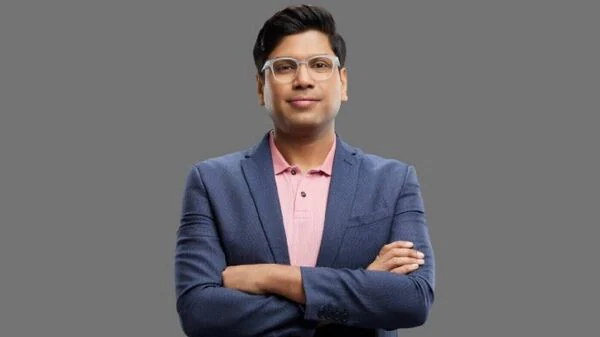
Peyush Bansal, Lenskart IPO, Indian startup, eyewear company, Lenskart global expansion, smart glasses, Indian tech IPO, consumer tech India, AI in eyewear, vision care India
Peyush Bansal started Lenskart Solutions Ltd., a company that makes glasses, more than 15 years ago with people he met on LinkedIn. Now it’s worth billions of dollars. The 41-year-old Indian television star and business owner is now in line for a big payday.
Lenskart wants to go public in Mumbai as early as next month. Based on the magnitude of the IPO, people who know about the situation say that the company would be worth $9 billion at the time of the IPO.
The Bloomberg Billionaires Index says that would give the entrepreneur a stake worth around $800 million when he sells a tiny amount of his shares in the IPO. If Lenskart shares rise approximately 25% on their first day, his stock might be worth more than $1 billion.
Also read: Shares of Renewable Energy Firm Rise After Latest Company Announcement
Bansal’s road to an IPO illustrates that some founder-led businesses are starting to get investors’ trust back after a time when the country’s biggest companies had trouble staying alive and getting money. Lenskart has found a niche in India by combining machinery from Germany to build its spectacles and a website that makes it easy for clients to order and test their products from anywhere.
Lenskart is already growing in Southeast Asia, where Bansal says demand trends in Indonesia and Vietnam are similar to how things were in India ten years ago.
Bansal remarked in an interview in Mumbai, “India is the myopia capital of the world, and a lot of our people need glasses.” “If we can fix that, everything else, like growth, profit, and a bigger market cap, will come next.”
Bansal’s thesis is that he is different from other Indian consumer-tech listings and is already making money. The Gurugram-based firm that develops, makes, and distributes eyewear online and in stores made its first full-year profit in the year ending March 31.
Shark Tank
He also has the support of a loyal group of retail fans behind him. Bansal is also a judge on the Indian version of the American show Shark Tank and has more than 900,000 followers on Instagram.
He feels that timing and not giving up have helped him in business. Bansal makes a joke about how he and co-founder Amit Chaudhary spend one day a week coming up with fresh ideas, but they don’t always work.
He remarked, “Our hit rate is about 50%.” “A flip of a coin might have worked just as well.”
This year, he’s had to deal with a stock debut that was hurt by trade disputes and geopolitical problems, as well as investors who are more cautious.
India has one of the biggest startup scenes in the world, but the values of some companies have dropped sharply as they have had trouble growing and investors have started to ask tougher questions. Narayana Murthy’s family office, a software millionaire, recently said that big reductions are happening because funds need to get out of their investments. Oyo Hotels, which is also funded by SoftBank Group Corp. like Lenskart, was once one of India’s most valuable businesses, worth $10 billion in 2019. Its value dropped and then rose again.
Advertisment : Investors that value patience over flash have backed Bansal’s plan. SoftBank owns roughly 15% of the company and has called its position in Lenskart an example of patient capital that may wait decades for growth to snowball. Fidelity Management & Research, an investor, put Lenskart’s worth at $6.1 billion earlier this year.
The IPO will show if investors’ renewed interest in Indian consumer technology stocks will last. Urban Co.’s huge debut last month, when shares of the rent-a-service marketplace rose 62% on the first day, brought back hope following a spate of poor performances from other startups after the market had cooled off interest in the sector.
Still, Lenskart relies on China for more than a third of its purchases, including frames, molds, and raw materials. Bansal admits this is a problem but says it is manageable. Because of this reliance, the company is vulnerable to changes in China’s supply chain, where tariffs or export limits might slow down supplies and lower profits.
Ad
Bansal is now in charge of building a new factory in Hyderabad that will be the world’s largest. It will occupy 50 acres and be able to make hundreds of thousands of glasses per day.
First Step : Bansal graduated from McGill University in Montreal with a degree in engineering. He then worked for Microsoft Corp. in Redmond, Washington, before going back to India to start his own business. His first business was a platform for student accommodation, but he soon realized that there was a much bigger need for vision care. He and three other people he met on LinkedIn started constructing Lenskart from a small office in Faridabad, which is on the outskirts of Delhi.
The business now controls almost every step in its value chain, from designing and making lenses to delivering them to the last mile. It employs hundreds of ophthalmologists in Kolkata who provide remote eye consultations and is working on AI-based testing tools to reach smaller cities where eye care is still hard to get.
According to documents, Lenskart wants to use the money from the sale of shares to open new stores all throughout India, buy technology and AI capabilities, make acquisitions, and pay for general business needs.
Also read : Gold prices Touches New Record Levels on MCX; COMEX Rates at USD 4,250
As of March, it had 2,723 outlets throughout India and other places like the Middle East and Southeast Asia. Almost 40% of its sales now come from outside of India, which shows how much it is expanding its business around the world.
Smart glasses are the next big thing for them. A team of 70 people is working on putting together elements including UPI, AI tools, cameras, and headphones.
Bansal remarked, “It’s tempting to go all in.” “But timing is important.”