
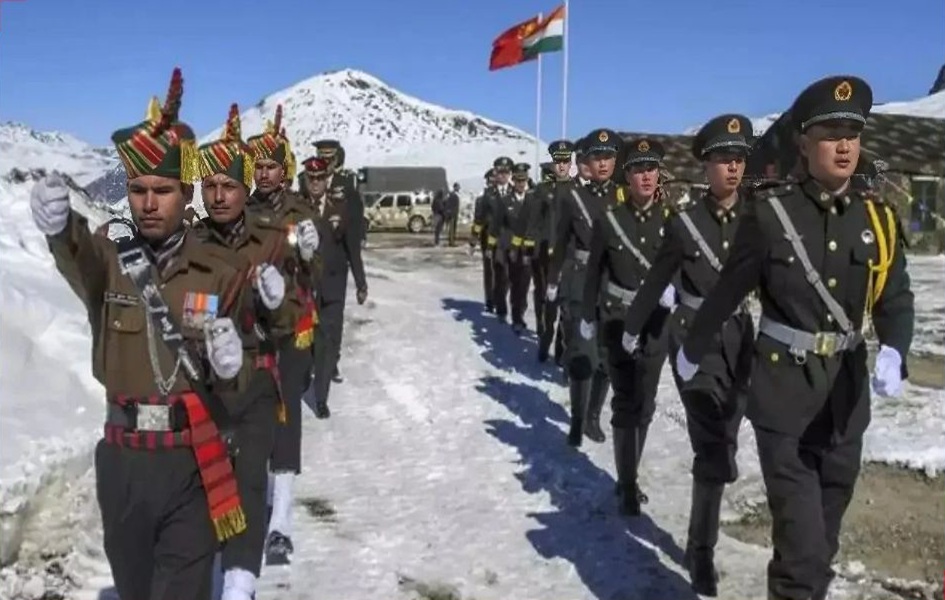
MEA Responds to ITBP Chief Disclosures
The ongoing Arunachal Border Standoff has drawn official clarification from the Ministry of External Affairs following public disclosures by Indo-Tibetan Border Police Director General Shatrujeet Kapur. Responding to media questions in New Delhi, MEA spokesperson Randhir Jaiswal addressed reports of active military face-offs along forward high-altitude posts.
He stated that disturbances occur whenever Chinese troops diverge from established patrolling patterns along the Line of Actual Control. The official response followed statements made by the ITBP chief during an annual felicitation ceremony in Alwar.
Director General Kapur confirmed that border guarding forces are managing active confrontations across multiple sectors in Arunachal Pradesh. He praised specialized Shaurya commando platoons for maintaining firm positions against Chinese forces. While directing specific operational queries to the Ministry of Defence, the MEA emphasized that maintaining peace remains essential for bilateral relations.
Also Read : https://indiathisweek.in/india/itbp-chief-confirms-chinese-incursions-arunachal-pradesh/
High-Altitude Face-Offs and Tactical Deployments
Details regarding the Arunachal Border Standoff indicate that active face-offs are concentrated around sensitive forward sectors. Chinese People’s Liberation Army troops reportedly pitched temporary tents six to seven kilometers inside India’s perceived alignment near the Asaphila sector in Upper Subansiri district.
The initial friction developed in late July when patrolling units came into close proximity near the Maja operational post. Although initial contact led to temporary pullbacks, foreign troops returned in larger numbers to establish temporary posts.
In response, Indian security forces deployed elite Shaurya commando units to reinforce high-altitude outposts. These specialized teams maintain continuous ridge-line surveillance to prevent further unauthorized advances.
The military standoff persisted despite diplomatic engagements, including Corps Commander-level talks hosted at the Wacha-Damai border meeting point. Indian Army divisions and border police units remain heavily deployed across strategic mountain passes to maintain complete territorial security.
Political Scrutiny and Demands for Governance Answers
The official confirmation of the Arunachal Border Standoff sparked immediate political debate across national governance channels. Opposition parties called on central authorities to provide transparent updates regarding border security and patrolling rights.
Congress President Mallikarjun Kharge and General Secretary Jairam Ramesh posted public statements demanding clarifications from Prime Minister Narendra Modi and Home Minister Amit Shah. They questioned whether Indian troops faced restrictions in accessing traditional patrolling points along forward sectors.
Opposition leaders also raised concerns regarding unilateral geographic renaming of locations by foreign agencies and mega-dam construction along the upper Brahmaputra River. Government representatives reiterated that military and diplomatic channels operate continuously to resolve outstanding friction points. Official updates affirm that existing bilateral mechanisms aim to prevent miscalculations along disputed mountain boundaries.
Force Modernization and Subsurface Bunker Construction
Managing the Arunachal Border Standoff requires long-term organizational adjustments and modern warfare technology. ITBP Director General Shatrujeet Kapur outlined extensive modernization initiatives designed to upgrade forward defensive capabilities.
The force plans to scale up specialized Shaurya commando platoons into company-sized units across all battalions. Eventually, border authorities will raise a full high-altitude commando battalion dedicated entirely to rapid-reaction operations.
Recognizing advances made by foreign forces, the ITBP is directing significant funding toward drone surveillance and anti-drone defense systems. Over seventy percent of immediate modernization funds support unmanned aerial vehicles and pilot training facilities.
Furthermore, engineering wings are constructing heavily reinforced underground shelters across forward outposts. These subsurface bunkers protect stationed personnel against heavy artillery, aerial strikes, and severe winter conditions.
Diplomatic Dialogue and Strategic Regional Stability
As the Arunachal Border Standoff continues, foreign policy officials emphasize that maintaining border stability remains critical for broader regional security. Ministry of External Affairs spokesperson Randhir Jaiswal confirmed that diplomatic and military channels operate actively to address field contingencies.
Both nations have agreed to discuss measures aimed at improving common understanding along disputed alignments. These discussions take place through established mechanisms, including the Working Mechanism for Consultation and Coordination on India-China Border Affairs.
Military commanders on the ground maintain regular communication through designated border personnel meeting points to manage immediate operational concerns. High-altitude command structures ensure that forward outposts receive full logistical backing, specialized winter gear, and advanced communications support.
While diplomatic negotiations proceed in formal settings, border guarding forces maintain peak operational readiness across all northeastern sectors.
Long-Term Frontier Management and National Preparedness
The ongoing Arunachal Border Standoff underscores the vital necessity of continuous infrastructure development along border zones. State and central departments collaborate closely to build all-weather roads, strategic bridges, and forward helipads across high-altitude districts.
Improved transportation corridors allow rapid movement of heavy equipment, supplies, and reinforcement troops during seasonal emergency periods. Advanced satellite imagery and ground radar systems provide real-time intelligence to regional command centers, enabling proactive tactical decisions.
Defense experts highlight that combining strong forward military positioning with active diplomatic channels protects national sovereignty effectively. High-altitude security forces remain committed to safeguarding border integrity while diplomatic dialogues work toward long-term peace along the Line of Actual Control.