
Empowering Rural Families With Legal Property Rights
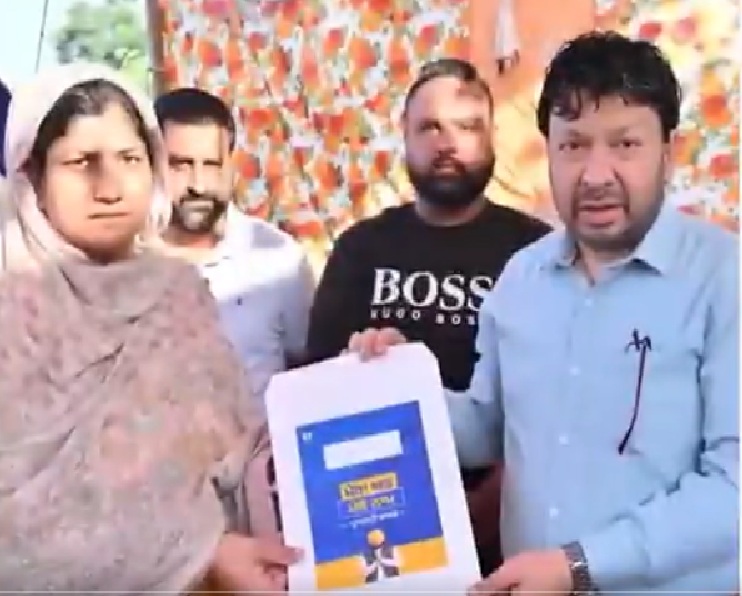
The initiative where Dr Ravjot Singh Distributes Property Cards Under Mera Ghar Mere Naam Scheme marks a significant milestone for rural households across Punjab. Punjab Cabinet Minister Dr. Ravjot Singh presided over official distribution ceremonies in Hoshiarpur district to grant full ownership rights to village residents.
During the public events, Minister Ravjot Singh handed over official property registry cards to 82 families in village Hajipur. In addition, he distributed property cards to 53 households in village Kutbpur. These residential properties fall within the traditional red line (Lal Lakir) boundary.
Also Read : https://indiathisweek.in/state/punjab/punjab-paddy-procurement-payments-farmers-2026/
Addressing the gatherings, Dr. Ravjot Singh highlighted that acquiring legal property titles provides immense relief to rural communities. For generations, families living inside the red line lacked formal land revenue records for their homes. The minister affirmed that Chief Minister Bhagwant Singh Mann’s government remains dedicated to ensuring dignity, social security, and economic prosperity for every citizen.
The Vision Behind the Mera Ghar Mere Naam Scheme
The ceremony where Dr Ravjot Singh Distributes Property Cards Under Mera Ghar Mere Naam Scheme reflects the state’s commitment to comprehensive land record digitization. Traditionally, village residential areas were kept inside a red line on revenue maps, leaving homeowners without legal deeds (Khasra or Khatauni entries).
To resolve this historical issue, the Revenue Department utilizes advanced drone technology to map every village residential plot accurately. Following digital mapping, revenue officials verify ownership claims with local panchayats before generating formal property cards.
This systematic process gives rural homeowners an official paper trail. Consequently, residents can now use their residential properties as financial assets. The official property card helps owners secure bank loans, transfer titles smoothly to legal heirs, and resolve long-standing boundary disputes.
Streamlined Distribution Drives Across Punjab Mandis and Villages
Beyond the event where Dr Ravjot Singh Distributes Property Cards Under Mera Ghar Mere Naam Scheme, similar distribution drives are underway across the state. Cabinet ministers and district deputy commissioners are actively holding distribution camps in rural blocks to cover every notified village.
The state government aims to cover all eligible rural habitations across Punjab. By establishing a clear Record of Rights (RoR) under the Punjab Abadi Deh Act, the administration provides crucial legal protection to vulnerable homeowners.
Furthermore, direct oversight by district collectors ensures that objection windows remain accessible. Villagers receive ample time to review draft maps, correct spelling errors, and settle boundary disagreements amicably before final cards are issued.
Preventing Land Disputes and Boosting Rural Economy
The impact of events where Dr Ravjot Singh Distributes Property Cards Under Mera Ghar Mere Naam Scheme extends beyond individual families. Clear property demarcation prevents illegal land encroachments and reduces court litigation among neighbors.
Moreover, giving formal financial identity to rural real estate stimulates local business activity. Villagers can leverage verified property documents to access commercial credit for home repairs, agricultural expansion, or small business ventures.
Local panchayat members expressed gratitude to the state government and Minister Ravjot Singh during the Hajipur and Kutbpur programs. Beneficiaries noted that getting official registry cards marks the fulfillment of a long-awaited demand, ensuring long-term security for future generations.
Complete Administrative Commitment to Social Welfare
The government initiative highlighting how Dr Ravjot Singh Distributes Property Cards Under Mera Ghar Mere Naam Scheme underscores a broader strategy for inclusive governance. Cabinet Minister Dr. Ravjot Singh assured residents that administrative machinery will maintain momentum until every eligible house receives its ownership card.
State authorities continue to monitor field surveys in real time to maintain transparency. Revenue officials conduct regular public meetings to explain card benefits, ensuring villagers understand how to access digital records through official government portals.
Through continuous digital innovation and welfare-focused governance, Punjab sets a strong precedent in rural land reform and social empowerment.