
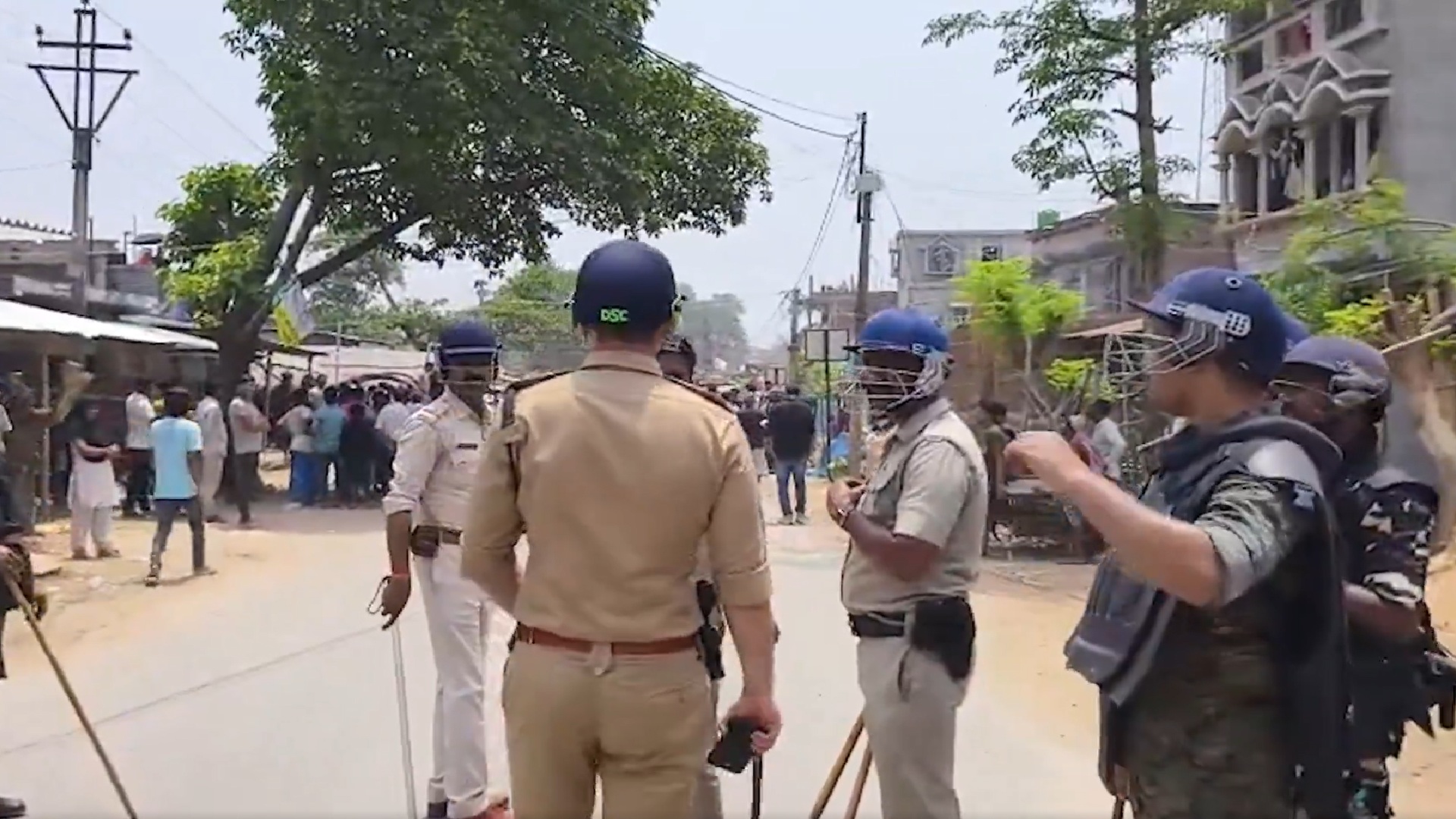
MURSHIDABAD — The high-stakes first phase of the Assembly Elections was marred by significant West Bengal poll violence on Thursday, April 23, 2026. In the Nowda area of Murshidabad district, a powerful crude bomb explosion injured several individuals while voting was actively underway. The blast occurred early in the morning, sending shockwaves through the local community and temporarily disrupting the polling process. Eyewitnesses described a scene of pure chaos as smoke filled the air and voters scrambled for safety. Emergency responders quickly arrived to transport the injured to nearby medical facilities for urgent treatment.
Following the explosion, the atmosphere in Nowda remained extremely tense throughout the day. The Election Commission of India (ECI) immediately sought a detailed report from the district magistrate regarding the security breach. Although the state government deployed massive numbers of central forces, the incident highlights the persistent volatility of the region. This act of West Bengal poll violence has once again raised questions about the safety of citizens during the democratic process. In response, security personnel have intensified their vigil, conducting route marches and setting up additional checkpoints across the constituency.
Also Read : West Bengal Assembly Elections 2026 Phase 1 Voting Begins Across 152 Constituencies
Political Rivalries Fuel Clashes in Nowda and Beyond
The explosion in Nowda appears to be linked to a broader surge in West Bengal poll violence involving rival political factions. Clashes erupted shortly after the blast between supporters of the All India Trinamool Congress (TMC) and the newly formed Aam Janata Unnayan Party (AJUP). Tensions peaked when AJUP founder Humayun Kabir visited a polling booth in Shibnagar village near the bomb site. Protesting TMC workers surrounded his vehicle, leading to a violent scuffle involving stone-pelting and the vandalism of several cars.
To restore order, police and central forces resorted to a baton charge to disperse the unruly mobs. Humayun Kabir later accused the ruling party of using “terror tactics” to intimidate voters. He alleged that local police were acting in tandem with party workers to influence the election outcome. Conversely, TMC candidate Shahina Mumtaz Khan condemned the violence, describing it as a “regrettable incident” sparked by provocation from opposition parties. Despite these skirmishes, the voter turnout in Murshidabad remained remarkably high, crossing 80% by the evening, showing the resilience of the electorate.
Widespread Unrest Across the First Phase Districts
Murshidabad was not the only district to experience West Bengal poll violence during this phase. In Dakshin Dinajpur’s Kumarganj, BJP candidate Suvendu Sarkar was allegedly chased through open fields and assaulted by a mob. Viral footage showed Sarkar running for his life alongside a single bodyguard as protesters caught and attacked him. Furthermore, reports of booth jamming and the removal of polling agents surfaced in Birbhum and North Bengal. These incidents have forced the ECI to review video footage from thousands of CCTV cameras installed at sensitive booths.
Transitioning into the evening, the ECI maintained that while scattered incidents occurred, the overall polling process was “largely peaceful” across the 152 seats. However, the recurring theme of West Bengal poll violence continues to dominate the national narrative. Experts suggest that the bipolar contest between the TMC and BJP, coupled with the emergence of local players like the AJUP, has made every seat a battlefield. As the state prepares for the second phase on April 29, the demand for even stricter security measures is growing among opposition leaders and civil society groups.
Final Assessment: A Shadow Over Democracy
The crude bomb blast in Nowda serves as a grim reminder of the challenges facing the electoral process in the state. While the 79% overall voter turnout reflects a vibrant democracy, the persistent West Bengal poll violence threatens the core of free and fair elections. Authorities must identify the perpetrators of the Nowda blast to prevent a repeat in the coming phases. For the victims of today’s explosion, the cost of exercising their right to vote was painfully high. As counting day on May 4 approaches, the state remains on a knife-edge, hoping for a peaceful conclusion to this marathon election.