
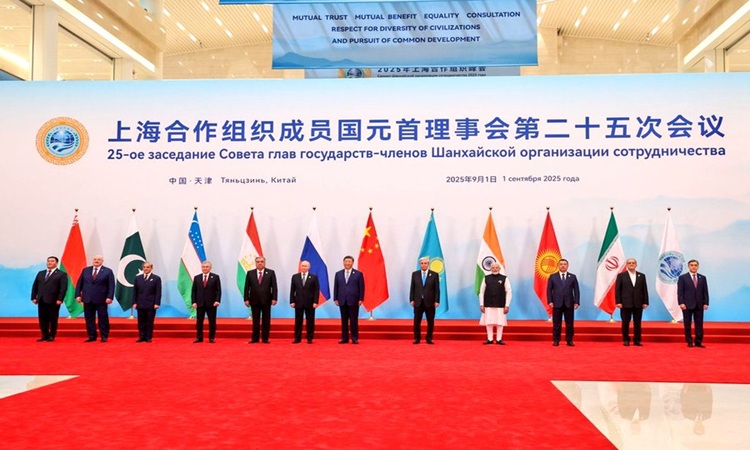
SCO Echoes India’s Stand on Terrorism
The Shanghai Cooperation Organisation (SCO) Summit 2025 in Tianjin delivered a major diplomatic boost for India after member states strongly condemned the Pahalgam terror attack. The assault killed 26 people and left several others wounded.
The joint declaration echoed Prime Minister Narendra Modi’s call against “double standards” in the fight against terrorism. The statement marked a significant development, particularly because Pakistan, often accused of backing cross-border terror, is also a member of the regional bloc.
The summit declaration read: “Member States strongly condemn the terrorist attack in Pahalgam and express deepest sympathy to the families of the victims.” It added that perpetrators, organisers, and sponsors of such violence must face justice.
Modi’s Strong Message
Speaking earlier at the summit, Prime Minister Modi underlined that terrorism has plagued India for over four decades, costing countless lives. He thanked SCO partners for their solidarity after the Pahalgam attack, describing it as “an attack on India’s soul and a challenge to all humanity.”
Modi warned against selective approaches in dealing with terrorism. “We have to clearly, and in one voice, say that double standards won’t be acceptable on terrorism. We must oppose terrorism in all its forms and colours,” he stressed.
He further said security and stability were essential for development, and therefore terrorism, separatism, and radicalism must be confronted collectively. Modi’s phrasing on “double standards” was directly incorporated into the Tianjin Declaration, reflecting growing alignment on the issue among SCO members.
Regional Implications and Symbolism
The SCO’s condemnation holds symbolic weight as Pakistan Prime Minister Shehbaz Sharif attended the summit. India has long accused Pakistan of harbouring and supporting groups involved in attacks on Indian soil. Diplomats see the inclusion of the Pahalgam reference in the SCO statement as a rare consensus on India’s concerns.
The declaration also urged the international community to combat terrorism comprehensively, including tackling cross-border movements of militants. It further rejected the use of extremist groups for “mercenary purposes,” signalling frustration with state-sponsored proxy warfare in the region.
Optics of Unity at Tianjin
The summit also produced striking visuals of solidarity between Eurasian powers. Prime Minister Modi, Russian President Vladimir Putin, and Chinese President Xi Jinping were seen exchanging smiles and sharing animated conversations. Images of Modi walking hand-in-hand with Putin, before joining Xi for a light-hearted chat, sent a strong message of regional alignment.
Observers suggested the optics were aimed at demonstrating resilience against Western pressure, particularly from the United States. President Donald Trump’s recent tariff offensive on India, China, and Russia has reshaped global trade dynamics. However, the trilateral warmth in Tianjin indicated that US threats would not disrupt traditional partnerships or undermine SCO unity.
A Turning Point for India
For India, the summit marked both a diplomatic and strategic win. The condemnation of the Pahalgam attack validates New Delhi’s long-standing demand for collective recognition of cross-border terrorism.
Moreover, the adoption of Modi’s “double standards” phrase underscores India’s growing influence in shaping SCO narratives. It also signals a broader willingness among Eurasian powers to strengthen cooperation against terror, even when politically sensitive.
Analysts believe this could be a turning point in India’s counterterrorism diplomacy, as the Tianjin Declaration provides a multilateral endorsement that goes beyond bilateral support.
Outlook
As SCO members look ahead, combating terrorism will remain a central pillar of the organisation’s agenda. With security linked to trade and development, leaders are expected to push for tighter cooperation against extremist networks and their state sponsors.
India’s success in aligning the bloc’s statement with its concerns reflects growing diplomatic clout. However, the real challenge lies in translating words into coordinated action, especially when differences persist within the group.
For now, the Tianjin summit has underscored a clear message: terrorism in any form is unacceptable, and double standards in its treatment will no longer be ignored.