
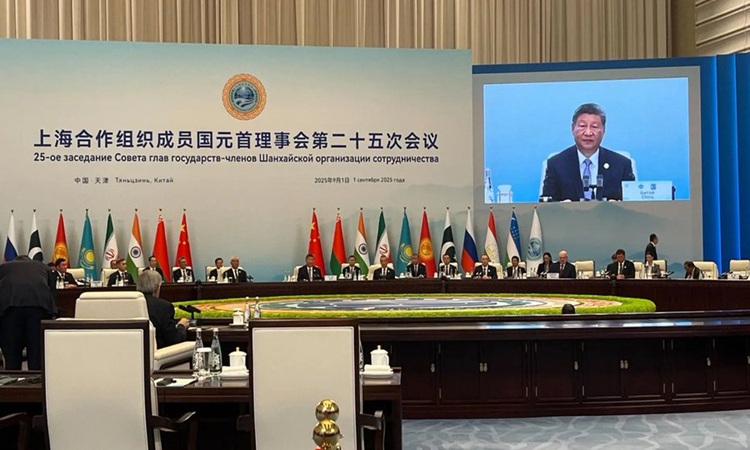
Xi Jinping Calls for Fairness at SCO
Chinese President Xi Jinping opened the Shanghai Cooperation Organisation (SCO) Summit 2025 in Tianjin with a sharp criticism of what he described as “bullying behaviour” in the global order.
Addressing leaders including Russian President Vladimir Putin and Indian Prime Minister Narendra Modi, Xi urged member states to “adhere to fairness and justice” while rejecting Cold War mentality and bloc politics.
“Looking to the future, with the world undergoing turbulence and transformation, we must continue to follow the Shanghai Spirit and better perform the functions of the organisation,” Xi said during the plenary session.
The two-day summit, which began on August 31, includes full members such as China, India, Russia, Pakistan, Iran, Kazakhstan, Kyrgyzstan, Tajikistan, Uzbekistan, and Belarus. Sixteen other countries are participating as observers or dialogue partners.
Tensions With the United States
Xi’s remarks came against the backdrop of mounting tensions with the United States under President Donald Trump. Washington and Beijing have been locked in a prolonged trade conflict, with tariff levels exceeding 100 percent at one point.
Although both sides reached a temporary agreement, disputes continue over market access, technology, and regional influence. The strain has now expanded to involve both Russia and India.
Trump recently imposed 50 percent tariffs on Indian goods, citing New Delhi’s continued purchases of Russian oil during the Ukraine conflict. The U.S. also announced an additional 25 percent levy on selected imports, a move condemned by Moscow and Beijing as “economic bullying.”
India, Russia, and China Reunite
The tariffs have prompted a rare moment of alignment between India, Russia, and China, despite their complex bilateral differences. Analysts note that the SCO platform has emerged as a counterweight to U.S.-led alliances in Asia and beyond.
Russian officials backed Xi’s comments, warning that unilateral sanctions and coercive measures would destabilize the global economy. India, which faces the brunt of the new tariffs, has so far maintained a cautious tone but is expected to highlight sovereignty concerns during the summit discussions.
For Moscow and Beijing, rallying support at the SCO serves as both a diplomatic show of strength and an economic necessity amid pressure from Western sanctions.
Trump’s Push for Ceasefire
While the U.S. has toughened trade policies, Trump has also increased diplomatic pressure on Russia. He called on Putin to establish a ceasefire in the Ukraine war, raising the issue during a bilateral meeting in Alaska earlier this year.
The U.S. president also hosted Ukrainian leader Volodymyr Zelensky in Washington, reinforcing American support for Kyiv. However, Moscow has resisted external demands for concessions, insisting that Western actions represent interference in its sphere of influence.
Xi’s call for “justice and fairness” at the SCO echoed a broader push by member states to oppose Western intervention in internal conflicts and regional disputes.
The Role of the SCO
Founded in 2001, the Shanghai Cooperation Organisation has grown into a major regional grouping covering almost half the world’s population. Its mandate spans security, trade, energy cooperation, and cultural exchange.
In recent years, the SCO has gained prominence as geopolitical rivalries sharpen. With new members like Iran and Belarus and growing participation from Central Asian nations, the bloc is positioning itself as a platform for alternative power centers.
The Tianjin summit is expected to focus on three core issues: economic resilience, regional security, and counterterrorism. However, global trade tensions and the fallout from U.S. tariffs remain the dominant themes.
Outlook
The SCO summit highlights the shifting balance of power in international politics. As India, Russia, and China converge on common concerns about sovereignty and trade, the grouping is set to play a bigger role in shaping multipolar cooperation.
Observers caution, however, that differences among SCO members—especially between India and China—could limit the bloc’s ability to take united positions. Still, Xi’s strong rhetoric against “bullying” reflects growing frustration over Western economic policies and the desire to project an alternative framework for global governance.