
Trump Aligns with Russia in Ukraine Peace Talks
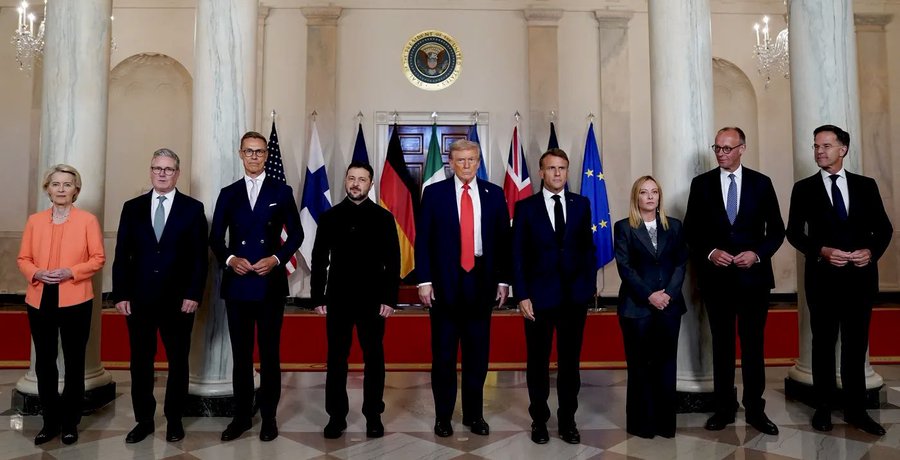
A high-stakes meeting in Washington between US President Donald Trump, Ukrainian President Volodymyr Zelenskyy, and seven European leaders has fueled fresh debate on the future of the two-year-old Ukraine war. Trump’s remarks indicated support for Russia’s position, signaling that peace may come only at the cost of major territorial concessions by Kyiv.
The US leader publicly suggested that Ukraine could “end the war almost immediately” if it chose to accept Russia’s terms. His comments were viewed by analysts as a push for Ukraine to surrender strategically important territories in the east and south.
Details of Russia’s Proposal
Last week, Trump hosted Russian President Vladimir Putin in Alaska for private talks. According to reports, Russia’s draft proposal offers to freeze the conflict along current battle lines, allowing Moscow to retain much of the territory it occupies.
Russia would reportedly return small parts of the Sumy and Kharkiv regions but expects Ukraine to cede large parts of the Donetsk and Luhansk provinces in the east. Additionally, Moscow has demanded international recognition of its sovereignty over Crimea, annexed in 2014.
The Institute for the Study of War estimates that Russia controls around 114,500 square kilometers of Ukrainian territory, or nearly 19% of the country. This includes most of the Donbas region and large sections of Kherson and Zaporizhzhia in the south.
Ukraine’s Stance and European Concerns
Ukraine has repeatedly insisted it will not recognize Russian control of its land, stressing that its internationally recognized borders remain unchanged since 1991. Kyiv still holds roughly 6,600 square kilometers of the Donbas region, where Russian forces continue to advance on key cities such as Pokrovsk and Chasiv Yar.
European leaders at the Washington talks expressed concern over the scale of concessions being discussed. French President Emmanuel Macron stated that the most significant outcome was the US pledge to develop security guarantees for Ukraine. Trump referred to the idea of a “NATO-like” framework, potentially involving European nations in coordination with Washington.
Security Guarantees as Bargaining Chips
Until now, Washington has hesitated to commit to binding security pledges for Ukraine, leaving responsibility largely to European allies. But Trump’s new proposal hints at a shift. While he has avoided promising direct NATO membership, the suggested arrangement could involve defense coordination to deter future Russian aggression.
For Kyiv, the challenge lies in weighing short-term peace against long-term sovereignty. Accepting Russia’s terms would likely solidify Moscow’s hold over Luhansk, Donetsk, Kherson, Zaporizhzhia, and Crimea—regions Ukraine still considers integral parts of its territory.
What Lies Ahead
The negotiations highlight the difficult choices facing Ukraine and its Western backers. While Trump’s alignment with Moscow’s demands may fast-track a ceasefire, it risks undermining Ukraine’s independence and rewarding Russia’s use of force.
As talks continue, international observers remain cautious. The coming weeks could determine whether Ukraine agrees to a compromised settlement or continues fighting to regain its occupied lands. For now, hopes for peace are tempered by fears of permanent territorial loss.