
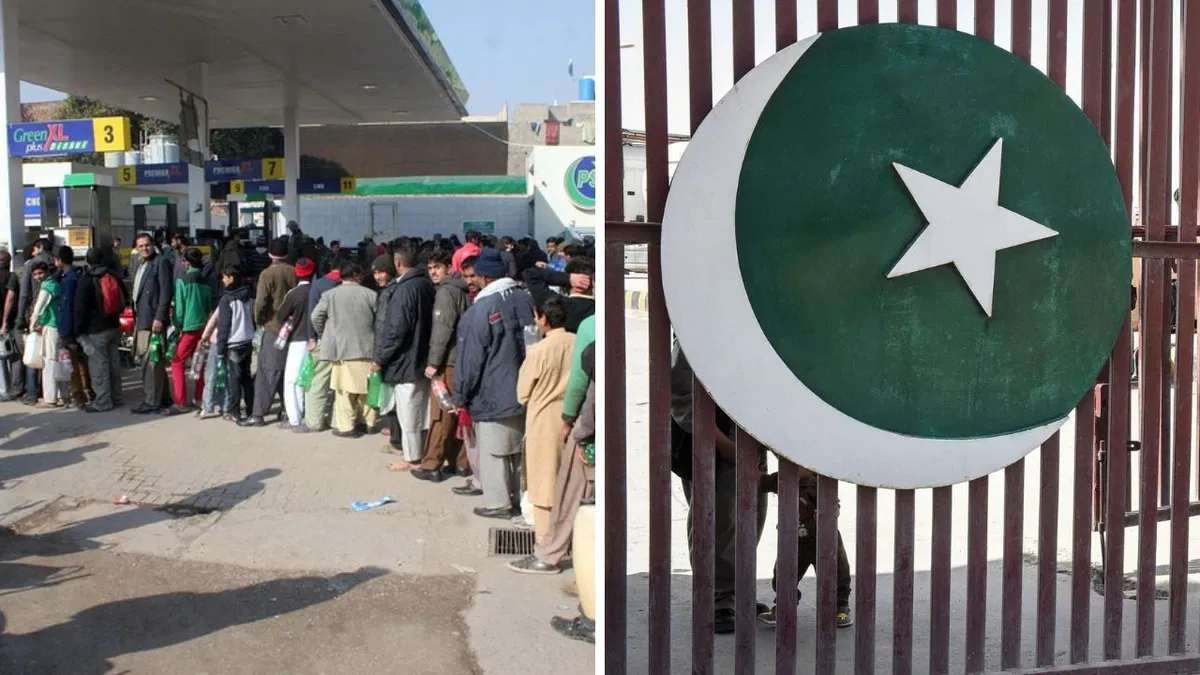
Pakistan is grappling with a severe fuel crisis as the ongoing war involving Iran disrupts key supply channels, leaving petrol pumps across multiple provinces running dry. The shortage is rapidly escalating, with motorists in Balochistan, Khyber Pakhtunkhwa, Punjab, and Sindh reporting long queues and limited fuel availability.
Heavy Dependence on Iranian Fuel
The current Pakistan fuel crisis is closely linked to the country’s reliance on fuel sourced from neighbouring Iran. Nearly 35% of Pakistan’s total oil demand is met through smuggled Iranian petrol and diesel, making the nation highly vulnerable to external disruptions.
Balochistan is the most affected, with around 80% of its fuel consumption historically supplied through informal Iranian channels. Sindh relies on Iran for about 20% of its fuel, Khyber Pakhtunkhwa 18%, and Punjab roughly 13%. The cheaper price of smuggled Iranian petrol – around 172 Pakistani rupees per litre compared to the official 266 rupees – has historically incentivized informal imports.
Also read : Nostradamus 2026 Prophecy: Does the Seer Predict a US-Iran Drone War?
War Disrupts Supply Lines
The ongoing conflict in Iran has cut off both formal and informal fuel supply routes, exacerbating the Pakistan fuel crisis. Shipping disruptions through the Strait of Hormuz and interruptions in cross-border smuggling have left several regions struggling to meet daily fuel needs.
Although Pakistan maintains reserves sufficient for the next 24 days, the disruption in supply lines has already caused severe shortages at petrol pumps. Balochistan alone reports over 70% of its petrol stations running dry, while similar shortages are emerging in Punjab, Sindh, and Khyber Pakhtunkhwa.
Pumps Running Dry, Rationing Introduced
Fuel stations in several cities have begun rationing petrol, allowing motorists to purchase limited quantities per vehicle. Authorities warn that hoarding by dealers and the ongoing war-related disruptions may worsen the situation. Analysts suggest that the Pakistan fuel crisis could deepen unless alternative supply channels or imports are secured quickly.
The government is under increasing pressure to address the shortages and ensure smooth fuel distribution, especially in provinces most dependent on Iranian supplies. Without intervention, the Pakistan fuel crisis may continue to impact daily life, transportation, and local economies.