
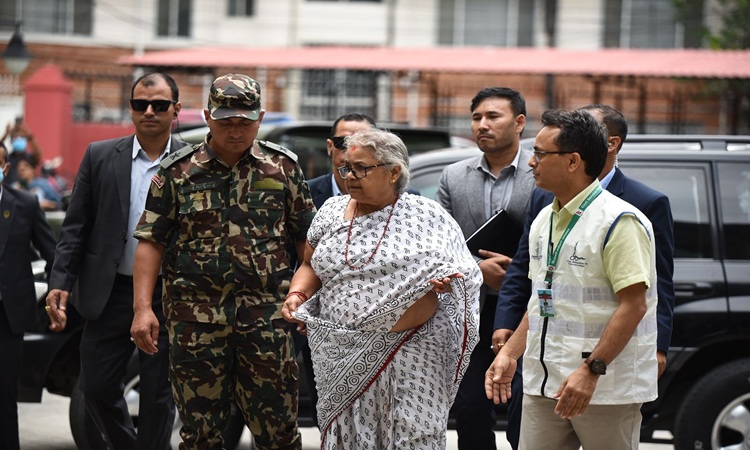
Nepal’s interim leadership prepares Cabinet
Kathmandu, September 13: Nepal is poised for a crucial political shift as interim Prime Minister Sushila Karki is expected to announce her Cabinet on Sunday, September 14. This move comes days after nationwide unrest, marked by violent Gen-Z protests that left the Himalayan nation shaken.
According to officials, the interim Cabinet will include representatives tasked with ensuring stability and rebuilding public confidence. Alongside the Cabinet formation, the government will establish a special commission to investigate the violent clashes that erupted this week.
The protests, driven largely by Nepal’s youth, escalated after security forces reportedly opened fire on demonstrators. The incident has raised concerns about accountability, human rights, and the future of democratic governance in the country.
Commission to probe protest violence
The government has decided to form a commission of inquiry with a mandate to submit an interim report on the deadly unrest. The panel will examine events that led to the firing on protesters, which resulted in multiple casualties and widespread injuries.
Officials confirmed that an FIR will be lodged based on the findings of the report. This is seen as a step toward addressing public outrage and ensuring legal action against those responsible.
The commission’s announcement reflects the government’s acknowledgment of the seriousness of the violence, which many observers view as a defining moment in Nepal’s fragile democratic transition.
Complaint filed against former PM Oli
Adding to the political storm, a lawmaker has filed a complaint against former Prime Minister KP Sharma Oli, who was ousted during the Gen-Z protests. The complaint, lodged at Banesar police station, accuses Oli of allegedly ordering police to open fire on demonstrators.
The case, if pursued, could mark a turning point in Nepal’s accountability framework, as it directly targets one of the country’s most influential leaders. Oli’s critics argue that his government mishandled dissent and failed to engage with protesters, many of whom are disillusioned with political elites.
Meanwhile, his supporters dismiss the allegations as politically motivated, warning that such cases could deepen divisions in an already polarized landscape.
Youth-led protests reshape Nepal’s politics
The Gen-Z protests, largely fueled by frustrations over unemployment, corruption, and lack of representation, have become a powerful force in Nepal’s politics. The movement, driven by students and young professionals, has challenged the traditional dominance of senior political figures.
Observers note that the protests symbolize a generational demand for change, echoing similar youth-led movements across Asia. While the violence has cast a shadow, the demonstrations underline growing impatience with slow reforms and unfulfilled promises since Nepal’s 2015 constitution.
Interim PM Sushila Karki has pledged to address these concerns, emphasizing accountability, inclusivity, and stability as the guiding principles of her administration.
What lies ahead for Nepal
With the Cabinet expected to be announced tomorrow, political analysts say the composition of the new team will be crucial. A balanced Cabinet, inclusive of diverse voices, may help reduce tensions and restore faith in governance.
The upcoming commission’s findings on the protest violence will also play a decisive role. If handled transparently, it could mark a step toward reconciliation. However, failure to deliver credible outcomes could risk fueling further discontent.
Nepal now stands at a crossroads. The decisions made in the coming days will not only shape the credibility of the interim government but also determine whether the Gen-Z movement leads to meaningful reforms or prolonged instability.