
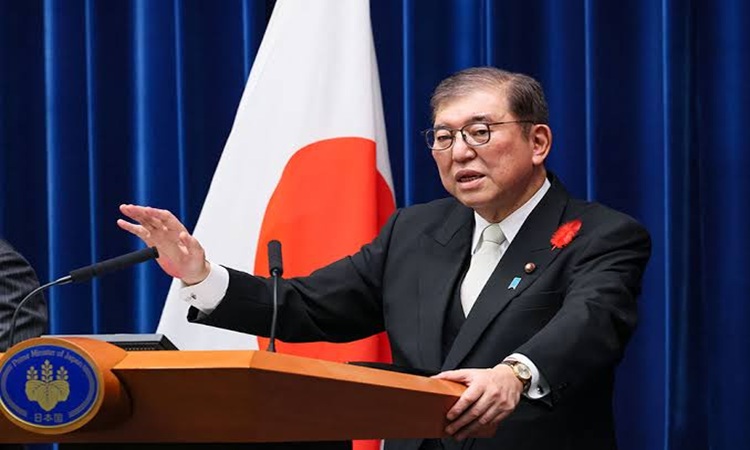
Japan PM Shigeru Ishiba to Resign Amid LDP Crisis
Tokyo — Japanese Prime Minister Shigeru Ishiba is set to resign in an effort to prevent further divisions within the ruling Liberal Democratic Party (LDP), according to public broadcaster NHK. The move, confirmed by unnamed party sources, marks a dramatic turn in Japan’s political landscape.
NHK reported on Sunday that Ishiba conveyed his intention to step down after a turbulent year that saw his government lose its majority in both houses of parliament. The announcement comes only days after Tokyo signed a trade agreement with the United States, a deal seen as a last major policy achievement for the embattled leader.
Electoral Setbacks and Public Discontent
Ishiba assumed office last year with promises of stability and economic reform. However, his tenure has been overshadowed by mounting voter frustration. Rising living costs, stagnant wages, and a slow response to inflation eroded public confidence in the government.
The tipping point came as the LDP-led coalition lost its grip on both houses of parliament, a rare setback for a party long dominant in Japanese politics. Analysts argue that voters punished Ishiba’s administration for failing to address the everyday struggles of households, particularly soaring food and energy prices.
Moreover, internal divisions within the LDP deepened after successive election losses. Rival factions questioned Ishiba’s leadership style, with some lawmakers pushing for an urgent change at the top to restore party unity.
LDP Prepares for Leadership Vote
According to Reuters, LDP lawmakers will meet on Monday to decide whether to hold an extraordinary leadership election. The outcome is expected to shape Japan’s political direction in the coming months, with several senior figures already seen as potential successors.
Party insiders said that Ishiba’s decision to resign was aimed at avoiding a drawn-out leadership battle that could weaken the government further. “He felt stepping aside was the best way to protect the party,” one lawmaker told Japanese media.
The resignation sets the stage for a power contest inside the LDP, which has historically chosen leaders capable of securing parliamentary majorities. Names such as former Foreign Minister Fumio Kishida and Defense Minister Taro Kono are already being mentioned as frontrunners.
A Trade Deal Overshadowed
Ironically, Ishiba’s departure comes just after his government finalized a trade pact with the United States. The agreement was billed as a win for Japanese exporters, particularly in the technology and automotive sectors.
However, political observers noted that the trade deal did little to ease public dissatisfaction. “Economic diplomacy cannot mask the struggles faced by ordinary people at home,” said political analyst Keiko Tanaka. “The LDP is paying the price for domestic neglect.”
Japan’s Political Future Uncertain
Ishiba’s exit adds fresh uncertainty to Japan’s political climate at a time when stability is critical. The country faces slowing growth, demographic challenges, and an increasingly tense security environment in East Asia.
While the LDP has historically bounced back from leadership crises, experts caution that the party’s internal cohesion will be tested. “This is not just about replacing one leader,” noted Professor Hiroshi Sato of Waseda University. “It is about redefining the LDP’s connection with the Japanese people.”
Public reaction has so far been mixed. Some citizens welcomed Ishiba’s decision as a necessary step toward change, while others worry that political instability could further harm Japan’s economic recovery.
What Comes Next
The LDP’s decision on holding a leadership election will determine the immediate path forward. If the party selects a new leader quickly, it could consolidate power and restore voter confidence. However, prolonged factional fighting could risk weakening the LDP’s standing ahead of the next general election.
For now, Ishiba remains in office until a successor is chosen. His resignation speech, expected early this week, will likely emphasize party unity and national stability.
Japan’s ruling party has faced many storms in its history, but Ishiba’s resignation underscores a new era of uncertainty—one where public patience is running thin, and political missteps carry heavier consequences than ever before.