
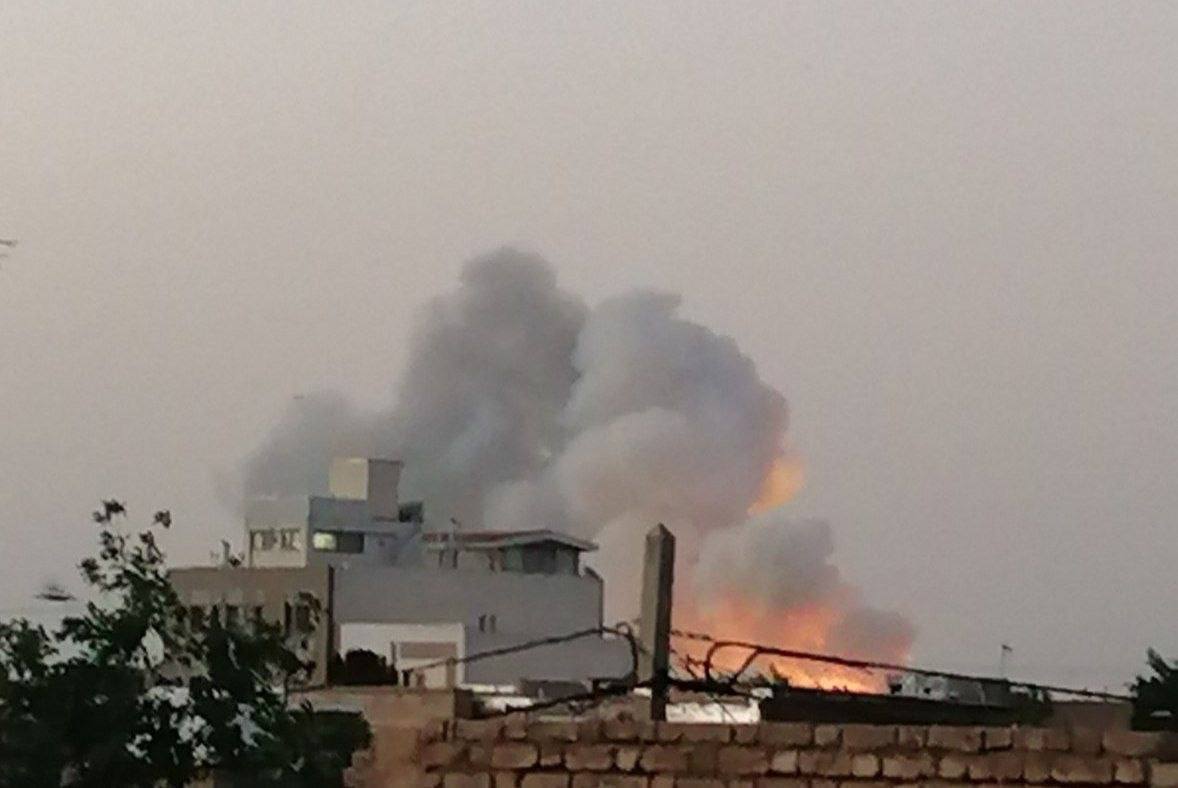
TEHRAN — The Middle East faced an immediate security crisis early Monday morning. Strategic Israeli airstrikes hit Iran across multiple provinces, dealing a severe blow to intense diplomatic stabilization efforts. Loud explosions shook the outskirts of Tehran, Tabriz, and Isfahan as regional air defenses engaged multiple incoming waves of fighter jets. This aggressive military confrontation marks the most severe direct clash between the two nations since a fragile truce took hold.
🚨 BREAKING: The U.S.-brokered April ceasefire is in jeopardy. Serious Israeli airstrikes hit Iran early Monday, striking targets near Tehran, Tabriz, and Isfahan. President Trump urges a deal as oil prices climb. #IranConflict #MiddleEastNews #CeasefireBroken… pic.twitter.com/7Y7Mvyj2dP
— India This Week (@indiathisweekk) June 8, 2026
The unexpected multi-city bombardment successfully targeted specialized defense facilities and missile storehouses belonging to the Iranian Revolutionary Guard Corps. Consequently, Iranian aviation officials suspended all domestic commercial operations, completely closing the national airspace. Security forces immediately established strict perimeters around damaged military compounds. Meanwhile, international energy markets responded rapidly to the escalating violence, causing global crude oil prices to surge past 95 dollars per barrel.
Read More : Mount Everest Trash Crisis: High Altitude Waste Chokes Camp IV as Nepal Launches Urgent Cleanup Plan
The Shattered Truce: Why Air Assaults Revived the Regional War
The current crisis unfolded rapidly after months of precarious diplomatic maneuvering by global powers. Israeli airstrikes hit Iran just hours after a series of intense proxy skirmishes erupted along the southern Lebanese border. Observers note that these rapid exchanges completely shatter the framework of the U.S.-brokered April ceasefire. That initial deal aimed to gradually stabilize commercial shipping pathways and pause heavy cross-border artillery duels.
The decision to launch deep penetrative strikes apparently bypassed direct diplomatic requests from Washington to show tactical restraint. Local residents in western Tehran reported hearing twin supersonic blasts that rattled residential windows. Additionally, the state-run media confirmed that defensive batteries activated near crucial research hubs in Isfahan. The military command in Tel Aviv quickly announced that the operation neutralized active threats. They stated that the targeted facilities directly supplied long-range munitions to regional militant networks.
Furthermore, regional analysts believe this latest exchange will permanently complicate ongoing international mediation efforts. The April truce required both factions to halt direct territorial aggression while neutral parties facilitated communication. However, this sudden wave of precision bombardments effectively ends that operational pause. The youth of both nations now face the immediate reality of a prolonged, state-level military confrontation.
Political Fallout as Global Leaders Demand Immediate Nuclear Restraint
This morning, the reality that Israeli airstrikes hit Iran triggered frantic diplomatic activity across several Western capitals. United States President Donald Trump expressed deep frustration regarding the breakdown of the established security arrangement. He had previously urged regional leaders to avoid retaliatory escalations, insisting that a final peace framework remained achievable. President Trump strongly emphasized that all parties must urgently prioritize a comprehensive nuclear deal over active warfare.
The timing of the aerial offensive remains highly problematic for international negotiators who are gathering in Islamabad. Diplomats were actively drafting conditional sanctions relief packages in exchange for strict enrichment limits on Iranian nuclear facilities. However, hardline politicians in Tehran now argue that diplomatic engagement is entirely useless under active bombardment. They insist that the state must firmly assert its sovereign right to self-defense against external aggression.
Moreover, European mediators warn that a total collapse of the April ceasefire could trigger a catastrophic broader conflict. The strategic maritime corridor through the Strait of Hormuz remains heavily guarded by international naval coalitions. If regional forces attempt to disrupt global shipping routes in retaliation, global trade will suffer immense damage. Therefore, neutral regional actors are working around the clock to establish an emergency communication channel.
Local Realities and the Grim Path Toward De-escalation
As morning progressed, the full physical scale of the damage became clearer to independent monitoring groups. The Israeli airstrikes hit Iran with notable precision, intentionally avoiding dense urban residential centers to minimize civilian casualties. Instead, the incoming warheads impacted remote research facilities and advanced radar arrays in the Tabriz region. Emergency response teams spent hours extinguishing containment fires at a logistics base situated near Karaj.
The international community remains highly divided on how to successfully restore regional stability after this major breach. Some defense experts believe that selective deterrence will eventually force both nations back to the negotiating table. Conversely, critics argue that unchecked military actions only empower extremist factions on both sides of the conflict. “The window for a peaceful diplomatic resolution is closing fast,” warned a prominent regional security analyst.
As night falls over the region, the prospect of further retaliatory missile volleys keeps cities on absolute alert. The definitive proof that Israeli airstrikes hit Iran has fundamentally shifted the geopolitical balance of power this year. President Trump continues to push for an immediate diplomatic compromise, but ground realities tell a different story. Without a binding, enforceable agreement, the Middle East remains dangerously close to an uncontainable regional war.