
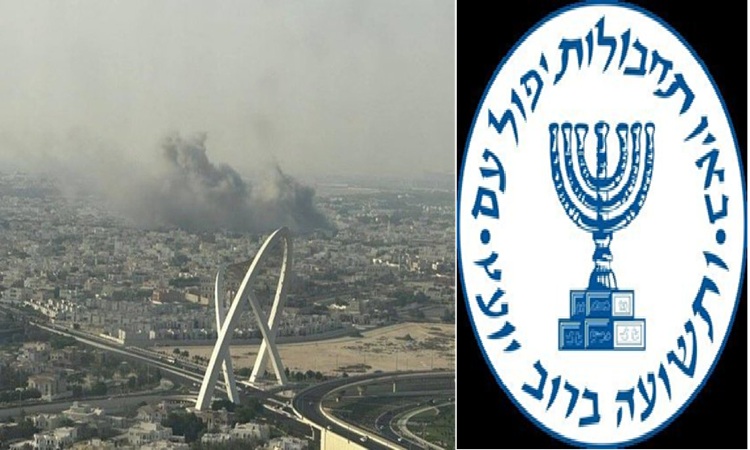
Mossad declines Doha mission targeting Hamas
In a development highlighting the delicate balance between diplomacy and military action, Israel’s Mossad intelligence agency refused to execute a planned ground operation in Doha aimed at assassinating senior Hamas leaders. According to a report by the Washington Post, Mossad Director David Barnea opposed the mission, fearing it could jeopardize Israel’s working ties with Qatari officials currently mediating ceasefire talks.
The decision underscored the risks of direct confrontation on Qatari soil, a state that plays a crucial role in mediating negotiations between Israel and Hamas. Barnea reportedly argued that such a mission could derail ongoing discussions for the release of hostages held in Gaza.
Israeli Prime Minister Benjamin Netanyahu, days later, indirectly acknowledged the failed attempt. In an English-language post on social media, he claimed that eliminating the targeted Hamas leaders “would rid the main obstacle to releasing all our hostages and ending the war.”
Airstrikes launched instead of ground mission
Rather than pursue the controversial ground raid, Israel launched airstrikes on Tuesday using 15 fighter jets, which fired 10 missiles from outside Qatari airspace. The strikes, however, failed to eliminate top Hamas figures.
According to Hamas, the attack instead killed several aides and relatives of its leadership delegation, along with a Qatari officer. Israeli officials have not confirmed Qatari casualties but emphasized that the mission was a joint effort involving the Air Force and Shin Bet, Israel’s domestic intelligence agency.
A senior Israeli official cited by Channel 12 explained the reasoning: “The position was clear — there is a deal for the return of the hostages on the table, and the negotiations should be exhausted. Everyone understood that a ground operation at this time could harm the possibility of securing their release.”
Israel cites rare opportunity for strike
Despite Mossad’s reluctance, the airstrike was presented by Netanyahu’s government as a necessary move. Current and former Israeli officials described the operation as a rare chance to target Hamas leaders concentrated in one location.
Officials also linked the timing of the strike to recent escalations. Earlier this week, Hamas claimed responsibility for an attack in Jerusalem that killed six civilians and an ambush in Gaza that left four Israeli soldiers dead. Netanyahu and senior security officials argued that retaliation was unavoidable.
The Israeli military confirmed that the airstrike was coordinated between the Air Force and Shin Bet, with both agencies monitoring from a central command hub. While Mossad typically handles overseas operations, Shin Bet and the Air Force played lead roles in Tuesday’s mission.
Qatar’s mediation role under strain
The episode has raised questions about Qatar’s role as a mediator in ongoing ceasefire and hostage negotiations. Doha has long positioned itself as a diplomatic bridge between Hamas and the West, often hosting indirect talks.
Any direct Israeli military action on Qatari soil, observers warn, could undermine this channel and complicate international mediation efforts. By rejecting the ground raid, Mossad appeared to prioritize long-term negotiation prospects over short-term military gains.
However, the airstrikes themselves risk straining Israel-Qatar relations. Killing a Qatari officer, as Hamas has claimed, could add new friction to already fragile talks. Analysts suggest that Doha may now push for stronger security guarantees before continuing its mediating role.
Regional implications
The incident highlights Israel’s struggle to balance military pressure with diplomatic strategies. While airstrikes demonstrate military resolve, they also risk undermining diplomatic partners like Qatar, whose role remains pivotal in securing the release of Israeli hostages.
Security experts caution that the failure to eliminate Hamas leaders could embolden the group. At the same time, the collateral damage may fuel criticism of Israel’s military campaign, especially among Gulf states.
For Israel, the choice between covert operations and overt military strikes remains fraught with consequences — both at home and abroad.
Conclusion
The Israel airstrike in place of a Mossad ground operation in Doha illustrates the complexity of modern conflict management. Mossad’s refusal highlighted the importance of protecting Qatar’s mediation role, while the airstrike underscored Israel’s urgency to respond to Hamas attacks.
As hostilities continue, the episode reveals a deeper struggle: balancing diplomacy, intelligence, and military action while navigating fragile international relationships.