
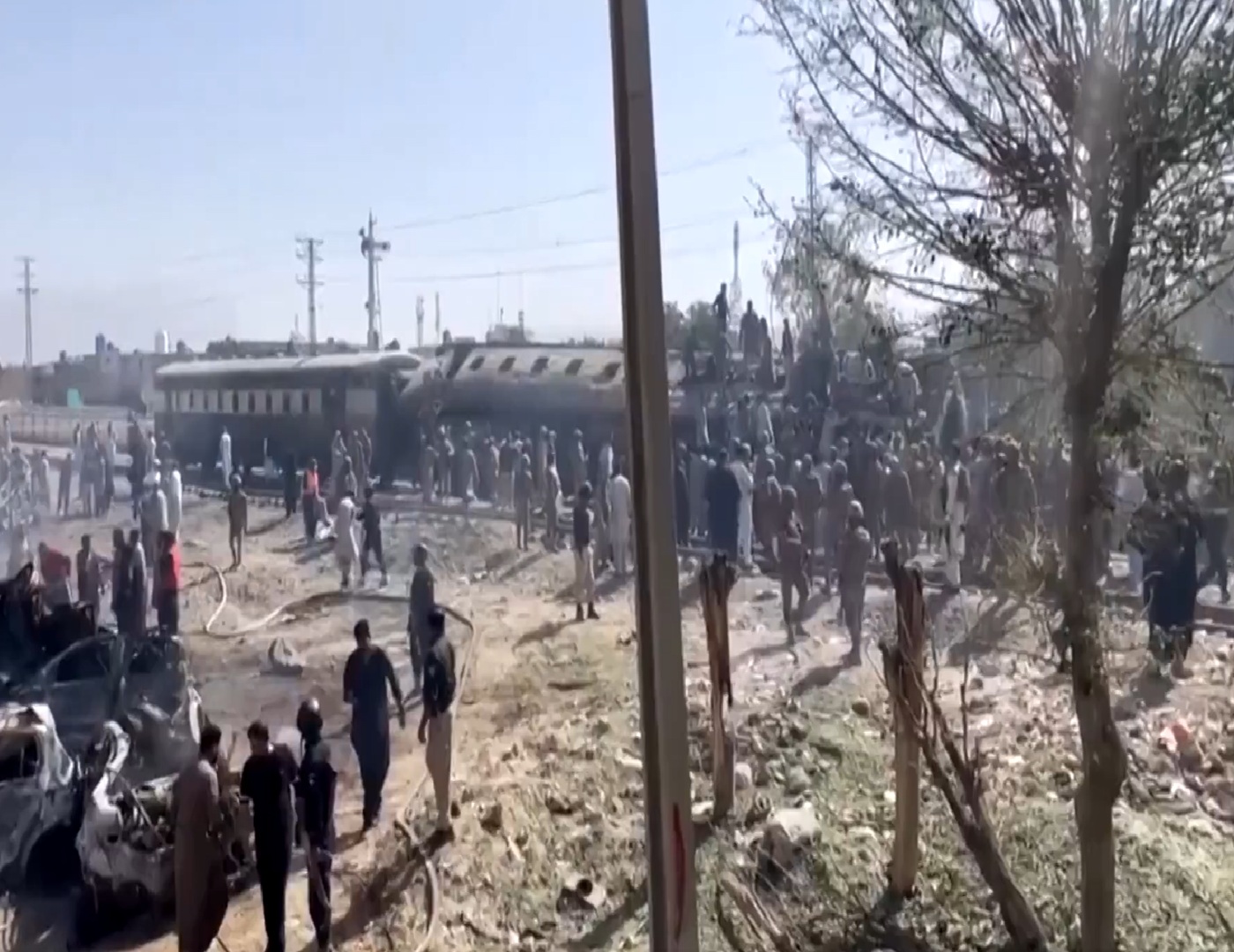
QUETTA — A massive explosion ripped through a passenger shuttle train in Pakistan’s southwestern province on Sunday morning, May 24, 2026. The devastating Balochistan train bombing killed at least 24 individuals and wounded more than 70 others. According to senior security officials, an explosives-laden vehicle rammed directly into the train near the Chaman Phatak railway signal. The targeted shuttle was transporting military personnel and their families from Quetta Cantonment toward Peshawar ahead of the upcoming Eid holiday.
The immense force of the blast caused the train engine and three coaches to derail immediately. Subsequently, two of the affected carriages overturned and caught fire, sending columns of thick black smoke skyward. The impact shattered windows of nearby structures and destroyed over a dozen vehicles parked along the road. Witnesses reported widespread panic as local volunteers clambered over mangled wreckage to recover blood-soaked victims. Emergency rescue teams rushed to the site, and provincial authorities quickly declared a medical emergency across all major Quetta hospitals.
Baloch Freedom Fighter Militants Claim Responsibility for the Ambush
The outlawed Baloch Liberation Army (BLA) claimed absolute responsibility for the deadly strike in a statement released shortly after. The insurgent group confirmed that they targeted a military transport train in a highly organized “fidayee” or suicide mission. Balochistan has faced a low-level insurgency for decades, with Baloch Freedom Fighter factions frequently targeting state infrastructure. However, this latest Balochistan train bombing represents a significant escalation in the capability of militants to execute high-casualty strikes against security forces.
Also Read : India–Canada CEPA Trade Talks Gain Momentum as Piyush Goyal Visits Canada
Pakistan Prime Minister Shehbaz Sharif strongly condemned the bombing, labeling the attack a cowardly act of terrorism. Additionally, Balochistan Chief Minister Sarfraz Bugti expressed deep grief over the loss of innocent lives, including women and children. Bugti vowed that security agencies would relentlessly hunt down the masterminds and facilitators behind the operation. Meanwhile, federal railway authorities halted the Peshawar-bound Jaffar Express at the main station as a strict precautionary safety measure.
Geopolitical Strains and Ongoing Regional Instability
The deadly explosion occurred at a highly sensitive moment for regional diplomacy and international transit security. Specifically, the attack came just a day after Pakistan announced progress regarding a Middle East peace memorandum. President Asif Ali Zardari noted that the perpetrators actively seek to undermine Pakistan’s role in international peace efforts. To counter the threat, security forces deployed helicopters and drones across Quetta to secure secondary transit lines.
Economic experts observe that persistent violence continues to hamper development in Pakistan’s largest but poorest province. Local Baloch groups frequently accuse the federal government of exploiting the region’s vast natural gas and mineral wealth. This systemic economic grievance remains the primary driver behind recruitment for various active Baloch Freedom Fighter insurgencies. Investigators at the scene confirmed that the vehicle-borne improvised explosive device contained approximately 35 kilograms of high-grade military explosives.
Conclusion: The Long Path to Structural Peace
Ultimately, the tragic Balochistan train bombing underscores the profound security challenges facing the country’s critical transportation corridors. Despite continuous counter-insurgency operations by state paramilitary forces, soft targets like public railway networks remain highly vulnerable. Regional stability will likely require a comprehensive approach combining robust intelligence operations with meaningful economic reforms. Until local communities feel included in wealth-sharing models, militant factions will unfortunately continue to exploit regional fractures.