
UP Police Question Siblings at Temple, Anti-Romeo Check Sparks Harassment Debate
A routine check at a temple in Uttar Pradesh by UP Police has triggered a heated public debate.
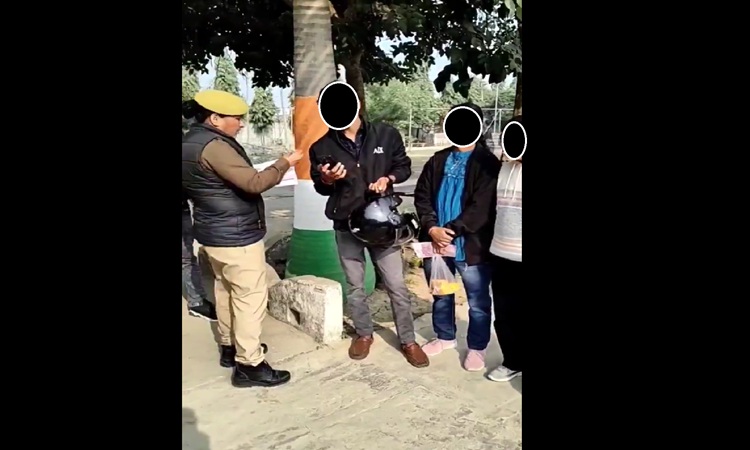
The incident involved a man and a woman visiting a crowded religious site in Ghazipur.
Police personnel stopped the pair and questioned their relationship.
The siblings clarified that they were brother and sister.
Officers verified their claim by speaking to relatives over a speakerphone call.
After confirmation, the police allowed them to leave the temple premises.
However, the officers advised the woman to visit public places with a guardian next time.
A video of the interaction soon circulated widely on social media platforms.
As a result, the incident sparked allegations of harassment and moral policing.
Many users questioned the legality of stopping consenting adults in public spaces.
Incident Linked to Anti-Romeo Squad Operations
Police officials described the action as part of routine Anti-Romeo squad operations.
These squads operate at crowded places across Uttar Pradesh.
Authorities say the initiative aims to prevent eve-teasing and harassment.
Additionally, squads monitor cases of forced elopement and coercion.
The temple, officials noted, remained crowded during peak visiting hours.
Therefore, officers claimed heightened vigilance was necessary.
Supporters argue such checks help ensure women’s safety in public spaces.
Moreover, they say preventive policing deters potential offenders.
However, critics argue that such actions often cross personal boundaries.
They claim the approach assumes wrongdoing without reasonable suspicion.
The Ghazipur incident has again raised concerns about overreach.
The video clip intensified scrutiny due to the public nature of the questioning.
Public Outrage Grows Over Alleged Moral Policing by UP Police
Following the video’s circulation, criticism poured in from various quarters.
Civil rights activists described the questioning as unnecessary intrusion.
Many social media users argued adults should not face suspicion by default.
They questioned why identity verification became necessary without any complaint.
Some legal experts also weighed in on the issue.
They stressed that adults have constitutional rights to privacy and movement.
Critics highlighted the advisory given to the woman as problematic.
They argued it reinforced outdated notions about guardianship.
Moreover, they said such advice undermines women’s autonomy in public spaces.
The episode, they claimed, reflects moral policing rather than law enforcement.
Several users compared the incident with earlier Anti-Romeo squad controversies.
Similar cases have previously drawn criticism from courts and activists.
Supporters Defend UP Police Action as Preventive Measure
Despite criticism, some citizens defended the police action.
They argued crowded religious places require enhanced security measures.
Supporters said officers acted cautiously rather than aggressively.
They pointed out that police released the siblings after verification.
According to them, verification prevented potential misunderstandings later.
They also claimed police behavior remained polite throughout the interaction.
Some residents argued that Anti-Romeo squads deter harassment effectively.
They believe the presence of police reassures families and women visitors.
Additionally, supporters stressed the need to judge context carefully.
They cautioned against drawing conclusions based on short video clips.
However, even supporters acknowledged the need for sensitivity.
They urged police to balance safety with respect for personal dignity.
UP Police Silent as Debate Intensifies
As of now, Uttar Pradesh Police has not issued an official statement.
No clarification has addressed whether procedures were followed correctly.
The silence has further fueled speculation and public debate.
Activists are demanding clearer guidelines for Anti-Romeo squad operations.
Legal observers stress the importance of transparent policing protocols.
They argue ambiguity often leads to misuse of authority.
The incident highlights ongoing tension between safety initiatives and civil liberties.
It also underscores the challenges of policing in socially sensitive spaces.
Experts suggest regular training for officers on gender sensitivity.
They also recommend clearer communication during public interactions.
As the debate continues, the Ghazipur episode remains under public scrutiny.
It raises broader questions about freedom, safety, and responsible policing.