
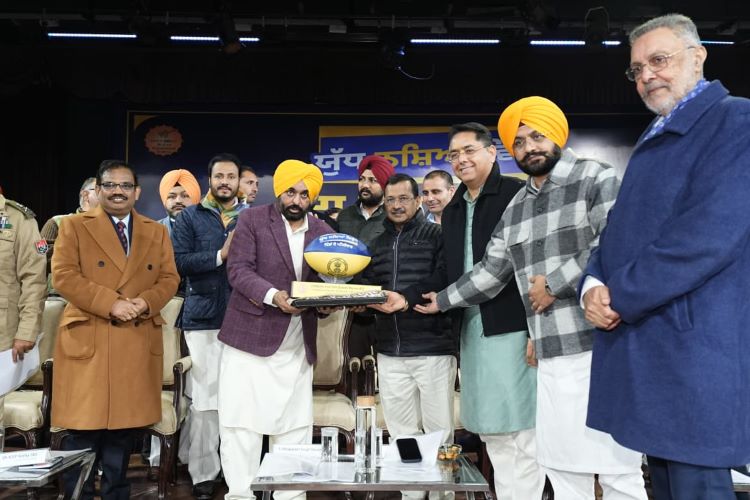
Kejriwal and CM Bhagwant Mann launch Phase II of Yudh Nashean Virudh, urging public participation to make Punjab drug-free.
Punjab’s anti-drug campaign took a significant step forwar with the commencement of Phase II of Yudh Nashean Virudh, as Aam Aadmi Party (AAP) National Convenor Arvind Kejriwal and Chief Minister Bhagwant Singh Mann urged the state’s people to work together to eradicate drugs. The second phase began at Lovely Professional University in Phagwara, signaling a shift away from enforcement-led activity and toward a large-scale people’s movement.
Addressing a large crowd, Arvind Kejriwal stated that Punjab had demonstrated to the rest of the country how to fight a true drug war. He stated that from the start of Phase I on March 1, 2025, the state has taken unprecedented action against drug traffickers. “In just 10 months, roughly 28,000 cases have been registered under the NDPS Act, with courts imposing penalty in around 88 percent of these cases. Such a high conviction rate demonstrates that the actions performed were honest and effective,” he stated.
पंजाब में ‘युद्ध नशेया विरूद्ध’ की शानदार सफलता के बाद आज से उसका Phase 2 शुरू हो गया है।
अब हर पिंड में ‘पहरेदार’ तैनात होंगे जो नशा तस्करों पर पैनी नज़र रखेंगे। हजारों छोटे-बड़े तस्कर पहले ही पकड़े जा चुके हैं और सज़ा पा चुके हैं।
ये युद्ध अब तब तक चलेगा जब तक पंजाब से नशे… pic.twitter.com/i3JGzet1Dw
— Arvind Kejriwal (@ArvindKejriwal) January 7, 2026
Kejriwal stated that over 42,000 smugglers had been detained thus far, including over 350 prominent narcotics dealers. He also stated that properties built with drug money were razed and confiscated, delivering a clear message that crime does not pay in Punjab. According to him, for the first time, even the most powerful drug traffickers, who were before regarded untouchable, were arrested and imprisoned, restoring people’s trust in government.
Also read : Punjab Police Bust Major Heroin Smuggling Ring, Seize 19.98 kg Drugs, 4 Arrested
Kejriwal emphasized public participation, stating that the foundation of Phase II lies in regular folks’ knowledge of who sells narcotics in their communities. To channel this awareness, Village Defence Committees (VDCs) were established in villages and urban wards. He stated that approximately 1.50 lakh volunteers had already joined these committees, transforming the anti-drug campaign into a massive movement. A unique mobile application has been established to enable volunteers to contribute information in a secret manner, with all monitoring conducted directly by the Chief Minister’s Office.
Kejriwal also proposed statewide padyatras from January 10 to 30 to mobilise citizens, as well as a massive assembly of VDC volunteers on February 13. He stated that anyone might join the movement by leaving a missed call on 9899100002. He went on to say that, in addition to enforcement, drug addicts’ treatment and rehabilitation were a top focus, with de-addiction infrastructure greatly strengthened throughout the state.
Chief Minister Bhagwant Singh Mann said the tremendous public response indicated that Punjab was on the verge of winning the drug fight. He described narcotics as not only a crime, but also a significant societal problem that could only be overcome through a massive movement. Mann accused previous regimes of supporting narcotics networks and declared that their “sins against Punjab” will never be forgiven.
The Chief Minister stated that the state government has a zero-tolerance attitude towards drug dealers while treating addicts with compassion. He stated that the government has expanded de-addiction centers, enhanced facilities, and provided free treatment. Mann also highlighted larger government achievements, such as creating over 61,000 employment, increasing education and healthcare, and focusing on youth participation through sports infrastructure.
Senior AAP leader Manish Sisodia stated that Punjab had made history by effectively implementing Phase I and expressed confidence that Phase II will decisively disrupt narcotics networks through community involvement.
The Punjab administration reiterated its commitment to continuing the effort until the state is totally drug-free, employing a multifaceted strategy that includes enforcement, public monitoring, rehabilitation, and prevention.