
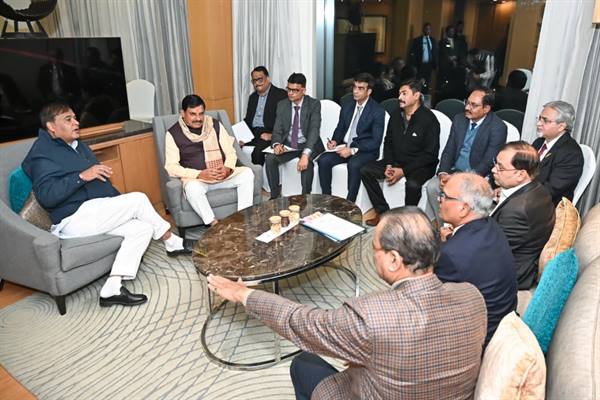
Madhya Pradesh to reintroduce wild buffaloes from Assam; exchange includes tigers, crocodiles & rhinos to boost biodiversity & forest conservation.
Chief Minister Dr. Mohan Yadav visited Guwahati and spoke with Assam Chief Minister Shri Himanta Biswa Sarma about the two states‘ wildlife sharing. It was decided that over the course of three years, 50 wild buffaloes would be transported from Assam to Madhya Pradesh in three groups. The state will receive three cobras and one pair of rhinoceroses. Van Vihar National Park will be the home of these creatures. As requested, Madhya Pradesh will provide Assam six crocodiles and one pair of tigers in exchange.
Following the successful reintroduction of cheetahs, Chief Minister Dr. Yadav said that the restoration of wild buffalo would give the state’s biodiversity a new dimension. In addition to protecting a species, the project is a serious step toward bolstering the state’s forest ecosystems. Madhya Pradesh has already gained the titles of “Leopard State” and “Tiger State.” With the successful reintroduction of cheetahs, the restoration of wild buffalo will usher in a new era of biodiversity conservation. The state administration is still dedicated to protecting wildlife and reintroducing species that were formerly essential to this region.
Also read: Governor Mangubhai Patel Urges Madhya Pradesh Youth to Lead India Towards “Viksit Bharat 2047”
More than a century ago, Madhya Pradesh’s wild buffalo population went extinct. Currently, the majority of India’s wild buffalo population is found in Assam. Although they can be found in Chhattisgarh as well, their population there is incredibly small.
Kanha Tiger Reserve is the best location for the reintroduction of wild buffalo, according to a thorough scientific study carried out by the Wildlife Institute of India. The quality of grasslands, the accessibility of water supplies, the lack of human involvement, and pressure from other herbivores were all considered in the study.
The Madhya Pradesh government has started the process of obtaining the required licenses from the Indian government and the Central Zoo Authority. Keeping in mind natural breeding and long-term conservation objectives, the reintroduction will be done gradually and safely.