
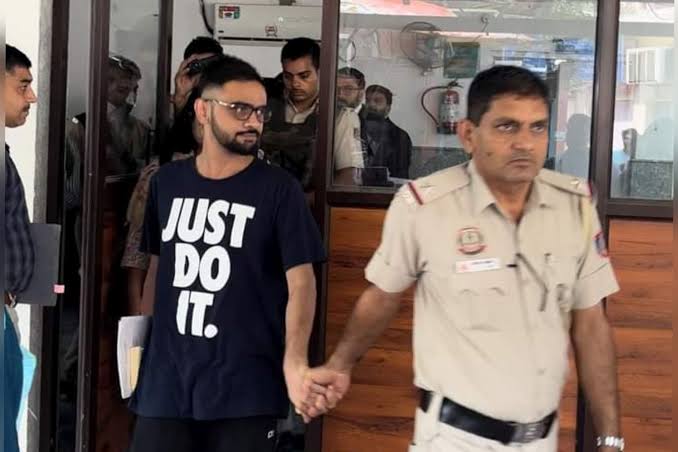
NEW DELHI — The Supreme Court of India has officially dismissed the review petition filed by activist Umar Khalid. He had challenged the January 5 order that denied him bail in the Delhi Riots 2020 larger conspiracy case. On Monday, April 20, 2026, the bench comprising Justice Aravind Kumar and Justice NV Anjaria confirmed that they found no valid reason to reconsider their previous ruling. The court also rejected a prayer for an oral hearing in the matter. Consequently, both Khalid and co-accused Sharjeel Imam will remain in custody under the stringent Unlawful Activities (Prevention) Act (UAPA).
The review petition was an attempt to overturn the court’s earlier observation that a prima facie case exists against the activists. However, the bench remained firm in its assessment of the prosecution’s evidence. The court noted that it had thoroughly examined the review petition and all enclosed documents before reaching this conclusion. This dismissal marks another significant legal hurdle for the student leaders. They have been in high-security detention since September 2020. While the court acknowledged the long period of their incarceration, it ruled that the legal embargo under UAPA overrides claims of a “constitutional mandate” for bail in this specific instance.
The “Different Footing” Argument: Why Bail Was Denied
In its detailed analysis from January 2026, the Supreme Court explained why Khalid and Imam were treated differently than other accused individuals. While the court granted bail to five other activists in the same month, it maintained that Khalid and Imam occupied a “central and formative role” in the alleged conspiracy. The bench emphasized that their involvement went beyond localized acts of protest. Instead, the prosecution provided materials suggesting their role in the planning, mobilization, and strategic direction of the violence that rocked North East Delhi.
Moreover, the court clarified that all individuals in a conspiracy case do not stand on equal footing. While delay in trial is often a ground for bail, the bench refused to treat it as a “trump card” in this case. The judges noted that the scale of the Delhi Riots 2020 necessitated a rigorous examination of those in leadership positions. Consequently, the court imposed a strict embargo. Khalid and Imam cannot renew their bail applications in the trial court until the examination of all protected witnesses is complete, or until at least one year has passed from the January 5 order.
A Legal Deadlock: The Road Ahead for the Accused
The dismissal of the review plea effectively puts the defense in a state of legal deadlock. Senior Advocate Kapil Sibal, representing Khalid, had previously requested an open-court hearing to address what he termed “grave injustice.” However, with the bench rejecting the oral hearing, the legal focus now shifts back to the trial court proceedings. The Delhi Police’s case relies heavily on digital records, WhatsApp group chats, and the testimonies of over 897 witnesses. Because the trial is at the stage of arguments on charges, a final verdict remains years away.
Read More : Supreme Court Denies Bail to Umar Khalid and Sharjeel Imam in Delhi Riots Case
Civil society and rights campaigners have expressed concern over the “virtually impossible” standards for bail under UAPA. Some legal experts argue that the judiciary is under immense pressure to maintain national security narratives. Nevertheless, the Supreme Court maintained that its ruling is based on the statutory requirements of the law. As of April 2026, 12 of the 18 originally arrested individuals in the “main conspiracy” case remain behind bars. The court’s decision to uphold the denial of bail ensures that the primary faces of the anti-CAA protests will stay in Tihar Jail for the foreseeable future.
Context of the 2020 North East Delhi Violence
The Delhi Riots 2020 broke out in February of that year during widespread protests against the Citizenship (Amendment) Act. The violence resulted in 53 deaths and over 700 injuries, with property damage running into hundreds of crores. The Delhi Police allege that the riots were not spontaneous but a pre-planned attempt to destabilize the government. Critics, however, claim the investigation is biased and targets peaceful dissenters.
Ultimately, the Supreme Court’s latest order reinforces the legal status quo. By dismissing the review plea, the apex court has signaled that it sees no immediate procedural error in its previous judgment. For Umar Khalid and Sharjeel Imam, the next window for legal relief will only open in early 2027, unless the trial court proceedings move at an unprecedented pace. The case continues to serve as a litmus test for the balance between state security and individual liberty in modern India.