
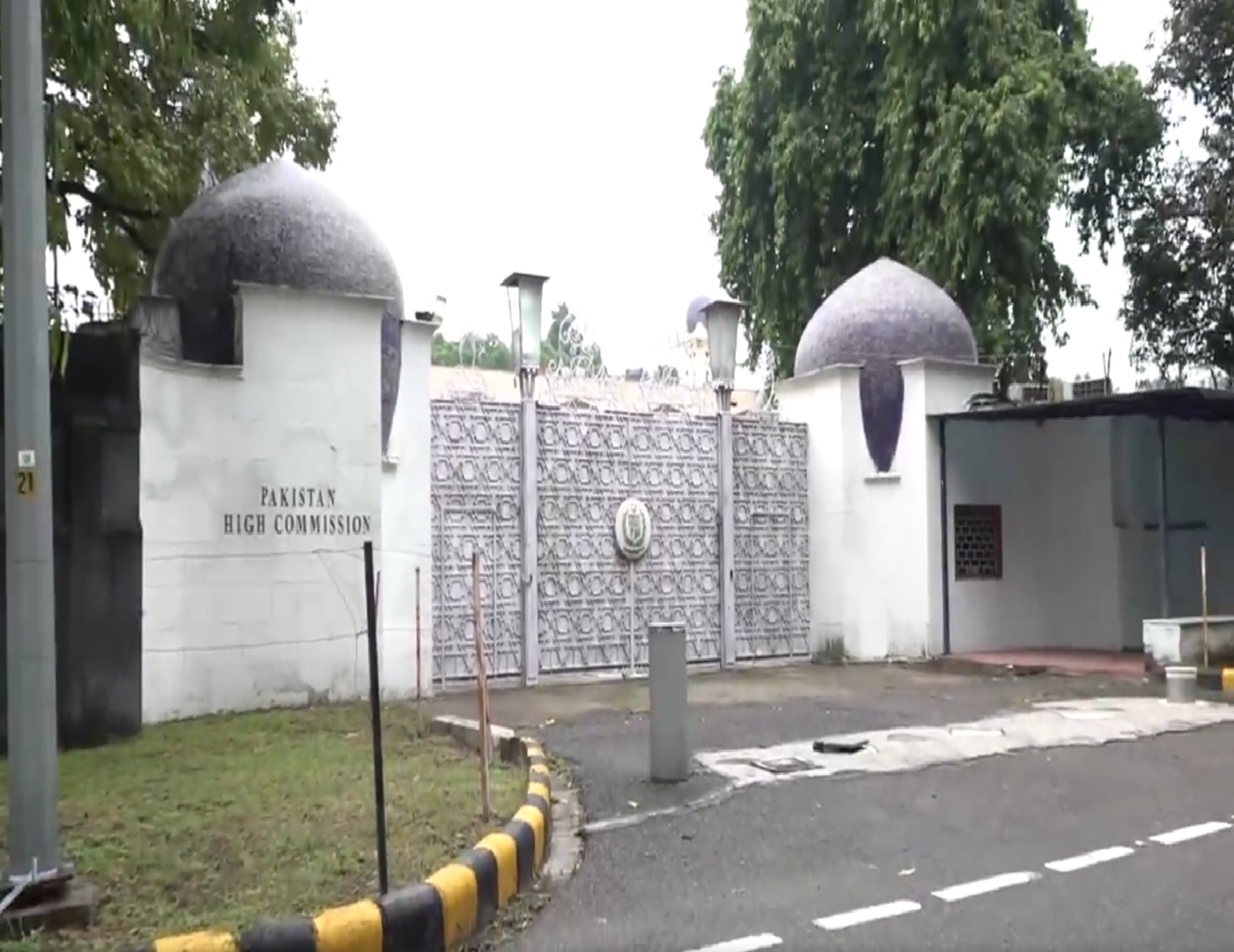
Reciprocal Demolition Drive In New Delhi Diplomatic Enclave
Indian municipal workers removed unauthorized Pakistan High Commission security barriers along Shantipath in New Delhi on Thursday. Heavy equipment cleared traffic bollards, concrete blocks, temporary fencing, and queue liners.
Officials confirmed that these removed external structures extended beyond the mission’s designated boundary. Specifically, the demolition cleared areas surrounding the public visa counters.
However, the main mission entrance, gates, and internal facilities remained untouched. This action represents a direct counter-response to Islamabad’s recent dismantling of protective installations outside the Indian mission.
| Operation Parameter | Details of Diplomatic Action |
| Primary Location | Shantipath Lane, Chanakyapuri, New Delhi |
| Targeted Structures | Bollards, metal railings, queue liners, corrugated roofs |
| Official Reason | Clearing unauthorized encroachments beyond compound limits |
| Triggering Event | Counter-action to barrier removals outside Indian mission in Islamabad |
Strategic Significance Of The Pakistan High Commission Security Barriers
Removing the Pakistan High Commission security barriers demonstrates strict diplomatic reciprocity between the two neighboring capitals. Historically, both nations adjust physical access controls outside missions to signal diplomatic displeasure.
These calibrated perimeter adjustments allow governments to project administrative firmness without disrupting formal core operations. Consequently, normal consular processing at the visa counters continues despite the structural clearance.
Furthermore, municipal teams acted swiftly using heavy bulldozers to clear debris from public roads. Local traffic authorities restored open access along the public lane shortly after operations concluded.
Also Read : Tushar Gandhi Meets CJP Founder Abhijeet Dipke, Says Gen Z Adopts Gandhi Values
Heightened Regional Tensions And US Diplomatic Statements
This reciprocal action coincides with political friction involving American foreign policy statements. On Wednesday, US Ambassador to India Sergio Gor visited Srinagar in Jammu and Kashmir.
During his official visit, Ambassador Gor referred to Jammu and Kashmir as an important part of India. He also praised local authorities for improving security conditions across the region.
| Diplomatic Event | Related Foreign Policy Action |
| US Envoy Visit | Ambassador Sergio Gor visited Srinagar for official bilateral meetings. |
| US Public Remark | Gor called Jammu and Kashmir an important part of India. |
| Pakistani Protest | Islamabad summoned US Charge d’Affaires Natalie Baker to lodge a demarche. |
Consequently, Pakistan summoned senior US diplomats in Islamabad to register a strong formal protest. However, Indian officials have not formally linked the barrier removal directly to the American diplomatic exchange.
Step-By-Step Timeline Of Reciprocal Diplomatic Moves
The recent adjustments reflect a fast-moving sequence of administrative decisions across both capitals.
- August 17: Pakistani agencies remove security bollards outside the Indian High Commission in Islamabad.
- August 19: US Ambassador Sergio Gor makes key statements during his trip to Srinagar.
- August 19: Pakistan lodges an official diplomatic protest with the US embassy in Islamabad.
- August 20: Indian authorities clear outer perimeters along the Pakistan High Commission security barriers.
In addition, civil maintenance crews surveyed surrounding public lanes to prevent future unauthorized constructions. Both capitals continue monitoring mission access protocols closely.
Long-Term Impact On Bilateral Mission Operations
Recent events highlight how physical security setups remain tied to political developments between the two nations. By modifying the Pakistan High Commission security barriers, New Delhi maintains complete structural parity with Islamabad.
Moreover, experts note that such non-verbal signaling remains standard practice during periods of heightened diplomatic review. Both missions continue running essential diplomatic channels despite external perimeter changes.
“Adjusting physical layers around diplomatic compounds allows both sides to signal administrative firmness while keeping core diplomatic operations functional.”
— Ministry of External Affairs Analysis
Ultimately, New Delhi’s quick action restores municipal boundaries along Shantipath while establishing clear operational boundaries. Observers expect both nations to maintain existing embassy operations under these adjusted security protocols.