
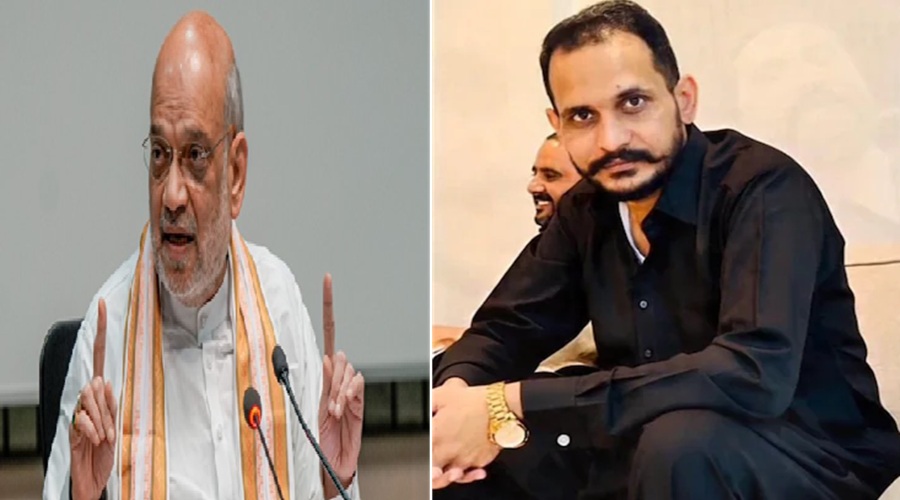
Gangster Rejects Claims Following Multi-State Counter-Terror Operations
Pakistan-based gangster Shahzad Bhatti released a video on social media challenging the Indian government. His message follows a massive Shahzad Bhatti network crackdown executed by security forces across 14 states.
The Ministry of Home Affairs announced that agencies dismantled the ISI-backed network. Security officials detained 253 individuals and recorded over 200 arrests. They seized grenades, firearms, improvised explosive devices, and espionage equipment during coordinated raids.
However, Bhatti publicly disputed the official government account in an unverified viral video. He claimed his active operational strength remains intact despite the recent arrests.
Also Read : Delhi Dismantles Pakistan High Commission Security Barriers In Calibrated Diplomatic Move
Key Details of Counter-Terror Operation
- Total Detentions: 253 individuals across 14 states.
- Confirmed Operative Arrests: Over 200 individuals under UAPA.
- Key Recoveries: POF-marked grenades, IEDs, firearms, and CCTV cameras.
- Primary Target: Cross-border recruitment and propaganda channels.
High-Volume Claims Target Government Security Reports
In his digital address, Bhatti denied that the detained individuals belonged to his criminal network. He alleged that authorities arrested activists linked to the Cockroach Janata Party instead. These individuals previously participated in political demonstrations at Delhi’s Jantar Mantar.
Bhatti openly dared officials to present recovered weapons publicly. “If you have arrested 300, I have 3,000 who are roaming the streets freely,” he stated. Additionally, he promised to offer legal assistance to those detained.
Furthermore, Bhatti questioned the sudden timing of the multi-state intelligence operation. He argued that his group operated for six years without similar action. Therefore, he questioned why security agencies acted only now.
Digital Recruitment Strategy Drives Regional Intelligence Focus
Investigative agencies describe the syndicate as heavily reliant on online platforms for propaganda. Handlers approached young people on social media with small monetary rewards. Later, recruits received larger payments to carry out violent acts.
| Operational Phase | Activity Details | Primary Tool or Weapon |
| Phase 1: Scouting | Reaching youth online | Social media comments and messages |
| Phase 2: Initial Tasks | Poster placement and low-level recce | Direct digital bank transfers |
| Phase 3: Escalation | Planting explosives and surveillance | Grenades, IEDs, and CCTV setups |
The recent Shahzad Bhatti network crackdown aimed to break this digital pipeline. Officials emphasize that public posture is vital for online criminal networks. Consequently, leaders project continued strength to retain credibility among potential recruits.
Regional Statewise Detention Breakdown
State police forces collaborated with national agencies to execute simultaneous raids across northern and western states.
- Uttar Pradesh: 62 Detainees
- Haryana: 52 Detainees
- Delhi: 51 Detainees
- Punjab: 44 Detainees
- Rajasthan & Other States: 44 Detainees
National Security Agencies Maintain Zero-Tolerance Stance
The Union Home Ministry reiterated its firm stance against cross-border terror syndicates. Union Home Minister Amit Shah confirmed that agencies acted swiftly on real-time intelligence. Coordinated raids prevented potential attacks targeted around key national events.
Security personnel recovered ammunition, firearms, and surveillance gear across multiple raid points. State police forces continue analyzing seized mobile devices. Authorities remain focused on completely neutralizing the syndicate’s local logistics networks.
“Security forces remain fully committed to identifying and dismantling cross-border digital terror recruitment pipelines.”
— Ministry of Home Affairs Official Statement
Ultimately, authorities continue monitoring online channels to prevent fresh recruitment attempts. Security agencies maintain heightened vigil across all major northern states.