
AAP’s Saurabh Bharadwaj Exposes Water Sprinkling Near AQI Units
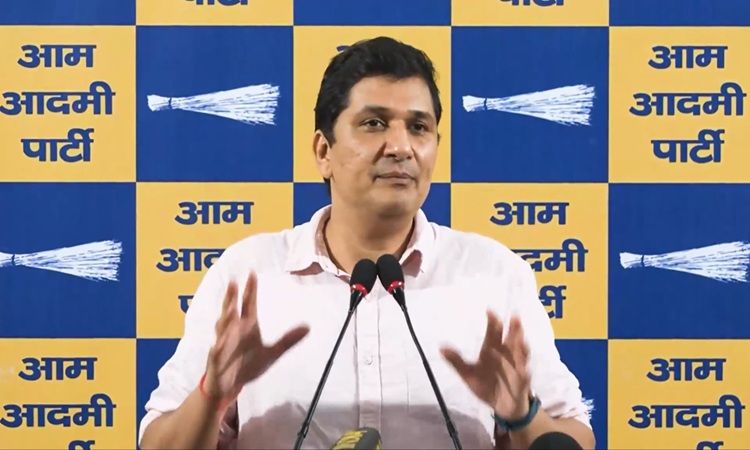
In a startling revelation, Delhi Aam Aadmi Party (AAP) President Saurabh Bharadwaj has alleged that officials are using water sprinklers near Air Quality Index (AQI) monitoring units to manipulate pollution data in the national capital. The claim was made during a live broadcast on X (formerly Twitter), where Bharadwaj showed visuals of water being sprayed directly around an air quality monitoring site.
— Saurabh Bharadwaj (@Saurabh_MLAgk) October 25, 2025
According to him, the move was intended to artificially reduce particulate matter readings, thereby presenting a misleading picture of Delhi’s air quality. The broadcast quickly gained traction on social media, sparking public outrage and renewed debate about transparency in pollution data reporting.
“This is a clear attempt to deceive Delhi residents. Instead of addressing pollution at its source, they are trying to hide it by watering down the data,” Bharadwaj said in his live video.
The AAP leader claimed that such actions undermine efforts to implement long-term environmental solutions while giving a false impression of cleaner air.
ALSO READ : AAP Alleges Pollution Data Manipulation on Diwali Night
Visual Evidence Raises Questions Over Monitoring Integrity
During the live stream, Bharadwaj showcased what appeared to be a water sprinkler truck operating right beside an AQI monitoring station. He alleged that this act was carried out deliberately to settle dust particles temporarily, leading to lower pollution readings in official reports.
The video quickly went viral, with several residents expressing anger and disbelief. Many questioned whether this practice was isolated or part of a broader attempt to manipulate air quality data ahead of public scrutiny.
Environmental experts also raised concerns, stating that such interference can distort pollution metrics and delay urgent policy action. “Monitoring sites are meant to reflect real conditions,” said an independent environmental analyst. “Spraying water nearby skews readings and misguides both the public and policymakers.”
This controversy comes at a time when Delhi’s AQI remains in the ‘very poor’ category, despite ongoing measures under the Graded Response Action Plan (GRAP) Stage II.
Bharadwaj Demands Accountability and Transparency
Saurabh Bharadwaj has demanded a high-level probe into the alleged manipulation of AQI data. He also urged the Central Pollution Control Board (CPCB) to verify if similar activities are taking place across other monitoring stations in Delhi-NCR.
“If the government truly cares about people’s health, it must ensure honest reporting. Fudging data will only make matters worse,” he said.
The AAP leader also called upon the Delhi Environment Department and the Union Ministry of Environment, Forest and Climate Change to intervene. He emphasized that any artificial suppression of AQI levels amounts to misleading citizens about public health risks.
Bharadwaj’s claims have intensified the political face-off between AAP and the Centre over pollution control measures. The AAP has consistently accused central agencies of failing to take responsibility for cross-border pollution sources, such as stubble burning in neighboring states.
Experts Warn Against “Short-Term Optics” Over Real Solutions
Environmental experts say that cosmetic fixes like water sprinkling near monitoring stations can never replace systemic reforms. The Centre for Science and Environment (CSE) has long emphasized the need for consistent emission control, vehicular regulation, and industrial accountability rather than “quick fixes.”
Delhi-based environmental researcher Dr. Meenakshi Verma said, “Such practices may temporarily reduce particulate matter in a localized area, but they don’t improve the city’s overall air quality. Worse, they create a false sense of progress.”
Meanwhile, pollution levels across Delhi continue to fluctuate between ‘poor’ and ‘very poor’, with PM2.5 concentrations exceeding safe limits by up to five times in several areas. Experts warn that this can lead to severe respiratory and cardiovascular problems, especially among children and the elderly.
Public Reaction and Political Fallout
The incident has triggered widespread discussion online, with citizens demanding transparency in AQI reporting. Hashtags like #DelhiAQI and #PollutionScam trended on X shortly after Bharadwaj’s live video went viral.
Opposition parties have accused AAP of politicizing pollution, while AAP supporters argue that exposing manipulation is essential for accountability.
The Delhi government is expected to issue a formal response in the coming days. Meanwhile, the CPCB has not yet released an official statement regarding the alleged manipulation of AQI monitoring conditions.