
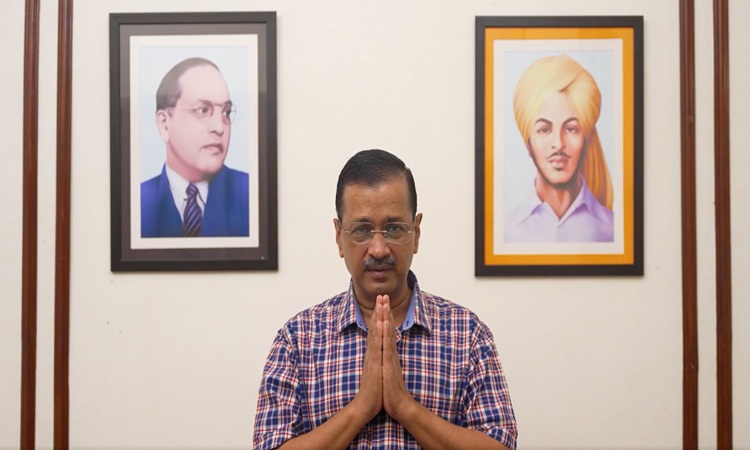
AAP Steps Up Bihar Election Push with Third Candidate List
The Aam Aadmi Party (AAP) on Saturday released its third list of 28 candidates for the upcoming Bihar Assembly elections, further intensifying its campaign in the politically charged state. The announcement marks AAP’s continued effort to expand its electoral footprint beyond Delhi and Punjab.
The list features several new faces, including Shashi Bhushan Tiwari (Lauriya), Arjun Kumar Sinha (Bettiah), Gaysaudin Samaini (Sugauli), and Ranjan Kumar (Samastipur). Party leaders said the selection process was guided by local feedback, ground-level surveys, and the candidate’s record of public service.
Earlier this week, on Tuesday, AAP had declared its second list of 48 candidates, fielding Prem Prapt Singh from Chapra, Rajendra Prasad Singh from Lalganj, Aditya Lal from Purnia, and Inderjeet Jyotikar from Hathua. Its first list had included 11 names, bringing the total announced so far to 87 candidates.
The party leadership stated that the final list of candidates would be released soon, as AAP prepares to contest all seats independently.
Other Political Parties Also Release Lists Ahead of Polls
The announcement comes amid heightened political activity across Bihar. On the same day, the Communist Party of India (Marxist–Leninist) or CPI(ML), a key constituent of the Mahagathbandhan alliance, unveiled 20 candidates, strengthening its position within the coalition.
Earlier, on October 16, the Janata Dal (United) or JD(U) released its second list of 44 candidates, reflecting the party’s strategy to balance experience with youth. The JD(U)’s list featured sitting MLAs, professionals, and new entrants, emphasizing its commitment to inclusive representation.
Prominent names from the JD(U) list include Dhirendra Pratap Singh alias Rinku Singh (Valmikinagar), Leshi Singh (Dhamdaha), Jayant Raj (Amarpur), Mahabali Singh (Karakat), and Sumit Kumar Singh (Chakai).
Other candidates such as Samridh Verma (Sikta), Shweta Gupta (Sheohar), Pankaj Mishra (Runnisaidpur), and Meena Kamat (Babubarhi) represent diverse professional and regional backgrounds. JD(U) officials said the selections aimed to “strengthen grassroots democracy and promote inclusive development” under Chief Minister Nitish Kumar’s leadership.
Election Schedule and Political Context
The Bihar Assembly elections will be held in two phases — on November 6 and 11, with results declared on November 14. The last date for filing nominations for the first phase is October 17, leaving parties just days to finalize their candidate lists and campaign strategies.
Political analysts believe this election will be a test of both Nitish Kumar’s governance record and the opposition’s ability to unite against the ruling alliance. AAP’s growing presence adds another layer to the contest, particularly in urban constituencies where the party is banking on its “clean politics and development-first” agenda.
AAP leaders have stated that their campaign will focus on education, healthcare, employment, and corruption-free governance — key issues resonating with Bihar’s youth and working-class voters.
AAP’s Growing Political Ambitions in Bihar
While AAP has limited organizational presence in Bihar compared to older regional parties, it is seeking to make inroads through grassroots outreach and local alliances. The party has intensified its digital campaigns, public rallies, and door-to-door interactions.
Political observers note that AAP’s decision to field candidates across the state reflects its ambition to establish a long-term presence in Bihar politics, regardless of short-term electoral gains. The party’s state leadership believes that its performance in Delhi and Punjab offers a credible governance model for Bihar’s development.
With major players like JD(U), RJD, BJP, CPI(ML), and Congress already in the fray, the addition of AAP is likely to make the multi-cornered battle more competitive.