
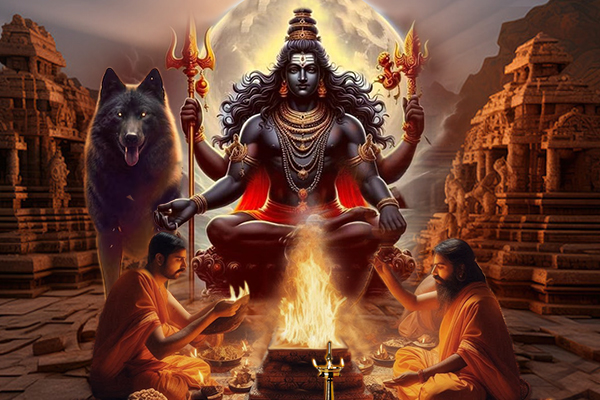
Kalashtami 2026 is being observed today, Friday, April 10, 2026, as a sacred Hindu occasion dedicated to Lord Shiva’s fierce manifestation, Kal Bhairav. The day falls on the Ashtami of Krishna Paksha and holds deep spiritual importance for devotees seeking protection, strength, and relief from negative influences.
The observance of Kalashtami 2026 rituals and significance is closely linked with Lord Kal Bhairav, who is worshipped as the guardian of Kashi and remover of obstacles. Devotees believe that prayers offered on this day help in overcoming persistent troubles, including health issues, financial setbacks, and negative energies.
One of the widely followed practices during Kalashtami 2026 rituals and significance is the black thread ritual. Devotees visit Kal Bhairav temples, apply sindoor from the deity’s feet on a black thread, and chant sacred mantras before wearing it on the wrist or neck for protection.
Kalashtami 2026 Rituals Include Lighting Four-Faced Mustard Oil Lamp for Protection and Evil Eye Relief
Another important tradition under Kalashtami 2026 rituals and significance includes lighting a mustard oil lamp with four faces at the home entrance. The soot from the lamp is often used to prepare kajal, which is believed to protect family members, especially children, from the evil eye.
Devotees also chant the powerful mantra “Om Kalabhairavaya Namah” at least 108 times while keeping a lamp lit. The Kalashtami 2026 rituals and significance emphasize spiritual discipline and faith in seeking divine protection and inner strength.
Traditional practices also include feeding jaggery bread to black dogs, avoiding tamasic food, and donating food and clothes to the needy. These acts are considered highly auspicious in Kalashtami 2026 rituals and significance and are believed to bring blessings and positive energy.
According to scriptures, Kal Bhairav is the protector of sacred spaces, and Kalashtami night is believed to enhance spiritual energies. The Kalashtami 2026 rituals and significance highlight how devotees use this time for reflection, prayer, and purification of mind and soul.
Overall, Kalashtami 2026 continues to be observed with deep devotion, as believers follow age-old traditions and rituals rooted in faith, spirituality, and cultural heritage.