
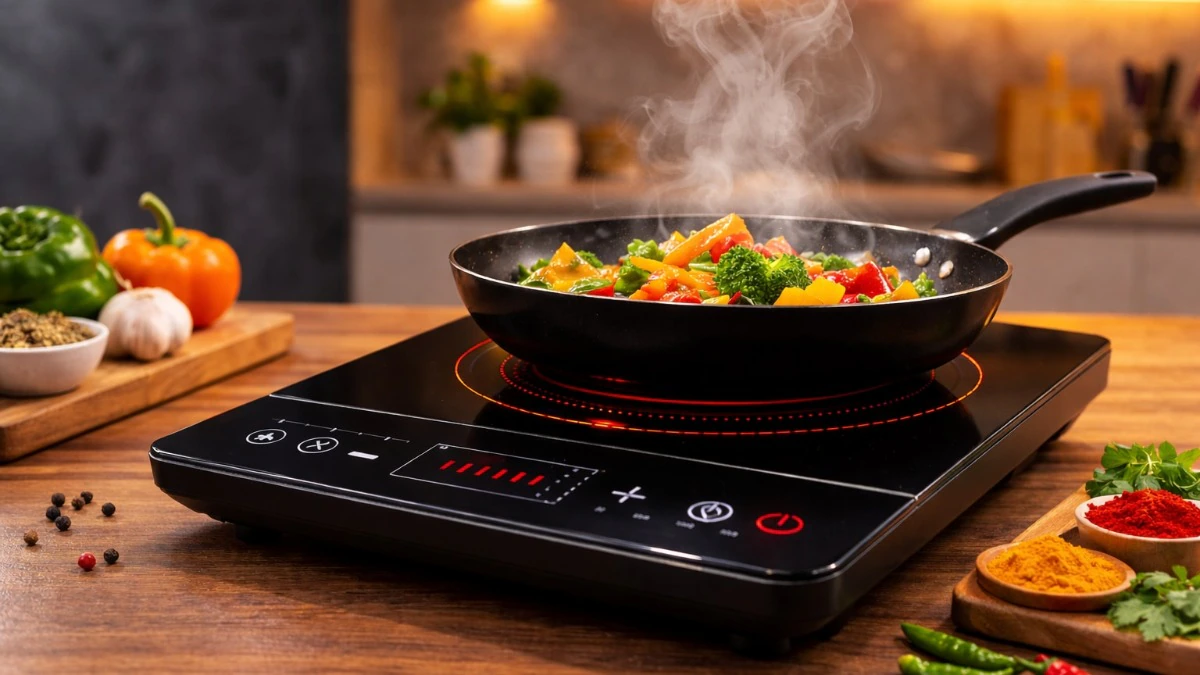
With global tensions continuing to affect energy supply chains, many households are beginning to feel the pressure through rising fuel prices and concerns about LPG availability. As a result, a growing number of families are considering the induction cooktop as an alternative cooking solution for their kitchens.
Unlike traditional gas stoves, an induction cooktop uses electromagnetic energy to directly heat cookware instead of producing an open flame. This technology allows food to cook faster while often being more energy-efficient. However, switching from gas to induction cooking is not as simple as plugging in a new appliance. Several lesser-known factors can affect how efficiently it works in your kitchen.
Before relying on an induction cooktop during a potential LPG shortage, here are five important things many first-time users tend to overlook.
1. Not All Steel Utensils Work On Induction
Many people assume that any metal utensil will work on induction, but that is not always true. Only cookware with magnetic properties can heat properly on an induction cooktop.
Certain stainless-steel utensils, aluminium vessels and traditional kadais may not respond to induction heating at all. A simple way to check compatibility is the magnet test. If a magnet sticks firmly to the bottom of the utensil, it is likely suitable for induction cooking.
Using incompatible cookware may prevent heating and can even trigger error messages on the appliance, which often confuses first-time users of an induction cooktop.
2. Flat Bottom Cookware Is Essential
Even if the utensil supports induction technology, the shape of its base plays a major role in cooking efficiency.
Induction heating works best when cookware sits perfectly flat on the cooking surface. Many traditional Indian utensils have curved or uneven bases, which reduces the contact area between the vessel and the cooktop.
This can result in uneven cooking, slower heating, or sudden power interruptions. For the best results with an induction cooktop, heavy-bottom cookware with a flat base is recommended.
3. Home Power Load Should Be Checked
Another important factor many households overlook is the electrical capacity of their homes.
An induction cooktop usually consumes between 1200 and 2000 watts of power. In older homes with outdated wiring systems, running multiple appliances at the same time—such as refrigerators, microwaves, or air conditioners—may cause circuit trips or voltage fluctuations.
Checking your home’s electrical load capacity before depending heavily on an induction cooktop can help prevent interruptions while cooking.
4. Indian Cooking Techniques May Need Adjustment
Some traditional cooking methods behave differently on induction compared to gas stoves.
Techniques such as deep frying, slow simmering, or roasting spices rely on the visual control of flame intensity on gas stoves. In contrast, induction appliances use preset temperature or power levels.
Also read : 7 Summer Foods to Boost Immunity and Stay Healthy During Extreme Heat
Because of this, recipes may need small adjustments when using an induction cooktop. Learning how to control heat through temperature settings instead of flames can improve cooking results and make the transition smoother.
5. Proper Placement Improves Performance
Where you place the appliance in your kitchen can also affect its performance.
Many people keep induction cooktops in tight corners or close to walls, but these appliances require proper airflow for ventilation. Blocking the ventilation vents may cause the cooktop to overheat and shut down automatically as a safety measure.
Placing the induction cooktop on a stable, heat-resistant surface with adequate surrounding space ensures better performance and extends the appliance’s lifespan.
A Reliable Alternative During LPG Shortages
With fuel supplies sometimes affected by global developments, having alternative cooking solutions can provide peace of mind. Induction cooking is becoming increasingly popular because it is clean, efficient, and convenient for modern households.
For families considering this switch, understanding how an induction cooktop works and preparing the kitchen accordingly can make the transition smooth and reliable.