
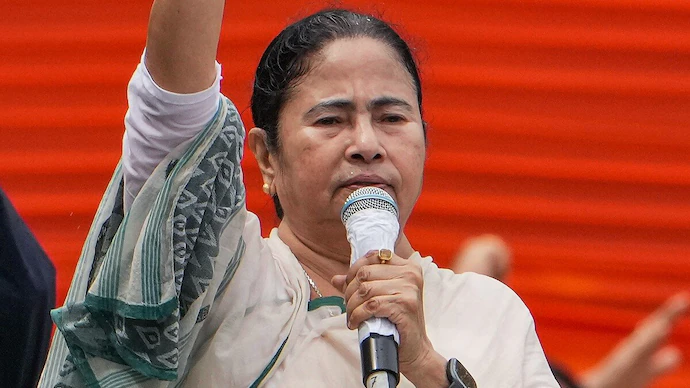
A major political standoff has emerged in India following the West Bengal Political Crisis 2026, after Mamata Banerjee refused to resign as Chief Minister despite losing the Assembly election. The results handed a clear majority to the Bharatiya Janata Party with 207 seats in the 294-member House, intensifying the crisis.
The unfolding West Bengal Political Crisis 2026 has now placed the state in an unprecedented constitutional situation, with possible intervention from the Governor and even the Supreme Court.
Refusal to Resign Deepens Political Uncertainty
At the center of the West Bengal Political Crisis 2026 is Mamata Banerjee’s refusal to step down from office. She has claimed that the election mandate was “manipulated” and does not reflect the true will of the people.
Banerjee stated that she will neither visit Raj Bhavan nor submit her resignation, asserting that she does not accept the defeat as legitimate. This has created a governance vacuum in the state.
Question of Constitutional Convention
Experts say the West Bengal Political Crisis 2026 highlights a rare situation in Indian democracy. While resignation after electoral defeat is a long-standing convention, it is not explicitly written in the Constitution.
Also read : BJP Government in West Bengal: Suvendu Adhikari Likely to Become Chief Minister After Historic Election Win
The core rule requires a Chief Minister to enjoy majority support in the legislative assembly. Since Election Commission results show a clear BJP majority, constitutional norms typically require resignation or floor test.
However, Banerjee has challenged the results, alleging irregularities in nearly 100 seats.
Governor and Article 164 in Focus
The West Bengal Political Crisis 2026 may now move to the constitutional role of RN Ravi. Under Article 164(1), the Governor holds authority over the Chief Minister’s continuation in office.
If Banerjee refuses to prove majority support in the Assembly, the Governor may invite the BJP to form the government or recommend President’s Rule in extreme circumstances.
Allegations Against Election Process
As the West Bengal Political Crisis 2026 escalates, Banerjee has accused the Election Commission of bias and collusion with the BJP. She also claimed voter roll manipulation and alleged misconduct during polling and counting.
She further stated that democracy is under threat due to alleged central interference and questioned recent election outcomes in other states as well.
State in Political Uncertainty
With the Assembly term nearing its end on May 7, the West Bengal Political Crisis 2026 has left the state in uncertainty.
No clear resolution has emerged yet, and the situation may now require constitutional authorities to step in to determine the next course of governance in West Bengal.