
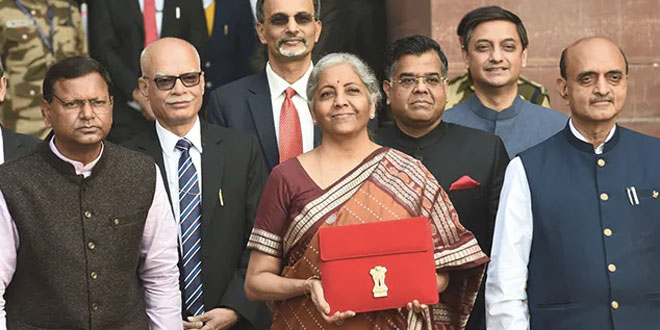
As Finance Minister Nirmala Sitharaman prepares to present the Union Budget for FY 2026-27 on February 1, it’s worth reflecting on how India’s most important economic document has evolved—from a colonial-era English record to a more accessible public instrument.
Colonial Beginnings
India’s first Union Budget was presented on April 7, 1860, by James Wilson, a finance member of the Indian Council and founder of The Economist. Entirely in English, the Budget reflected British administrative priorities and targeted a limited, English-speaking audience.
Post-Independence Shift
Following Independence, the Budget process started taking on a more indigenous form. The first Union Budget of independent India, presented by Finance Minister RK Shanmukham Chetty on November 26, 1947, marked a shift from colonial fiscal practices to a focus on national economic planning.
1955: Hindi Enters the Budget
A significant milestone occurred in 1955 under Finance Minister CD Deshmukh, when the Union Budget was printed in both English and Hindi for the first time, according to ICAI. This change recognized the need for key policy documents to reach a wider audience rather than remain confined to a narrow administrative elite. During his tenure, Deshmukh also strengthened India’s financial institutions, helped establish the Reserve Bank of India as a robust monetary authority, and played a central role in formulating the country’s first Five-Year Plans, which laid the groundwork for industrial and infrastructure development.
Also read : Meghalaya Police Probe ISIS Poster Threatening Land Vacancy in West Garo Hills
From Paper to Digital
The Budget transformation has continued in recent years. Since 2019, Nirmala Sitharaman has presented the Budget, introducing India’s first paperless Budget in 2021, delivered on a digital tablet inside a traditional bahi-khata-style pouch. She is set to present her ninth consecutive Budget on February 1, second only to former Prime Minister Morarji Desai in consecutive presentations. From its colonial English origins to linguistic inclusivity and digital delivery, the Union Budget’s journey reflects broader shifts in governance and public engagement in India.