
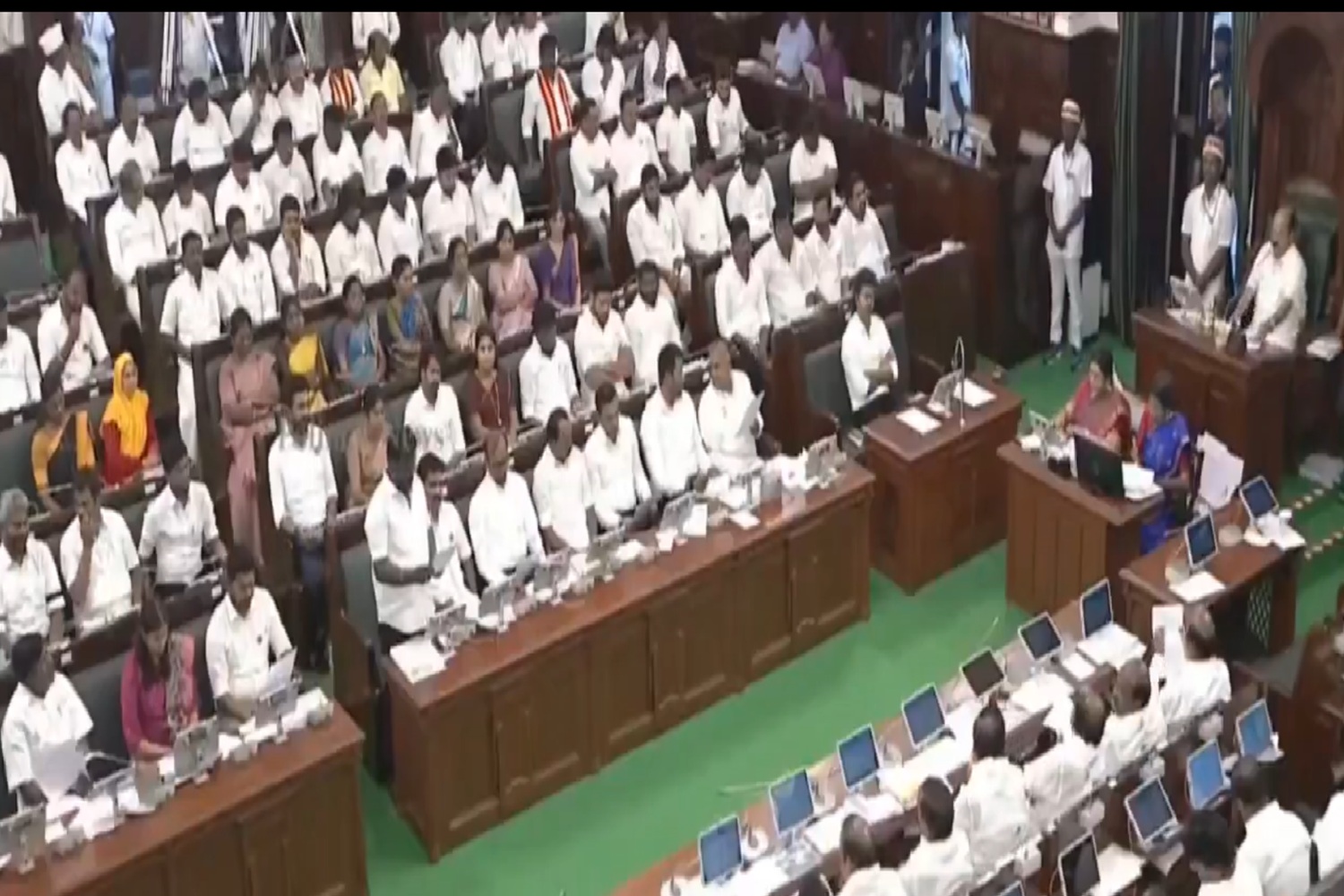
CHENNAI — The Tamil Nadu Legislative Assembly has unanimously adopted a resolution opposing the Centre’s proposed legislation.
Specifically, the Assembly urged the Union government to withdraw the FCRA Amendment Bill 2026 immediately.
School Education Minister Rajamohan introduced the official resolution during a crucial legislative session in Chennai.
Consequently, state lawmakers firmly registered their objections against the controversial national framework.
The resolution highlights deep concerns regarding international aid regulations for non-governmental organizations.
Furthermore, Tamil Nadu leaders argued that the new rules threaten charitable and educational institutions.
In particular, minority-run schools, hospitals, and elderly care homes could face severe administrative hurdles.
Therefore, the state government demanded comprehensive consultations with all regional stakeholders before proceeding further.
While acknowledging national security needs, Tamil Nadu insisted on protecting constitutionally guaranteed autonomy.
Thus, the legislative move establishes a major federal stand against centralized regulatory expansion.
Additionally, opposition members supported the core message of the state resolution.
However, some opposition leaders noted that national security requires strict financial vigilance.
Nevertheless, the House voted collectively to demand a complete legislative review.
Consequently, the formal resolution was officially forwarded to the Union Ministry of Home Affairs.
Also Read : CJP Founder Abhijeet Dipke Launches Nationwide Campaign to Improve Government Schools on August 15
Unanimous Assembly Resolution Urges Centre to Drop Legislation
State leaders emphasized that foreign aid regulations must respect existing constitutional principles.
Specifically, Minister Rajamohan noted that arbitrary cancellation of registration harms social welfare networks.
Furthermore, educational institutions managed by minority communities face elevated operational uncertainty under these provisions.
Healthcare facilities across rural districts also depend on international grants for infrastructure upgrades.
Consequently, any sudden suspension of foreign contribution certificates creates immediate operational disruptions.
Additionally, non-renewal of licenses prevents charitable organizations from serving underprivileged populations effectively.
Therefore, the state administration urged the central government to hold extensive stakeholder dialogues.
These consultations must include state governments, religious trusts, and medical charity representatives.
Moreover, the resolution insists that transparency measures should not penalize lawful non-profit entities.
Instead, regulatory frameworks must balance security requirements with fundamental social welfare needs.
Hence, Tamil Nadu requested immediate policy reconsideration before the bill moves forward in Parliament.
Indeed, public interest groups across the state welcomed the decisive legislative action.
They noted that small non-governmental groups lack resources to navigate complex central compliance processes.
Consequently, simplified statutory procedures are essential to protect legitimate charity operations.
Provisions Governing Asset Takeovers and Civil Court Powers Spark Opposition
Importantly, the proposed legislation creates a specialized Designated Authority with extensive administrative powers.
This authority receives power to take control of foreign-funded assets upon certificate cancellation.
Additionally, non-renewal, expiration, or voluntary surrender of registration triggers automatic asset seizure.
Consequently, the government can transfer or sell those assets to official agencies.
Minister Rajamohan emphasized that affected institutions must receive fair opportunities to present their case.
Otherwise, property rights and natural justice principles face significant erosion under the current draft.
Moreover, the FCRA Amendment Bill 2026 grants civil court authority to these regulatory officials.
Therefore, charitable groups losing registration could permanently forfeit properties built through past donations.
Furthermore, automatic deemed cessation rules eliminate necessary administrative appeal buffers for NGOs.
Consequently, social welfare organizations risk sudden closure without adequate legal remedy.
Hence, state representatives urged the Centre to reconsider these stringent operational clauses.
Additionally, legal experts caution that asset disposal provisions may face severe constitutional challenges.
Property rights protected under Article 300A require clear legal safeguards against arbitrary state acquisition.
Therefore, legislative amendments must include robust judicial review mechanisms for affected organizations.
Safeguarding Federal Rights and Minority Educational Institutions
Crucially, the state resolution asserts that regulatory procedures must strictly align with constitutional principles.
The Tamil Nadu administration emphasized that federalism requires active participation from state governments.
Additionally, minority educational institutions provide vital social services to marginalized local communities.
However, strict compliance hurdles under the FCRA Amendment Bill 2026 could disrupt ongoing operations.
Cancellation or non-renewal of certificates severely hampers hospital funding and student scholarship programs.
Consequently, vulnerable populations reliant on welfare networks could suffer immediate financial distress.
Furthermore, the state government stressed that legitimate organizations should not face punitive actions.
Instead, regulatory oversight must maintain proportionality without infringing upon fundamental property rights.
Therefore, state leaders advocated for balanced reforms that protect legitimate charitable endeavors.
Moreover, legislative members called for binding legal safeguards to protect religious and social trusts.
In summary, Tamil Nadu insists that federal principles must guide national regulatory policy.
Furthermore, state officials argued that central oversight should not override local governance authority.
Joint consultation mechanisms can foster better coordination between central and state monitoring agencies.
Consequently, institutional autonomy remains protected while preventing potential misuse of foreign funds.
Balancing National Security Oversight with Constitutional Rights
Meanwhile, state officials reiterated their steadfast commitment to maintaining robust national security standards.
Indeed, Minister Rajamohan clarified that Tamil Nadu does not oppose preventing fund misuse.
State authorities fully support measures that stop money laundering and illicit financial diversions.
However, regulations must distinguish between illegal activities and genuine humanitarian contributions.
The state argues that the FCRA Amendment Bill 2026 currently lacks necessary nuanced distinctions.
Consequently, well-intentioned medical facilities and research centers face unintended operational disruption.
Therefore, the resolution urges a balanced approach between security and constitutional freedoms.
Specifically, legislative leaders requested multi-stakeholder dialogues involving religious, educational, and medical representatives.
Through broad consensus, the Union government can establish transparent financial rules without harming charities.
Ultimately, the unanimous resolution sends a powerful signal regarding state rights and institutional autonomy.
Moving forward, all eyes remain on the Union government for its legislative response.
Meanwhile, civic groups plan regional discussions to raise awareness about the proposed amendments.
Policy analysts suggest that constructive dialogue can bridge the gap between central control and institutional autonomy.
Therefore, nationwide consultations offer the best path toward balanced and equitable legislation.
Key Summary of Tamil Nadu’s Resolution on the FCRA Bill
The table below outlines the major objections raised by the Tamil Nadu Legislative Assembly regarding the proposed federal amendments:
| Parameter / Issue Area | Assembly Resolution Objection | Proposed Federal Amendment Provision |
| Asset Takeover Powers | Opposes government control over assets upon license expiry | Vests foreign-funded assets in a Designated Authority |
| Impact on Minority Institutions | Threatens autonomy of schools, hospitals, and trusts | Increases central supervisory oversight on aid recipients |
| Principles of Natural Justice | Demands fair hearing before asset management transfers | Imposes deemed cessation on expiry or renewal refusal |
| Federal Coordination | Urges mandatory consultations with state governments | Centralizes investigation clearance and authority |
| National Security Stance | Supports anti-misuse rules while protecting charities | Tightens operational rules to curb illegal fund diversions |