
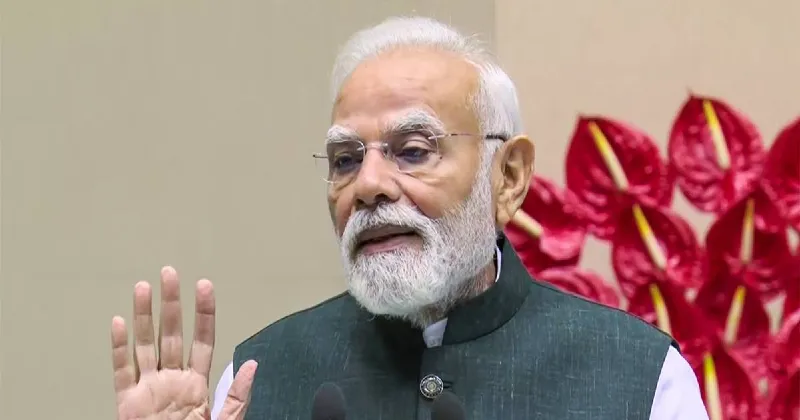
PM Modi to Attend ASEAN Summit Virtually
Prime Minister Narendra Modi will not travel to Malaysia for the upcoming ASEAN (Association of South East Asian Nations) leaders’ summit, government sources confirmed. Instead, the Prime Minister will participate virtually, citing domestic commitments linked to India’s festive calendar.
The announcement was first made by Malaysian Prime Minister Anwar Ibrahim, who stated that he received a phone call from PM Modi conveying his inability to attend in person. According to Ibrahim, the Indian leader expressed regret and explained that his decision was guided by the ongoing Diwali and Chhath Puja celebrations, which hold significant cultural and political importance.
“Prime Minister Modi conveyed his warm wishes for the success of the ASEAN summit and reaffirmed India’s commitment to strengthening regional cooperation,” Anwar Ibrahim said on Thursday.
The decision effectively rules out any possibility of a meeting between PM Modi and US President Donald Trump, who were widely expected to hold talks on the sidelines of the ASEAN summit in Kuala Lumpur.
Domestic Priorities Ahead of Key Bihar Elections
According to government insiders, Modi’s choice to skip the overseas trip was influenced by the Chhath festival, which falls on October 28, and its timing ahead of the Bihar Assembly elections. Bihar will vote in two phases — on November 6 and November 11.
The Chhath Puja, one of the most important festivals in Bihar and eastern Uttar Pradesh, is seen as a politically significant period. Leaders across party lines often stay in their constituencies during the festival to connect with voters and show cultural solidarity.
“Given the election atmosphere in Bihar, the Prime Minister’s presence in India during the festive season sends a strong cultural and political message,” said a senior BJP functionary familiar with the matter.
The Diwali celebrations, followed closely by Chhath, are considered pivotal in shaping public sentiment ahead of the polls. Modi’s decision, therefore, aligns with the government’s broader political strategy to remain closely engaged with domestic events at a critical juncture.
Missed Opportunity For Modi-Trump Meeting
The decision not to travel also precludes a potential meeting between PM Modi and US President Donald Trump, which was being keenly anticipated by diplomatic observers. The two leaders were expected to discuss trade relations, defense cooperation, and Indo-Pacific strategy on the sidelines of the ASEAN gathering.
However, sources within the Indian government noted that trade negotiations between India and the United States are still ongoing, and officials believe a bilateral meeting would be “more meaningful once an agreement is finalized.”
“Both sides are engaged in detailed discussions over a comprehensive trade framework. There is a shared view that a high-level meeting should happen when both countries are ready to announce tangible outcomes,” one source said.
India and the US have been working toward resolving issues related to tariff barriers, technology cooperation, and digital trade — all central to their evolving economic relationship.
Despite Modi’s absence from Kuala Lumpur, officials maintained that India’s diplomatic engagement with ASEAN and the United States remains strong, with virtual dialogues and ministerial meetings continuing as planned.
Strengthening ASEAN Ties Virtually
India’s participation in the ASEAN summit is considered crucial given its Act East Policy and growing focus on the Indo-Pacific region. Modi’s virtual presence will ensure continuity in discussions on regional connectivity, maritime cooperation, and digital partnerships.
Officials have confirmed that India will reiterate its support for a free, open, and rules-based Indo-Pacific, emphasizing respect for sovereignty and regional stability.
“India remains deeply committed to ASEAN centrality,” an external affairs spokesperson said. “The Prime Minister’s virtual participation will reaffirm our dedication to advancing shared prosperity and security in the region.”
Modi has consistently underscored the strategic importance of ASEAN, describing it as a “cornerstone of India’s Indo-Pacific vision.” His earlier in-person attendances at ASEAN summits, including those in Singapore and Thailand, have helped strengthen India’s role in regional decision-making.
What Lies Ahead
While Modi’s absence may alter the tone of bilateral interactions at the summit, analysts believe it will have limited long-term impact on India’s foreign relations. Virtual participation has become common practice since the COVID-19 pandemic, allowing leaders to maintain engagement while managing domestic priorities.
Diplomatic sources added that a Modi-Trump bilateral meeting could be rescheduled later this year once trade negotiations reach an advanced stage.
Meanwhile, Indian ministers and senior officials are expected to represent the country in other ASEAN-related forums, ensuring that India’s diplomatic visibility remains strong in Southeast Asia.