
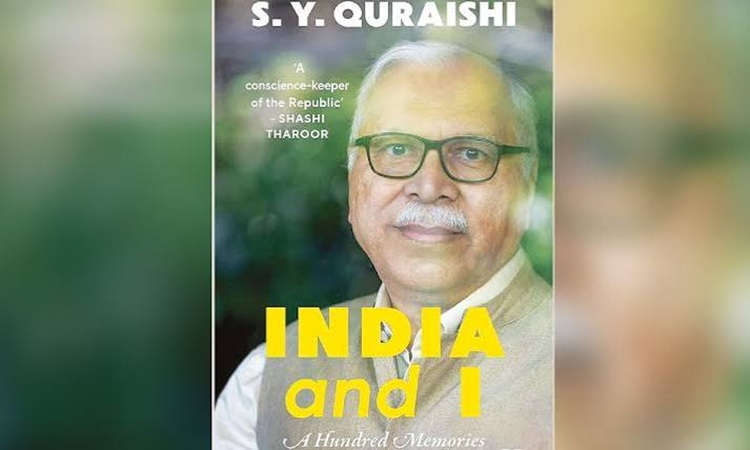
NEW DELHI : A rare, historic dialogue between the Rashtriya Swayamsevak Sangh and prominent minority intellectuals has triggered extensive national discussion. Former Chief Election Commissioner SY Quraishi detailed these interactions in his latest book, titled India and I: A Hundred Memories, Not a Memoir. Consequently, the public disclosure surrounding the Mohan Bhagwat RSS Muslim leaders meeting has captured significant political interest across the country.
The highly sensitive meeting originally occurred on August 22, 2022, following growing reports of communal insecurity. Quraishi participated as part of a five-member delegation that included former Delhi Lieutenant Governor Najeeb Jung and philanthropist Saeed Sherwani. During the closed-door interaction, the minority representatives conveyed deep anxieties regarding rising public incidents of targeted violence.
Read More : Gold Rate Today: 24K, 22K and 18K Gold Prices Decline…
The Assurance of Constitutional Supremacy
Crucially, the RSS chief responded to these urgent concerns with a firm message regarding the structural foundation of the nation. Quraishi writes that the chief assured the visiting delegation that the Constitution of India remained absolutely supreme. Furthermore, he emphasized that the organization viewed India as an inherently inclusive nation where all communities belong.
Additionally, the dialogue featured mutual acknowledgments regarding religious harmony and cultural sensitivities. The former poll chief notes that the delegation openly agreed that minority communities must genuinely respect Hindu sentiments regarding the cow. Reflecting on the historic Mohan Bhagwat RSS Muslim leaders conversation, Quraishi explicitly advocated for sustained engagement over hostile isolation. He firmly noted that while silence inevitably divides communities, transparent dialogue remains the only viable way forward.
Below is the verified structural breakdown of the prominent delegation members involved in the historic 2022 dialogue:
| Delegation Member | Professional Background / Public Role |
| Dr. S.Y. Quraishi | 17th Chief Election Commissioner of India |
| Najeeb Jung | Former Lieutenant Governor of Delhi |
| Saeed Sherwani | Prominent Industrialist and Philanthropist |
| Lt. Gen. Z.U. Shah | Former Vice Chancellor, Aligarh Muslim University |
Defending the Soul of Indian Democracy
Beyond the communal outreach, the newly published memoirs have acquired massive political relevance during the current legislative session. The opposition has launched aggressive campaigns regarding institutional independence, making Quraishi’s historical accounts incredibly timely. Specifically, the book revisits a dramatic 2012 confrontation involving the Prime Minister’s Office and internal Congress party dynamics.
The sequential breakdown below highlights the chronological progression of key constitutional flashpoints documented in the memoir:
[Jan 2012: Salman Khurshid Triggers MCC Row in UP]
│
▼
[Feb 2012: PM Manmohan Singh’s Emotional ECI Meeting]
│
▼
[Aug 2022: Historic RSS-Muslim Intellects Dialogue]
│
▼
[July 2026: Quraishi Releases “India and I” Memoir]
Quraishi recalls a private meeting with former Prime Minister Dr. Manmohan Singh after complaining about aggressive rhetoric from certain Union ministers. Visibly distressed by the situation, Dr. Singh stated he would rather take extreme personal measures than allow the poll panel to doubt his integrity. The former Prime Minister then delivered a profound statement, calling the poll watchdog the very soul of domestic democracy. He warned that if the nation loses that institutional credibility, it loses everything entirely.
Identity, Governance, and Tough Institutional Decisions
Moreover, the text addresses the complex intersection of personal faith and civil services in contemporary India. As the first Muslim IAS officer in the Haryana cadre, Quraishi encountered deep systemic skepticism early in his career. For instance, senior officials strongly advised him against accepting a challenging administrative posting in the socio-economically backward district of Mewat.
Nevertheless, he prioritized developmental governance, ensuring his religious background never overshadowed his objective bureaucratic output. The memoir also recalls a sharp public dispute with a parliamentarian who tried to label him as a partisan official. Quraishi firmly corrected the narrative, stating that he was a constitutional commissioner who simply happened to practice Islam.
The Legacy of Institutional Integrity
Finally, the book re-examines controversial rulings, including the famous 2012 directive to cover public elephant statues in Uttar Pradesh. The poll panel issued the order during the assembly elections because the statues represented the ruling party’s political symbol. Although heavily criticized by political actors at the time, the Allahabad High Court later fully upheld the decision.
Ultimately, the historic Mohan Bhagwat RSS Muslim leaders meeting underscores a growing institutional effort to preserve national harmony. While Quraishi avoids direct criticism of modern officials, he notes that modern poll bodies face massive pressure to sustain public trust. The ongoing reception of his book shows that transparent discussions remain crucial for defending democratic stability.