
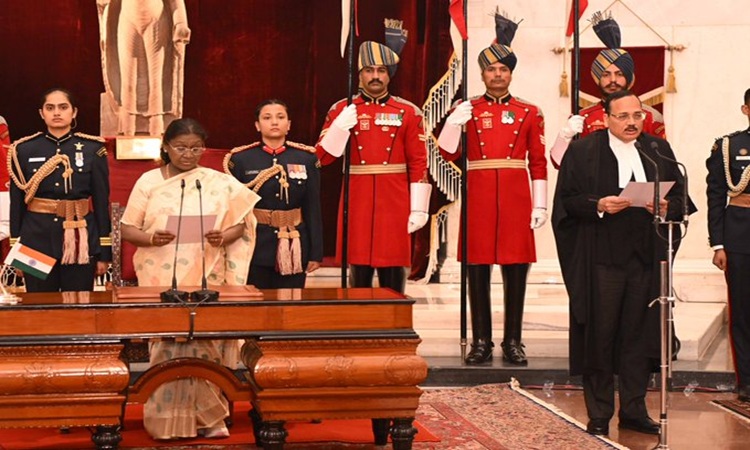
Justice Surya Kant Takes Oath as Chief Justice of India
Justice Surya Kant on Monday formally took oath as the 53rd Chief Justice of India. The ceremony took place at Rashtrapati Bhavan, where President Droupadi Murmu administered the oath. His appointment marks the start of a nearly 15-month tenure, which will run until February 9, 2027, when he turns 65.
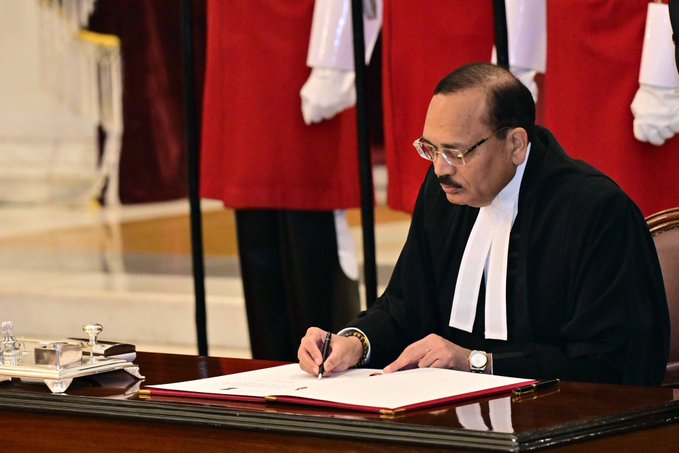
Justice Surya Kant Takes Oath as Chief Justice of India
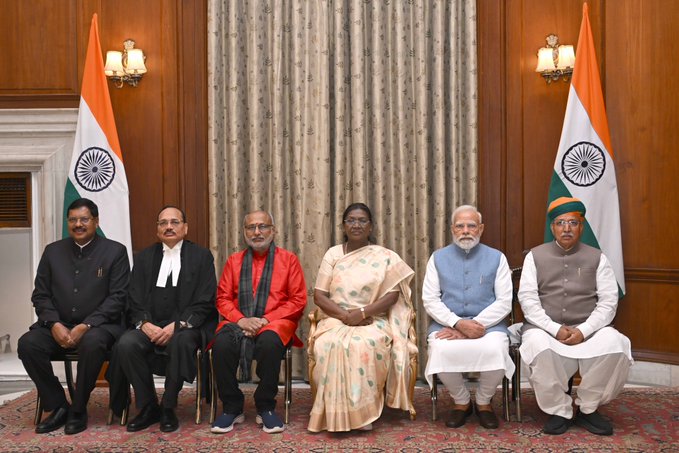
Prime Minister Narendra Modi, Lok Sabha Speaker Om Birla, Union Home Minister Amit Shah, Defence Minister Rajnath Singh and Commerce Minister Piyush Goyal attended the ceremony. Their presence highlighted the significance of the transition at the top of India’s judiciary.
Justice Kant succeeds Justice BR Gavai, who demitted office on Sunday evening. His elevation is seen as a continuation of the Supreme Court’s focus on key constitutional matters, administrative reforms and steady judicial leadership.
A Tenure Shaped by Key Constitutional Interventions
Justice Surya Kant has been part of several historic benches that shaped national discourse. His judicial record spans sensitive cases related to federal structure, electoral transparency, gender rights and national security.
Justice Surya Kant Takes Oath as Chief Justice of India
He was a member of the Constitution Bench that upheld the abrogation of Article 370. Moreover, the bench placed the colonial-era sedition law in abeyance and directed that no new FIRs be filed until the law is reconsidered. This intervention drew wide attention as it protected citizens from potential misuse of the law.
Additionally, Justice Kant was part of the bench that handled the presidential reference on the powers of Governors and the President in matters related to state bills. The ruling clarified how constitutional authorities should function when they receive bills from state legislatures.
He also directed the Election Commission to disclose the names of 65 lakh voters excluded from Bihar’s draft rolls. This order stressed transparency and protected voter rights. In another key judgment, he reinstated a woman sarpanch who was removed unlawfully, citing gender bias in the action.
Furthermore, he passed a landmark order mandating that one-third of seats in bar associations, including the Supreme Court Bar Association, be reserved for women. This ruling aims to boost gender diversity in legal institutions.
Major Rulings on National Security and Public Accountability
Justice Kant served on the bench that appointed a committee led by Justice Indu Malhotra to investigate the security breach during Prime Minister Narendra Modi’s 2022 Punjab visit. The bench observed that such matters required “a judicially trained mind,” stressing the need for independent examination.
He upheld the One Rank-One Pension (OROP) scheme, bringing clarity to a long-pending demand from veterans. He continues to hear matters filed by women officers seeking parity in permanent commission appointments. His consistent defence of fairness in service conditions has shaped several important rulings.
Justice Kant also served on the seven-judge bench that overruled the 1967 Aligarh Muslim University judgment. He was part of the bench dealing with the Pegasus spyware case. The court held that the state cannot claim a “free pass under the guise of national security” and stressed that civil liberties must remain protected.
A Journey from Hisar to the Country’s Top Judicial Post
Born on February 10, 1962, in Hisar, Haryana, Justice Surya Kant’s journey to the top post reflects years of steady progress. He completed his Master’s degree in law from Kurukshetra University, securing “first class first.” His early legal practice began in a small town before he rose through the ranks to serve as Chief Justice of the Himachal Pradesh High Court.
Known for his calm approach and clarity in court, Justice Kant has often spoken about dealing with public scrutiny. He once said: “Frankly speaking, I call social media ‘unsocial media’ and I do not feel pressured by online comments. Fair criticism is always acceptable.”
As he assumes office, legal experts expect him to steer the Supreme Court through key constitutional questions and judicial reforms. His past rulings suggest a focus on civil liberties, transparency and institutional accountability. With several major cases pending before the court, his leadership will play a crucial role in shaping India’s legal landscape.