
Indian Army’s Trishakti Corps Pioneers MUM-T Capability in Northeast with SARVSHAKTI Exercise
Indian Army Breaks New Ground with MUM-T Capability in Northeast: Trishakti Corps Leads the Way
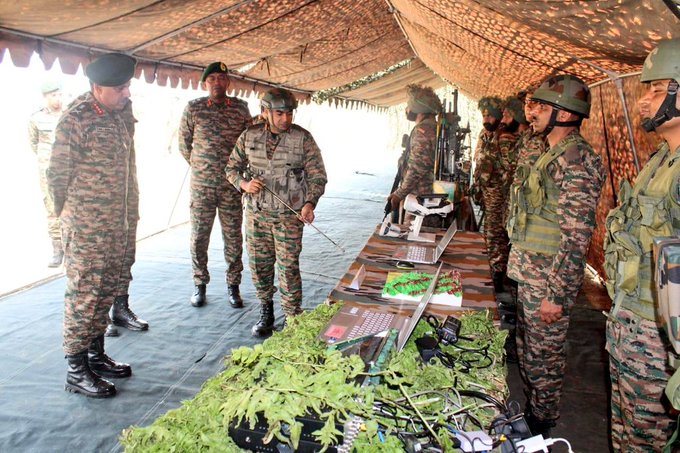
In a monumental development in modern military operations, the Indian Army’s Trishakti Corps has successfully demonstrated the Manned-Unmanned Teaming (MUM-T) capability during the recently concluded Exercise SARVSHAKTI in the strategically significant Northeastern sector of India. This successful exercise marks a defining moment in the Army’s efforts to modernize and enhance its battlefield capabilities, aligning with the vision of Multi-Domain Operations (MDO).
Indian Army’s Trishakti Corps Pioneers MUM-T Capability in Northeast with SARVSHAKTI Exercise
What is MUM-T and Why is it a Game-Changer?
Manned-Unmanned Teaming (MUM-T) refers to the seamless integration of human operators with autonomous unmanned systems, such as drones and AI-driven platforms, in military operations. The core advantage of MUM-T lies in the ability of soldiers to collaborate with unmanned assets for tasks like real-time reconnaissance, surveillance, and target acquisition, thus drastically enhancing situational awareness while accelerating the decision-making process.
For the Indian Army, this technology not only represents a leap in operational capabilities but also highlights the crucial role of AI-enabled warfare in modern military strategies. By leveraging cutting-edge unmanned systems, the Trishakti Corps has taken a bold step towards future-ready warfare, ensuring speed, precision, and adaptability on the battlefield.
A Historic Moment for Indian Defence
The exercise, conducted in the Northeast’s rugged terrain, was a live tactical validation of MUM-T integration. As a result, it underscored the Indian Army’s readiness to incorporate advanced technologies into its core operational frameworks. This is a clear demonstration of the Army’s ability to adapt to changing warfare landscapes, characterized by a greater reliance on technology-driven solutions.
Speaking about the significance of the exercise, Lt Gen Zubin A Minwalla, the General Officer Commanding of Trishakti Corps, said, “The battlefield of tomorrow demands adaptability, speed, and seamless integration of man and machine. Exercise SARVSHAKTI is a proud milestone in that journey. The successful validation of MUM-T is not just a technological achievement, but a testament to the Indian soldier’s ability to evolve with the times.”
This achievement has further bolstered India’s position in the evolving global defence landscape, where technological advancements play an ever-increasing role in strategic success. The integration of autonomous systems with traditional combat assets was particularly notable, as it demonstrated how AI platforms can complement human intelligence, creating a formidable force capable of tackling a range of modern security challenges.
Key Highlights of Exercise SARVSHAKTI
The SARVSHAKTI Exercise saw the successful field-level validation of MUM-T, with the following key highlights:
- Real-Time Intelligence Gathering: Human operators worked in tandem with unmanned systems to collect critical intelligence, providing operational commanders with enhanced awareness of the battlefield.
- Autonomous System Integration: For the first time, autonomous systems, including drones and AI platforms, were seamlessly integrated with traditional manned combat assets to boost operational tempo.
- Boosted Battlefield Awareness: The MUM-T capability allowed for enhanced situational awareness by combining real-time data from unmanned systems with human judgment, leading to quicker and more informed decision-making.
These elements underscore the growing importance of AI-driven platforms in modern warfare, where the combination of human intellect and machine efficiency can achieve results that were previously unattainable.
Atmanirbhar Bharat and Self-Reliance in Defence
The SARVSHAKTI Exercise also aligns with India’s larger vision of Atmanirbhar Bharat, or self-reliance in defence. By incorporating indigenous AI-driven platforms into the Army’s operational framework, the exercise underscored India’s commitment to self-sufficiency and the development of cutting-edge military technologies within the country.
This approach is in line with the government’s push towards indigenous defence production, with a focus on creating technology that is developed and manufactured within India. The integration of homegrown AI systems and autonomous platforms during SARVSHAKTI is a testament to India’s growing capabilities in defence technology.
The Future of Warfare: India’s Role in Shaping It
As global conflicts become more tech-centric, the Indian Army is positioning itself at the forefront of a new era in military operations. By integrating manned and unmanned systems, the Indian Army is not only adapting to new-age security challenges but is also setting a global benchmark for integrated and tech-empowered operations across all domains.
India’s growing emphasis on AI-driven warfare and unmanned systems is poised to significantly impact future military operations, especially in terms of speed, precision, and effectiveness. With Trishakti Corps leading the way, the Indian Army is now more prepared than ever to dominate the battlefield of tomorrow, employing state-of-the-art technology to stay ahead of adversaries.
Looking Ahead: The Road to Future-Ready Military Operations
With SARVSHAKTI marking just one of many future-focused exercises, the Indian Army’s strategic shift towards integrated warfare is set to reshape the nature of combat. The ongoing commitment to technology integration and AI innovation will ensure that India is not only prepared for the challenges of today but is also equipped to face the complexities of tomorrow’s conflicts.
As global security threats become increasingly intertwined with cyber warfare, drone operations, and AI-driven combat, the success of MUM-T validates India’s growing technological prowess. This exercise also paves the way for further advancements in the Army’s operational capabilities, setting the stage for future success in a rapidly evolving military environment.