
India Achieves Major Milestone in High Speed Ejection System Technology
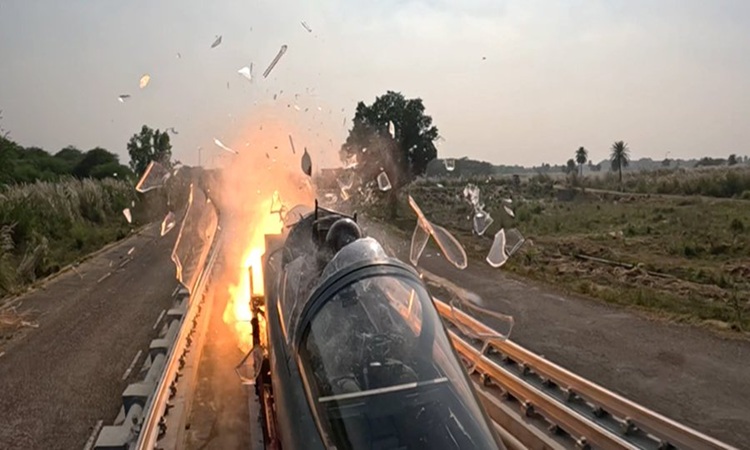
India has taken a major step in aviation safety with a successful test of a high-speed fighter jet escape system. The Defence Research and Development Organisation (DRDO) conducted the crucial trial at the Rail Track Rocket Sled (RTRS) facility in Chandigarh. The test propelled a Light Combat Aircraft (LCA) forebody to fighter-jet speeds with solid rocket motors. Moreover, the trial confirmed canopy severance, ejection sequencing, and complete recovery of all systems.
Defence Research and Development Organization (DRDO) has successfully conducted a high-speed rocket-sled test of fighter aircraft escape system at precisely controlled velocity of 800 km/h- validating canopy severance, ejection sequencing and complete aircrew-recovery at Rail… pic.twitter.com/G19PJOV6yD
— रक्षा मंत्री कार्यालय/ RMO India (@DefenceMinIndia) December 2, 2025
Officials from the Indian Air Force (IAF), Aeronautical Development Agency (ADA), and Hindustan Aeronautics Limited (HAL) witnessed the test. Their involvement added strong technical validation to the achievement. Defence Minister Rajnath Singh also praised the milestone. He said this breakthrough strengthens India’s push for a secure and self-reliant aviation ecosystem.
Furthermore, DRDO noted that the indigenously developed test system places India among countries with advanced in-house escape-technology capabilities. This achievement supports current and future fighter jet programs, including the LCA Tejas fleet and the upcoming AMCA and LCA-Mk2 platforms.
A Major Boost for Tejas and India’s Self-Reliant Defence Vision
The test carries deep significance for India’s defence preparedness. High-speed ejection systems are critical for pilot safety. They must work under intense pressure, rapid acceleration, and extreme conditions during emergencies. Therefore, the Chandigarh test marks a major leap in safety technology.
Additionally, the successful test aligns with the government’s “Aatmanirbhar Bharat” mission. India has been accelerating efforts to reduce dependence on imported aviation safety systems. With this milestone, the country strengthens its indigenous ecosystem for high-performance aircraft.
DRDO engineers explained that the test validated all critical elements. These included canopy blasting, seat ejection timing, and deployment of the parachute system. The RTRS facility, one of the few such complexes worldwide, enables realistic high-speed testing without airborne risk.
The LCA Tejas program stands to gain significantly. The escape system is vital for pilots who fly high-speed manoeuvres during missions or training. Also, the achievement supports export plans, since global buyers often prioritise strong safety credentials.
What This Achievement Means for India’s Defence Future
The test signals India’s emerging capability to develop and validate high-end aviation technologies. Countries with such capabilities belong to an elite group. Moreover, the ability to design, test, and refine escape systems domestically gives India strategic independence.
Industry experts believe this success will assist the next generation of fighter jets. The Advanced Medium Combat Aircraft (AMCA) project and other upcoming platforms will rely on standardized safety systems. As a result, this achievement reduces timelines and boosts confidence for future airframes.
Additionally, the presence of the IAF and HAL teams during the trial highlights strong inter-agency collaboration. Such cooperation speeds up decision-making and helps integrate safety features into frontline aircraft more efficiently.
Future Steps and Growing Global Acceptance
The next phase will include more trials under various speeds and conditions. DRDO aims to refine the ejection-seat response for different mission profiles. Engineers are also working on improved sensors and lightweight modules.
Furthermore, this test increases international interest in India’s defence technologies. Countries evaluating the Tejas aircraft will note these advancements. Strong safety performance often plays a decisive role during final selection.
With this milestone, India reinforces its place among global defence innovators. It also boosts morale across the aerospace community, which has been working toward this goal for years.