
India Rejects Mediation on Kashmir, Terrorism: Modi Clarifies to Trump
India Rejects Mediation on Kashmir, Terrorism: Modi Reaffirms to Trump in Phone Call
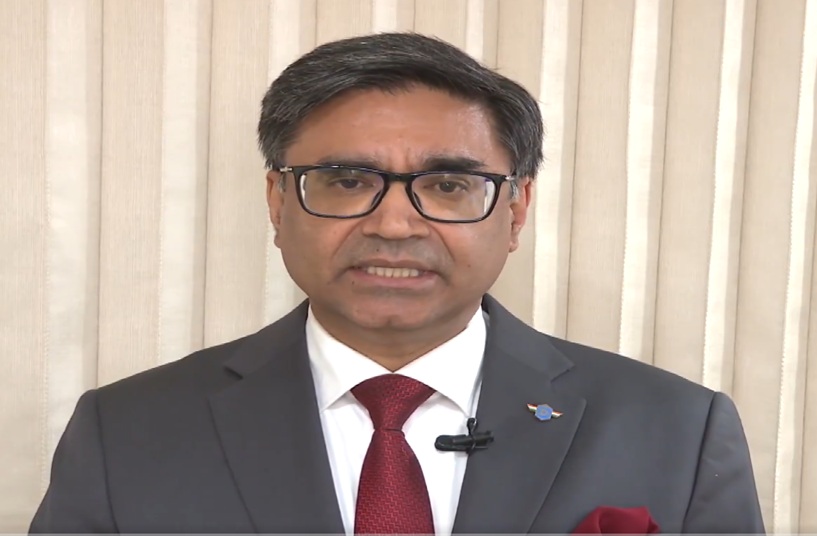
In a firm diplomatic statement, India has categorically rejected any mediation efforts on matters of Kashmir and terrorism, reiterating its long-standing policy of handling such issues bilaterally. This was conveyed during a 35-minute phone call between Prime Minister Narendra Modi and US President Donald Trump, as confirmed by Foreign Secretary Vikram Misri on Tuesday.
Foreign Secretary Vikram Misri announced that Prime Minister @narendramodi had a telephonic conversation with US President #DonaldTrump, which lasted approximately 35 minutes. During the discussion, PM Modi briefed President Trump about Operation Sindoor. PM Modi clarified that… pic.twitter.com/1RuPVc778V
— DD News (@DDNewslive) June 18, 2025
The conversation, initiated at Trump’s request after their planned meeting on the sidelines of the G7 Summit was cancelled, touched upon several crucial geopolitical issues including Operation Sindoor, India-Pakistan tensions, the Israel-Iran conflict, and Quad’s Indo-Pacific strategy.
Modi Rejects Mediation Claim, Asserts India’s Sovereignty
Addressing the media, Foreign Secretary Misri was unequivocal:
“India does not and will never accept mediation. There is complete political consensus on this in India.”
This statement directly contradicts claims made by some US officials suggesting that President Trump played a role in brokering the recent ceasefire between India and Pakistan. Misri clarified that the ceasefire was initiated at Pakistan’s request and granted by India through existing military communication channels.
Clarifying the Pakistan Conflict and Operation Sindoor
Prime Minister Modi detailed the events following the April 22 terrorist attack in Pahalgam, emphasizing India’s firm stance against terrorism. He explained to Trump that the airstrikes on May 6–7 targeted only terrorist camps in Pakistan and Pakistan-occupied Kashmir, and were carefully calibrated to avoid escalation.
“India’s response was precise and non-escalatory. We warned Pakistan of severe retaliation in case of further aggression,” Misri quoted the Prime Minister.
Modi also referenced Vice President Vance’s warning on May 9 about a possible Pakistani offensive, to which India responded with a strong counter-attack on May 9–10, reportedly disabling several Pakistani military airbases.
No Trade Deal, No Mediation Proposal: Modi
Foreign Secretary Misri categorically denied any discussion on a US-India trade deal or a US proposal to mediate during the period of military escalation.
“There was no dialogue at any level regarding mediation or trade-offs,” Misri said. “The decision to cease operations was communicated directly through military channels.”
This marks a crucial rebuttal to suggestions from some quarters in Washington that a behind-the-scenes diplomatic negotiation had taken place involving trade or mediation incentives.
Trump Expresses Support Against Terrorism
President Trump, according to Misri, listened attentively to the Prime Minister’s account and reaffirmed US support for India’s ongoing efforts against terrorism. He also expressed condolences for the Pahalgam attack and praised India’s restraint and strategic clarity in dealing with Pakistan.
Global Issues: Quad, Israel-Iran Conflict, and Russia-Ukraine
The leaders also touched upon ongoing global conflicts, including the rising tensions between Israel and Iran, and the Russia-Ukraine war. Both leaders emphasized the need for direct dialogue and de-escalation in global hotspots.
On the Indo-Pacific region, both reaffirmed their commitment to the Quad alliance and agreed on its increasing importance in maintaining regional stability.
“Prime Minister Modi invited President Trump to visit India for the next Quad Summit, and President Trump accepted the invitation,” Misri confirmed.