
India Rejects China’s Call to End Taiwan Ties
India has firmly responded to China’s reported request to stop engaging with Taiwan, stressing that its ties with Taipei are centered on economic, technological, and cultural cooperation. According to government sources, there is no change in New Delhi’s long-standing stance on Taiwan.
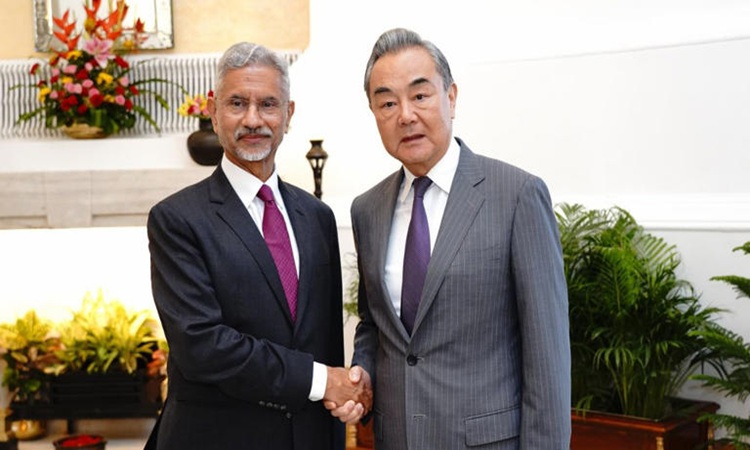
The clarification came after Chinese media claimed that External Affairs Minister S. Jaishankar reaffirmed Taiwan as part of China during talks with his Chinese counterpart, Wang Yi, in New Delhi on Monday. However, officials insisted Jaishankar made no fresh articulation on the Taiwan issue.
“Like the rest of the world, India has a relationship with Taiwan that focuses on economic, technological, and cultural ties. We intend to continue it,” PTI quoted sources as saying.
India Questions China’s Position
The dispute has gained further traction after ANI reported that New Delhi questioned Beijing’s request to avoid engagement with Taipei. Sources highlighted that China itself continues strong commercial and cultural exchanges with Taiwan.
“China itself is dealing with the areas that we are—economic, technological, cultural. So how is that possible?” ANI quoted sources as saying, in reference to China’s own $100 billion trade with Taiwan.
Notably, China remains Taiwan’s largest trading partner, accounting for more than 20 percent of Taipei’s total trade. When combined with Hong Kong, the share rises to over 30 percent. This underlines the complexities of India’s balancing act with both China and Taiwan.
India’s Taiwan Engagement: Economic and Cultural
While India and Taiwan do not share formal diplomatic relations, ties have strengthened over the past three decades. Bilateral trade has grown steadily, particularly in electronics, IT, and semiconductors.
In 1995, India set up the India-Taipei Association (ITA) in Taipei to promote business, tourism, and cultural exchanges. The ITA also provides consular and passport services for Indian nationals in Taiwan. In response, Taiwan established the Taipei Economic and Cultural Centre (TECC) in New Delhi the same year.
These mechanisms have enabled both sides to deepen cooperation without formally challenging China’s One-China policy, which India has avoided explicitly endorsing in recent years.
Changing Diplomatic Equations
Monday’s talks between Jaishankar and Wang Yi reportedly covered several contentious issues, including border disputes and regional stability. However, Taiwan emerged as a flashpoint after Beijing raised objections to India’s engagement with Taipei.
Analysts say India’s measured response signals a pragmatic approach. While New Delhi does not officially recognize Taiwan as a sovereign state, it views cooperation in technology and trade as essential to its growth agenda. Moreover, with global semiconductor supply chains shifting, Taiwan’s role in India’s technology ambitions is expected to expand.
The Ministry of External Affairs (MEA) has not yet issued an official statement, but sources suggest that India is unlikely to scale back its Taiwan ties despite China’s objections.