
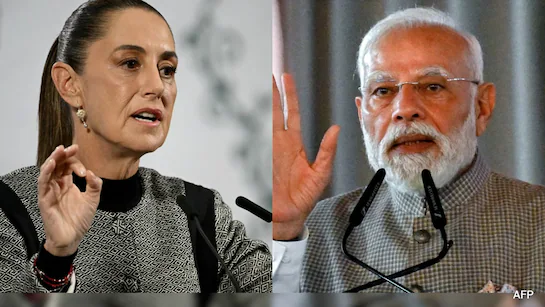
India proposes a PTA with Mexico to protect exporters from 5–50% tariffs affecting USD 2B goods in autos, textiles, steel, and more.
New Delhi: A senior government source stated on Monday that India has suggested a preferential trade agreement (PTA) with Mexico to assist domestic exporters in coping with the high tariffs imposed by the South American nation.
Mexico has made the decision to apply high import taxes on a variety of items (about 1,463 tariff lines) from nations that do not have free trade agreements with Mexico, such as India, China, South Korea, Thailand, and Indonesia. These tariffs vary from roughly 5% to as high as 50%.
According to Commerce Secretary Rajesh Agrawal, India has discussed the matter with the nation.
“Discussions at the technical level are ongoing…A preferential trade agreement (PTA) is the only quick fix because a free trade agreement (FTA) will take a long period. Thus, we are attempting to determine what would be a viable course of action,” he told reporters present.
In a PTA, import duties are reduced or eliminated on a restricted number of products, whereas in an FTA, two trading partners drastically decrease or eliminate import tariffs on the maximum number of goods traded between them.
Due to their WTO (World Trade Organization) compatibility, Mexico’s trading partners are unable to protest the decision to levy significant tariffs.
Also read : Indian Squash Team Creates History at SDAT World Cup 2025
He added that India was not their main objective and that the tariffs were within their fixed rates.
“We have proposed a PTA because it’s a WTO-compatible way forward… we can do a PTA and try to get concessions that are required for Indian supply chains and similarly offer them concessions where they have export interests in India,” Agrawal stated.
With effect from January 1, 2026, Mexico has approved an increase in MFN (most favored nation) import duties (5–50%) on 1,455 tariff lines (or product categories) inside the WTO framework, aimed at non-FTA countries, citing support for local production and rectification of trade imbalances.
According to preliminary estimates, this has an impact on India’s about USD 2 billion exports to Mexico, specifically on automobiles, two-wheelers, auto parts, textiles, iron and steel, plastics, leather, and footwear.
Another goal of the plan is to reduce imports from China.
With USD 5.73 billion in exports, USD 3.01 billion in imports, and USD 2.72 billion in trade surplus, the merchandise trade between India and Mexico reached USD 8.74 billion in 2024.
Since the issue first surfaced, the government has been thoroughly and continuously evaluating Mexico’s tariff changes, interacting with stakeholders, defending the interests of Indian exporters, and pursuing positive communication to guarantee a stable trading environment that benefits companies and consumers in both nations.
Mexico’s decision is concerning, especially for industries like autos and auto parts, machinery, electrical and electronics, organic chemicals, pharmaceuticals, textiles, and plastics, according to Ajay Sahai, director general of the Federation of Indian Export Organizations (FIEO).
Sahai stated that this situation also highlights the lack of urgency for India and Mexico to expedite a complete trade agreement. “Such steep duties will erode our competitiveness and risk, disrupting supply chains that have taken years to develop,” he said.
According to the trade group ACMA, Mexico’s increase in tariffs on Indian imports will put additional cost pressure on domestic car component producers.