
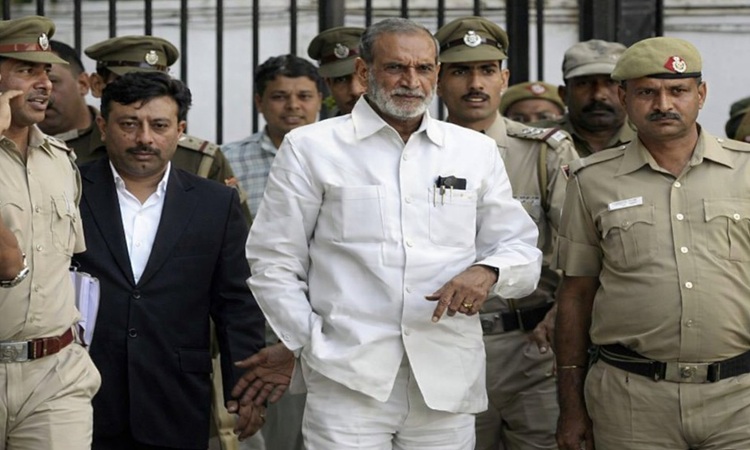
New Delhi, India — A Delhi court acquitted former Congress MP Sajjan Kumar in a 1984 anti-Sikh riots case on Thursday, marking another major twist in the decades-long legal battles over the deadly communal violence. The decision, likely to stir debate among survivors and legal experts, came nearly 42 years after the tragic unrest struck the national capital.
Special Judge Dig Vinay Singh delivered a brief oral order clearing Kumar of allegations linked to inciting violence in the Janakpuri and Vikaspuri areas during the anti-Sikh riots that followed the assassination of then-Prime Minister Indira Gandhi. A detailed, written judgment is expected soon.
Acquittal Details and Court Proceedings
The case against Kumar arose from two first information reports (FIRs) registered by a special investigation team in February 2015. One FIR pertained to the killing of Sohan Singh and his son-in-law Avtar Singh in Janakpuri on November 1, 1984. The second FIR concerned the death of Gurcharan Singh, who was allegedly set on fire in Vikaspuri on November 2, 1984.
In August 2023, charges were framed against Kumar for rioting and promoting enmity between communities, while the court had earlier discharged him of murder and criminal conspiracy in the same case. The recent acquittal relates specifically to these charges.
Despite the acquittal in this matter, Kumar remains in prison. On February 25, 2025, he was sentenced to life imprisonment in a separate 1984 riots case involving the killing of Jaswant Singh and his son Tarundeep Singh in the Saraswati Vihar area of Delhi. In that case, the court ruled that although the killings were grave, they did not qualify for the death penalty under Indian law.
Also read : Indian Pole Vaulters Thrown Off Train: Athletes Stranded for Hours Over Equipment Dispute
Historical Context and Legal Journey
The 1984 anti-Sikh riots erupted in the wake of Indira Gandhi’s assassination and saw widespread violence against the Sikh community across Delhi and other parts of India. According to the Nanavati Commission, a total of 587 FIRs were registered in Delhi alone, with only 28 resulting in convictions. Roughly 400 individuals were convicted, including about 50 for murder.
Kumar’s legal journey has been long and complex. In December 2018, the Delhi High Court upheld his life sentence for involvement in another riot case linked to Palam Colony violence. That conviction was one of the first major outcomes from the re-investigation of old riot cases by a Special Investigation Team formed in 2015.
Kumar’s appeal against his life sentence in the Palam Colony case remains pending before India’s Supreme Court.
Reactions and Public Response
The fresh acquittal has reignited debates over justice for the victims of the 1984 riots. Many survivors and rights groups argue that accountability has been slow and uneven. Some have expressed disappointment over the acquittal, saying it could deepen mistrust among riot-affected families. Others maintain that justice must follow evidence, and that court outcomes should be respected.
Legal analysts say the clarification provided in the written order will be key, as the oral order delivered on Thursday offered limited reasoning. Lawyers have noted that differences between cases can hinge on specifics like evidence reliability, witness testimony, and legal interpretations of intent and culpability.
Wider Implications for Riot Probes
The 1984 anti-Sikh riots remain one of India’s most sensitive and contested episodes of communal violence. More than 2,700 people, mainly Sikhs, were killed in Delhi alone during the unrest. Many families and activists have pushed for deeper reforms to ensure swift and transparent justice.
Despite multiple convictions over the years, gaps in prosecution and delays in trials have drawn criticism from civil society and human rights organizations. The latest acquittal in one of the riot-linked cases highlights the challenges courts face in adjudicating decades-old incidents with complex evidentiary histories.