
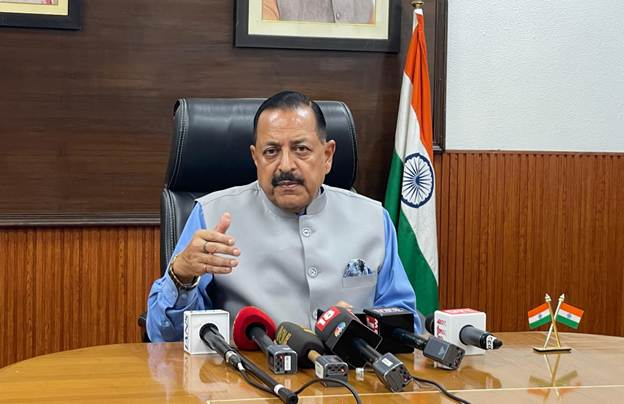
NEW DELHI — The Central Government has extended a fresh, open proposal regarding Centre student protest talks to end the ongoing standoff. Union Minister Dr. Jitendra Singh confirmed that authorities sent four formal proposals to student representatives.
Key Government Proposal Points
├──► Proposals Sent : Four formal invitations extended to CJP
├──► Venue Flexibility: Talks at JP Nadda’s office, residence, or neutral site
├──► Lead Officials : Health Minister JP Nadda & MoS Jitendra Singh
└──► Core Objective : Fast-track resolution for NEET paper leak issues
The administration emphasized its readiness to conduct negotiations at any time or venue convenient to the demonstrators. Furthermore, the outreach comes as youth groups continue demonstrating over examination irregularities and paper leaks.
A very humble appeal to students and youth ! pic.twitter.com/NyHnR7FFf9
— Dr Jitendra Singh (@DrJitendraSingh) July 23, 2026
Speaking on behalf of the Centre, Dr. Singh highlighted that the government does not stand on prestige or protocol. Consequently, both he and Union Health Minister JP Nadda stand ready to meet student delegates personally.
Also Read : Sonam Wangchuk Ends Hunger Strike After 26 Days Following Union Ministers’ Visit
Multiple Proposals Extended as Standoff Continues in National Capital
Addressing media channels, Dr. Jitendra Singh outlined repeated government efforts to initiate direct dialogue with student representatives. He noted that the administration wants to address youth concerns through constructive engagement.
Government Outreach Timeline
- July 20 : Initial meeting between CJP representatives and JP Nadda
- July 22 : Union Ministers visit hospital to discuss activist welfare
- July 23 : Four formal proposals sent for direct administrative talks
- July 24 : Standing invitation reaffirmed without venue constraints
Furthermore, the minister reiterated that Prime Minister Narendra Modi prioritized protecting student interests. To ensure rapid accountability, the government decided to establish fast-track courts for paper leak cases.
Therefore, officials maintain that structured conversation remains the most effective path toward resolving systemic issues. Moreover, the Centre believes mutual understanding will ensure long-term stability across competitive examination frameworks.
Protesters Demand Neutral Venue and Key Leadership Resignation
Despite fresh dialogue appeals, the Cockroach Janata Party (CJP) maintains strict conditions before joining Centre student protest talks. Specifically, student leadership insists on holding negotiations at a neutral venue rather than private residences.
Protester Demands & Conditions
├──► Resignation Demand : Immediate exit of Education Minister Dharmendra Pradhan
├──► Venue Condition : Neutral location or open public forum at Jantar Mantar
├──► Legal Guarantees : Withdrawal of all FIRs against peaceful demonstrators
└──► Financial Aid : ₹1 Crore compensation for families of affected students
CJP spokesperson Sourav Das stated that the resignation of Union Education Minister Dharmendra Pradhan remains non-negotiable. Additionally, student groups demand a total waiver of legal charges filed during recent street demonstrations.
Meanwhile, demonstrators at Jantar Mantar suggest holding open discussions near the protest site itself. However, student delegates indicated a willingness to consider suitable neutral venues provided proper safety protocols exist.
Parliamentary Stalemate and Broader Policy Measures
The ongoing youth agitation continues to impact legislative proceedings inside the Indian Parliament. Opposition parties aligned with student demands, calling for comprehensive parliamentary debates on examination security.
Parliamentary & Administrative Focus
- Legislative Debate : Opposition demands full House discussion on paper leaks
- Special Provisions : Introduction of stringent anti-paper leak legislations
- Administrative Action : Structural reforms within national testing agencies
- Fast-Track Courts : Special judicial benches for rapid case resolution
However, senior government officials clarified that the administration remains committed to institutional reforms rather than individual political removals. Ministers point toward new legal provisions designed to severely punish paper leak syndicates.
Additionally, testing agencies are updating digital surveillance systems to prevent future question leaks. Consequently, authorities hope these structural measures will restore public confidence among millions of young aspirants state-wide.
The Path Ahead for Student-Government Dialogue
As Centre student protest talks remain on the table, civil society figures urge both parties to establish formal communication channels. Activist Sonam Wangchuk recently ended his 26-day fast after receiving official assurances regarding student protections.
Next Steps Toward Resolution
├──► Neutral Mediator : Potential engagement of independent observers
├──► Written Demands : CJP preparing formal charter of demands
└──► Formal Meeting : Finalizing mutually agreed date and location
Furthermore, Union Health Minister JP Nadda confirmed that engagement with student delegations will continue persistently. He noted that both sides must collaborate to build long-lasting solutions for India’s education framework.
Ultimately, millions of students across the country await a peaceful, transparent resolution. Open dialogue between youth leaders and government ministers remains essential for restoring trust and safeguarding student futures.