
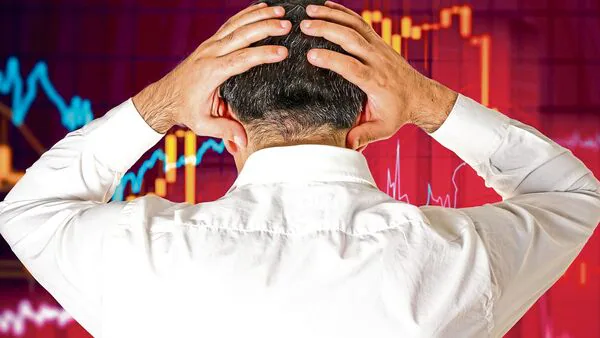
Mumbai: The Indian stock market witnessed a sharp decline on Monday, with benchmark indices tumbling amid escalating geopolitical tensions and surging crude oil prices, triggering fears of prolonged global instability. The Stock Market Crash rattled investor sentiment as both domestic and global cues turned negative.
The BSE Sensex plunged 1,682 points or 2.1% to hit an intraday low of 75,868.32, while the NSE Nifty 50 dropped 495 points or 2% to 23,555.60. The broader markets also reflected weakness, with Nifty Midcap 100 declining 1.8% and Nifty Smallcap 100 shedding 2% during early trade, intensifying the Stock Market Crash scenario.
US-Iran Tensions Escalate, Fueling Global Uncertainty and Intensifying the Stock Market Crash
The sell-off was primarily driven by global concerns after tensions between the United States and Iran escalated. Reports indicated that ceasefire talks failed to yield any breakthrough, raising fears of a prolonged conflict in the Middle East. Additionally, the move to block maritime traffic near Iranian ports added to the uncertainty, further fueling the Stock Market Crash.
Also read : Diesel Price Hike: Oil Companies Raise Premium Fuel Rates Across India
Rising crude oil prices played a major role in dampening market sentiment. Brent crude surged nearly 6.8%, hovering close to $102 per barrel, sparking concerns about inflation and its impact on global economic growth. This sharp increase in oil prices added pressure on equities, contributing significantly to the ongoing Stock Market Crash.
Sector-wise, heavy selling was witnessed across banking, financial services, auto, and realty stocks, each declining between 2–3%. The risk-off sentiment was evident as investors moved away from equities and sought safer assets amid growing uncertainty.
Global markets also mirrored the weak trend. Asian indices, including Japan’s Topix, Hong Kong’s Hang Seng, and China’s Shanghai Composite, traded lower. Meanwhile, S&P 500 futures remained under pressure, reflecting cautious investor sentiment worldwide. The strengthening US dollar further highlighted the shift towards safe-haven assets during the Stock Market Crash.
Experts believe that while markets have reacted sharply, some level of cautious optimism still persists, as investors hope for a possible resolution to the geopolitical tensions. However, volatility is expected to remain high in the near term.