
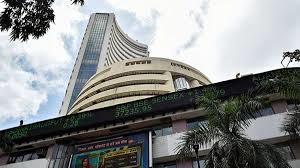
Indian Stock Market Sees Sharp Sell-Off
The Indian stock market witnessed a sharp fall on Monday, December 8, as heavy selling pressure hit benchmark indices. The Sensex plunged over 800 points in intraday trade. Meanwhile, the Nifty 50 dropped nearly 1%.
At its lowest point, the Sensex slipped to 84,906.90, while the Nifty touched an intraday low of 25,902.95. Moreover, the broader market faced deeper losses. The BSE Midcap and Smallcap indices crashed over 2% each.
As a result, overall market capitalization of BSE-listed firms fell sharply. It declined from ₹471 lakh crore to ₹464 lakh crore in a single session. Consequently, investors lost more than ₹7 lakh crore in a few hours.
Why Did the Sensex Crash Today?
Several key factors triggered today’s market decline. Firstly, global market weakness weighed heavily on Indian equities. Asian stocks opened lower after weak cues from the U.S. and European markets.
Secondly, profit booking intensified after recent record highs. Large investors chose to lock in gains. Therefore, selling pressure increased across banking, IT, and FMCG stocks.
Additionally, rising global bond yields affected equity sentiment. Higher yields reduce the appeal of risky assets. As a result, foreign institutional investors turned cautious.
Meanwhile, concerns over slower global growth also dampened investor confidence. China’s weak economic data added further pressure.
Midcap and Smallcap Stocks Face Heavy Selling
The pain was deeper in the broader markets. Midcap and smallcap stocks suffered steep losses of over 2%. Many high-risk stocks saw panic selling.
Retail investors were the worst hit in this segment. Moreover, margin calls added further pressure on leveraged positions. Therefore, liquidity tightened sharply in mid-sized companies.
Experts warn that these segments remain vulnerable to sharp corrections. However, they also stress that quality stocks may offer long-term value.
Sector-Wise Performance Shows Widespread Weakness
Almost all major sectors ended in the red. Banking stocks faced heavy profit booking. IT stocks declined amid global recession fears.
Additionally, metal and energy stocks slipped due to weak global commodity prices. FMCG stocks also failed to offer any major support.
Only a few defensive stocks managed to limit losses. However, the overall market breadth remained extremely weak.
What Are Analysts Saying About the Market Fall?
Market experts believe the correction remains healthy for now. According to analysts, valuations in several pockets had turned expensive. Therefore, some cooling was overdue.
They also point to global risk-off sentiment as a temporary factor. As global inflation worries ease, stable inflows could return.
However, experts advise caution in the near term. Volatility may stay elevated due to global economic uncertainty. Traders should avoid aggressive leveraged bets.
Long-term investors, on the other hand, may use systematic strategies. Staggered buying during dips could help reduce risk.
Should Investors Panic or Stay Invested?
Financial advisors urge investors to avoid panic selling. Short-term corrections are part of market cycles. Moreover, India’s domestic fundamentals remain strong.
Corporate earnings growth stays resilient. Government capital spending also supports infrastructure and manufacturing sectors.
However, experts recommend shifting focus to large-cap quality stocks. These companies offer better stability during volatile phases.
Investors should also review their portfolio diversification. Balanced exposure across equity, debt, and gold can help manage risk.
Outlook for the Indian Stock Market
In the short term, markets may remain volatile. Global inflation trends, crude oil prices, and U.S. interest rate signals will play a key role.
If global cues stabilize, Indian markets could recover gradually. However, sharp rebounds may take time as profit booking continues.
Analysts believe India’s long-term growth story remains intact. Digital transformation, manufacturing expansion, and consumption growth support positive outlooks.
(Disclaimer – This story is for educational purposes only. The views expressed are those of market analysts and not of ITW. Investors should consult certified experts before making decisions)