
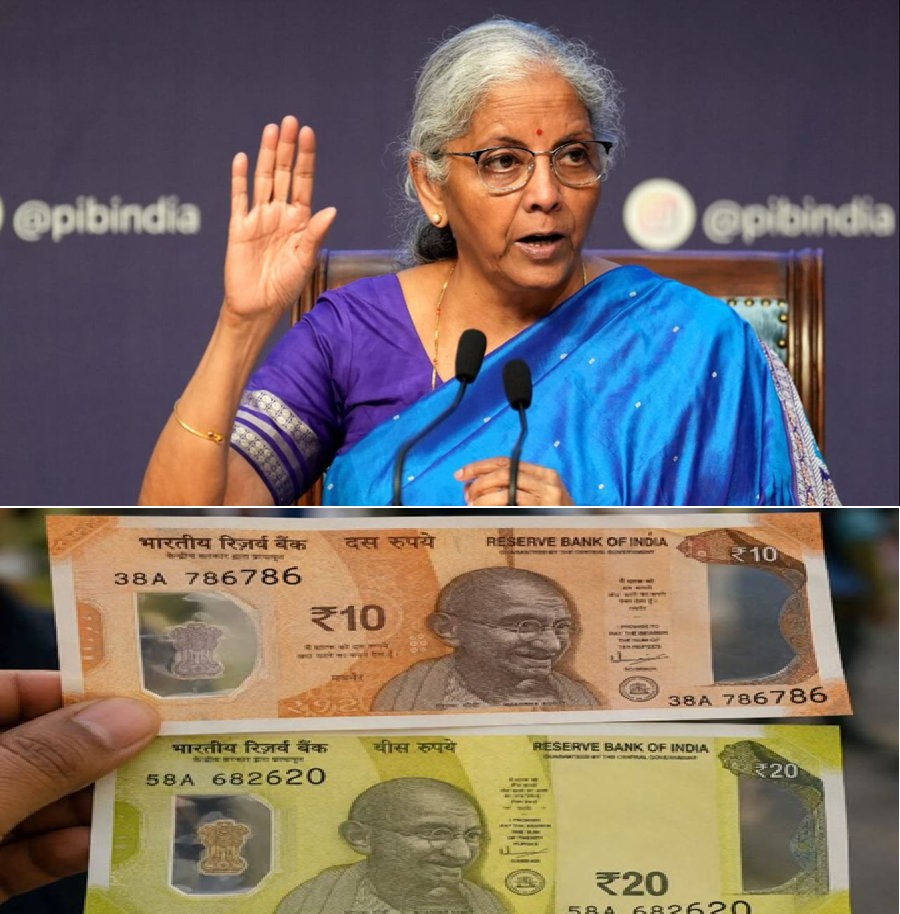
NEW DELHI — India will soon test plastic currency notes in daily circulation. The government has officially approved a proposal from the Reserve Bank of India (RBI) to conduct field trials. Consequently, the central bank plans to introduce one billion pieces each of ₹10 and ₹20 polymer banknotes.
Finance Minister Nirmala Sitharaman confirmed this crucial development in a written reply to the Rajya Sabha on Tuesday, August 11, 2026. The proposal was submitted under Section 25 of the Reserve Bank of India Act, 1934. Therefore, the trial marks a major milestone in modernizing the nation’s cash infrastructure.
However, officials clarify that these new polymer notes will not instantly replace current paper money. Instead, polymer notes will circulate alongside traditional paper banknotes. The government aims to evaluate note performance under extreme weather conditions and heavy public usage.
Also Read : FCRA Bill Sent to JPC Amid Opposition Protests in Lok Sabha
Overview of India’s Polymer Banknote Trial
| Parameter | Project Details |
| Issuing Authority | Reserve Bank of India (RBI) |
| Denominations | ₹10 and ₹20 |
| Trial Volume | 1 billion pieces for each denomination |
| Legal Provision | Section 25 of the RBI Act, 1934 |
| Current Status | Procurement stage; initial field trial testing |
RBI Focuses on Durability to Combat Soiled Banknotes
Small-denomination paper currency faces rapid wear and tear in daily business transactions. Every year, the central bank replaces billions of soiled ₹10 and ₹20 paper notes. Therefore, the RBI wants plastic currency notes to enhance note life and lower long-term printing expenses.
Polymer substrate materials resist moisture, oil, dirt, and mechanical tearing. Additionally, international studies show that polymer notes last two to four times longer than paper currency. Moreover, smooth surfaces prevent dust accumulation, keeping bank notes cleaner over prolonged circulation periods.
Furthermore, central bank officials believe higher durability reduces disposal waste significantly. Lower denomination notes travel through local markets, public transport, and street vendors quickly. Consequently, stronger polymer materials reduce frequent note destruction and re-printing cycles.
Finance Minister Explains Timelines and Procurement Progress
Addressing the Rajya Sabha, Finance Minister Nirmala Sitharaman addressed queries regarding exact rollout schedules. She noted that the central bank’s note-printing subsidiary initiated early procurement procedures. However, the government cannot specify an exact launch date or total expenditure yet.
The procurement process remains at an initial stage. Therefore, practical timeframes will depend on substrate procurement outcomes and preliminary testing results. Meanwhile, RBI Governor Sanjay Malhotra indicated that trials are planned for the upcoming fiscal cycle.
Importantly, central authorities urged the public to ignore misleading rumors on social media. The government confirmed that existing paper currency remains valid legal tender. Thus, citizens do not need to exchange their current paper notes.
Key Benefits of Polymer Banknotes
- Enhanced Durability: Polymer notes withstand heavy folding, moisture, and extreme heat.
- Advanced Security: Transparent windows and complex holograms reduce counterfeiting risks significantly.
- Hygiene Standards: Smooth plastic surfaces reject dirt and bacterial absorption.
- Global Alignment: Over 60 countries, including Canada and the UK, successfully use polymer currency.
Global Adoption and Advanced Anti-Counterfeiting Features
More than 60 nations currently utilize plastic currency notes for daily transactions. Countries such as Australia, Canada, the United Kingdom, Singapore, and Vietnam report strong security results. Polymer technology allows central banks to embed specialized visual elements that paper substrates cannot support.
For example, polymer currency supports see-through windows, color-shifting inks, and metallic micro-optics. Consequently, these integrated security features make successful counterfeiting extremely difficult for criminal networks. Furthermore, automated sorting machines can verify genuine polymer bills rapidly.
As field trials begin, commercial banks will recalibrate cash processing machinery and sorting equipment. Full-scale adoption across India will follow after the central bank reviews initial performance metrics. Thus, the gradual introduction of plastic currency notes marks an important evolution in India’s financial system.