
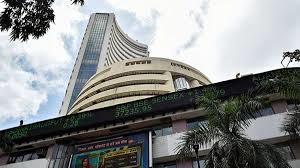
Indian Stock Markets Rebound from Historic Crash: Sensex Jumps 1,200 Points
Indian Stock Markets Rebound After Historic Crash: Sensex Surges Over 1,200 Points
Following one of the most significant single-day losses in the past ten months, Indian stock markets staged a strong recovery on Tuesday. The recovery was marked by widespread buying across various sectors and positive global cues, with the BSE Sensex climbing 1,283.75 points (1.75%) to reach 74,421.65, while the NSE Nifty rose 415.95 points (1.87%) to 22,577.55.
This turnaround came after markets endured their steepest fall in nearly a year, largely driven by growing concerns surrounding US President Donald Trump’s tariffs on China and the broader trade environment.
What Triggered the Market Crash?
On Monday, the Indian stock markets saw their worst drop in months. The BSE Sensex and NSE Nifty were deeply affected by global uncertainty, with the market reacting to Trump’s threat of imposing an additional 50% tariff on Chinese imports. The news raised fears of an escalating trade war between the US and China, which could potentially lead to a slowdown in global economic growth.
Compounding the downturn was the decline in US markets, with the Dow Jones Industrial Average and S&P 500 both finishing lower, although the Nasdaq Composite posted a modest 0.10% increase. These global developments contributed to the negative sentiment, which was reflected in the Indian markets. However, Tuesday’s recovery demonstrated the market’s resilience in the face of these challenges.
Sensex and Nifty Surge: Key Drivers of the Rebound
Tuesday’s rally in Indian stocks was driven by strong buying across all sectors, with all but one of the Sensex’s 30 components seeing positive movement. Leading the gains were stocks such as Titan, Adani Ports, Bajaj Finserv, State Bank of India, Axis Bank, UltraTech Cement, Larsen & Toubro, and Tata Steel. The recovery mirrored the positive movement in Asian markets, with Japan’s Nikkei 225 surging more than 5%, and markets in Hong Kong, South Korea, and China also experiencing an uptick following their sharp losses on Monday.
This resurgence was not only reflective of global market conditions but also highlighted the strength of India’s domestic economic fundamentals, which helped boost investor confidence.
Positive Global Cues and Investor Sentiment
The recovery in Indian stock markets followed a similar rebound in other Asian markets, where investor sentiment turned positive after Monday’s declines. Although US markets ended lower, the upward movement in Asian indices provided a boost to domestic sentiment. Additionally, the increase in global oil prices, with Brent crude rising 1.32% to $65.06 per barrel, offered some relief to energy-importing nations like India, contributing to further optimism in the stock market.
In addition to global market movements, investor confidence was also supported by India’s strong economic fundamentals, which helped maintain optimism despite global headwinds.
India’s Economic Outlook: A Pillar of Stability
India’s solid economic outlook continues to support market confidence. Despite global uncertainties, India is expected to experience GDP growth between 6.3% and 6.8% for the current fiscal year, with some experts forecasting a GDP growth rate of up to 6.5% by FY26. Stable oil prices and strong domestic demand are expected to support economic expansion in the years to come.
Despite the sharp losses on Monday, the overall outlook for the Indian economy remains strong, and India’s large consumer base, growing digital infrastructure, and resilient financial sector are seen as key factors helping to mitigate global economic challenges.
Institutional Activity and Market Volatility
Foreign Institutional Investors (FIIs) were net sellers on Monday, offloading equities worth Rs 9,040 crore, while Domestic Institutional Investors (DIIs) stepped in to purchase shares worth Rs 12,122 crore, helping to cushion the market’s losses. The presence of domestic investors helped maintain some stability amid the broader market sell-off.
Market volatility, as reflected by the India VIX, spiked nearly 70% on Monday, signaling potential fluctuations in the market. While Tuesday’s recovery was a positive sign, analysts are cautious, as volatility could persist in the coming sessions. The Nifty index has reclaimed certain levels, but some analysts expect resistance at the 22,660 mark, with consolidation likely between 22,320 and 22,660 in the near term.
Outlook for the Indian Stock Market
Although the sharp rebound on Tuesday was welcomed by investors, many remain cautious, anticipating continued volatility in the market. Investors will closely monitor global trade developments, particularly the ongoing US-China trade tensions, and assess the potential impact on the global economy and Indian markets.
India’s strong economic fundamentals, along with its robust domestic market, are expected to help support the stock market amid global uncertainties. Nevertheless, the path ahead remains uncertain, and market watchers will be keeping a close eye on both global and domestic developments as they unfold.