
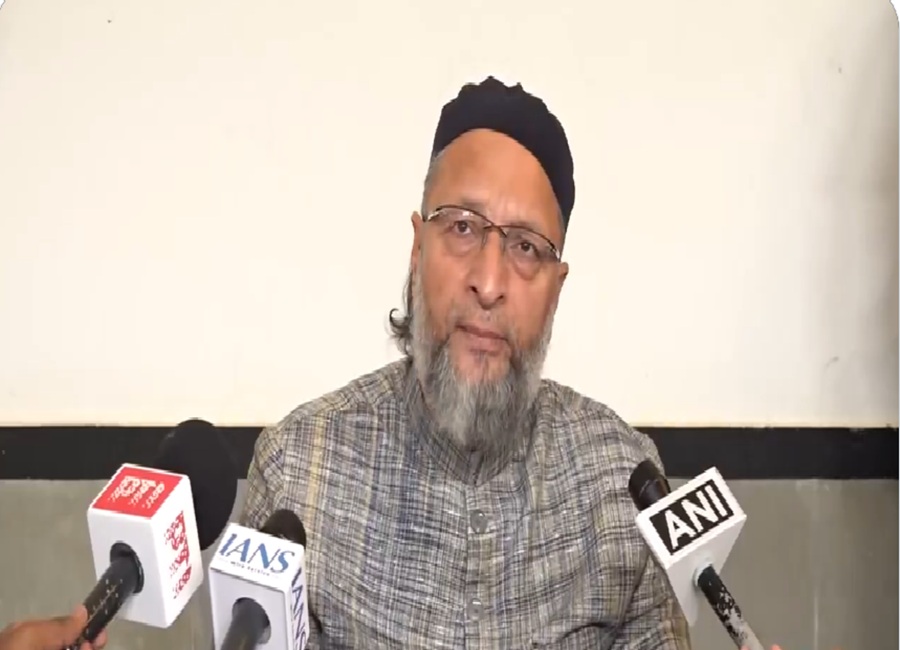
NEW DELHI — AIMIM chief Asaduddin Owaisi launched a sharp critique against Union Home Minister Amit Shah following the Centre’s declaration regarding the rollout of the Uniform Civil Code in NDA states. Speaking a day after Shah announced in Mumbai that 21 NDA-governed states would enact civil code legislation before 2029, Owaisi accused the ruling alliance of repeating political missteps. He cautioned that pairing nationwide civil law standardization with citizenship verification policies would impose massive administrative burdens on ordinary citizens.
Key Takeaways of the Political Standoff
- AIMIM President Asaduddin Owaisi hit back at Home Minister Amit Shah over plans to introduce the Uniform Civil Code in NDA states before 2029.
- Owaisi warned that implementing a nationwide National Register of Citizens (NRC) would create bureaucratic chaos “100 times worse” than previous exercises.
- The opposition leader cited ongoing voter revision friction and Assam’s NRC documentation hurdles to highlight risks for low-income citizens.
- Shah reiterated that all 21 NDA-governed states will move toward common civil legislation following Uttarakhand’s operational baseline.
- Discussions remain active regarding the 1951 baseline for Manipur’s potential NRC implementation alongside regional coalition partners.
Addressing reporters, Owaisi linked current discussions around the National Register of Citizens (NRC) to the Special Intensive Revision (SIR) of electoral rolls. He noted that mandatory document verification already creates logistical friction across several states. Recalling the 2019 anti-CAA/NRC demonstrations, Owaisi stated that misplaced political rhetoric previously triggered widespread public concern across the country.
Also Read : Uniform Civil Code in NDA States: Amit Shah Outlines Strategic Roadmap for 21 States Before 2029
| Political Figure | Statutory / Policy Position | Core Argument Presented |
| Amit Shah (Union Home Minister) | Enact Uniform Civil Code in NDA states by 2029 | Standardizes marriage, divorce, and property inheritance laws; advances legal equality |
| Asaduddin Owaisi (AIMIM Chief) | Opposes mandatory nationwide UCC & NRC push | Undermines pluralism; creates administrative distress for 80 crore ration dependents |
| NDA State Administrations | Phased legislative assembly rollouts | Uses Uttarakhand’s operational baseline for regional adaptation |
Owaisi Highlights Assam Lessons and Vulnerable Group Friction
Owaisi emphasized that enforcing an NRC nationwide would be “100 times worse” than earlier localized updates. Pointing to Assam’s multi-year documentation verification process, he noted that marginalized communities faced significant difficulties in producing historic paper records. He highlighted that forcing marginalized families to establish citizenship status through localized bureaucracy places them at the mercy of ground-level officials.
The AIMIM leader raised practical concerns about document availability for low-income populations. In a nation where over 80 crore citizens rely on government food support, requiring paper proof for basic legal standing creates structural hardship. Migrant workers, Scheduled Castes, Scheduled Tribes, and religious minorities encounter disproportionate operational obstacles when verifying old records during administrative drives.
| Implementation Scope | Targeted Metric / Timeline | Key Concerns Identified by Critics |
| State UCC Enactment | 21 NDA-ruled states before 2029 | Overrides custom-based local practices and personal identity frameworks |
| Manipur NRC Drive | 1951 Baseline consultation | Potential exclusion risks due to missing ancestral records |
| Food Subsidy Baseline | 80 Crore welfare beneficiaries | Bureaucratic verification obstacles for economically vulnerable groups |
| Electoral Verification | Special Intensive Revision (SIR) | Tight submission windows for claims and document hearings |
NDA Framework vs Opposition Response on Civil Reform
Home Minister Amit Shah defended the planned introduction of the Uniform Civil Code in NDA states, citing successful reforms like the abolition of triple talaq. Shah noted that Uttarakhand has already operationalized its common civil legislation, offering a viable administrative template for other alliance-ruled jurisdictions. The central leadership maintains that unified legal frameworks eliminate discriminatory practices in personal matters while upholding constitutional principles.
However, opposition leaders contend that pluralism remains central to India’s governance structure. Owaisi questioned whether NDA coalition allies hold independent perspectives on implementing localized civil codes. On Manipur’s proposed NRC using 1951 baseline records, Shah confirmed that consultations remain active with regional political parties before finalizing operational details.
| Policy Initiative | Government Rationale | Opposition Critique |
| Uniform Civil Code (UCC) | Modernizes personal laws; guarantees equal rights for women | Infringes on cultural autonomy and constitutional rights under Article 25 |
| National Register of Citizens (NRC) | Identifies and deports illegal infiltrators; secures borders | Triggers bureaucratic panic; burdens vulnerable populations |
| Special Intensive Revision (SIR) | Cleanses voter rolls and ensures democratic integrity | Causes administrative hurdles due to strict hearing notices |
Broader Outlook for Civil Legislation Ahead of 2029
The political debate surrounding the Uniform Civil Code in NDA states highlights contrasting visions for India’s legal evolution. While the ruling alliance prepares individual state assemblies to pass common civil codes, opposition parties are organizing public outreach to oppose administrative verification requirements.
With state-level drafting committees actively preparing legal texts across several regions, statutory legal uniformity will remain a defining theme leading up to the 2029 national elections. How state administrations balance uniform statutory enforcement with regional safeguards will determine the smooth adoption of these legal updates nationwide.