
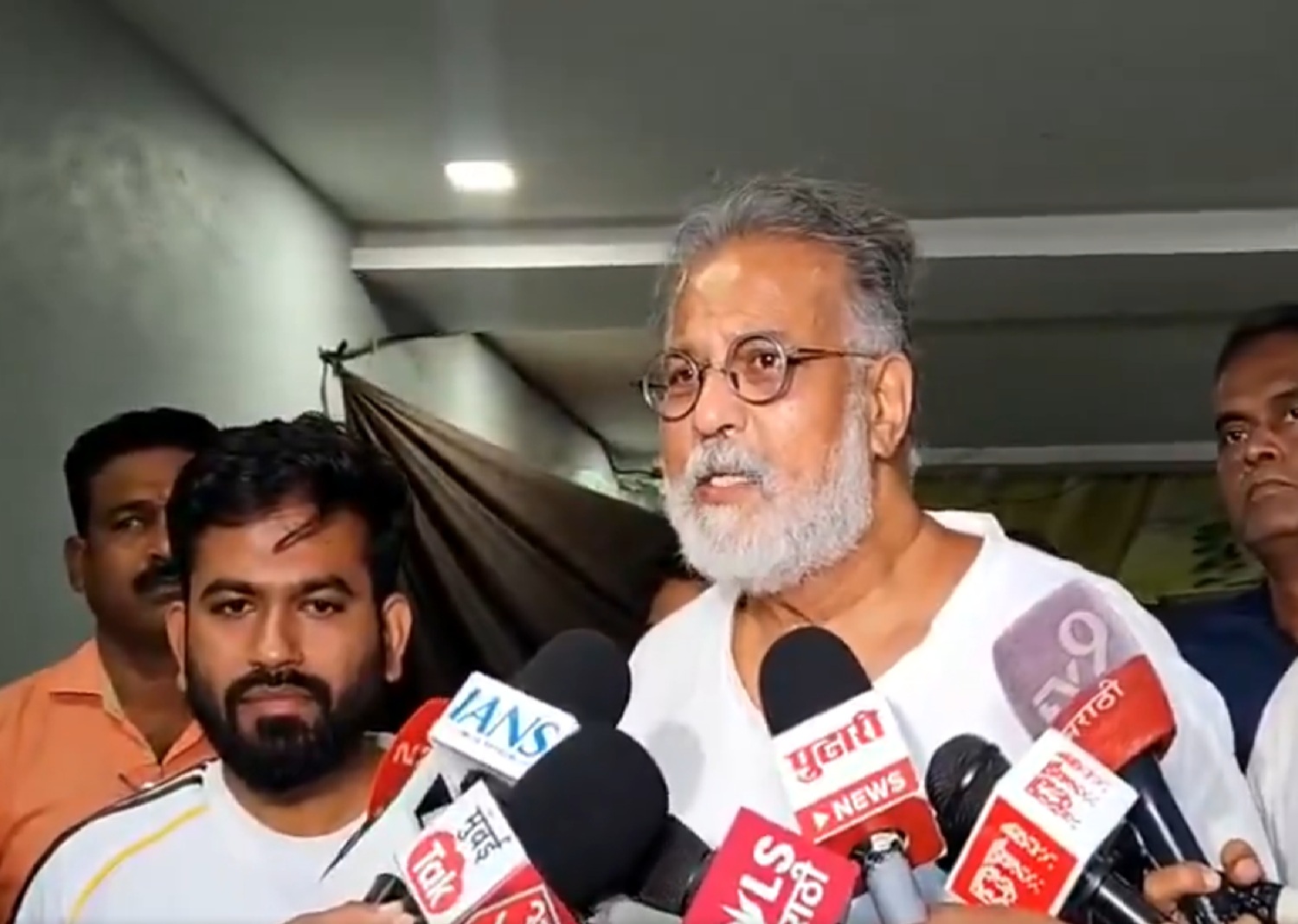
Tushar Gandhi, the great-grandson of Mahatma Gandhi, met with youth activist Abhijeet Dipke on Wednesday. During this meeting, he stated that Gen Z adopts Gandhi values by leading peaceful agitations for public accountability.
Dipke is the founder of the Cockroach Janta Party (CJP), a youth movement that organized protests at Jantar Mantar. The demonstrations demanded systemic examination reforms following widespread entrance test irregularities.
Tushar Gandhi commended the young activists for choosing non-violent methods throughout their campaign. He noted that their peaceful approach proves that Mahatma Gandhi’s core philosophy remains vital today.
Dipke emphasized that support from Gandhi’s family validates the movement’s integrity. He noted that walking the path of Bapu ensured their voice reached millions across the nation.
Also Read : TREE PLANTATION FESTIVAL ORGANISED IN CU RESIDENTIAL CAMPUS
Moving Beyond Symbolism as Gen Z Adopts Gandhi Values
During his interaction with reporters, Tushar Gandhi observed that Bapu had long been reduced to static memorials. He noted that official initiatives often focus on logos and symbols rather than true internal transformation.
However, the recent student movement demonstrates how Gen Z adopts Gandhi values in everyday civic action. Younger citizens are actively demanding governance transparency and ethical policy reforms.
Furthermore, this youth-led push has inspired even younger cohorts across the country. Tushar Gandhi noted that Gen Alpha students in Maharashtra are now asking questions about basic school infrastructure.
Dipke highlighted his team’s focus on auditing government school conditions. He urged authorities to spend unutilized public funds directly on classrooms, clean drinking water, and proper roads.
Response to Crackdowns and the Path of Non-Violence
The movement faced severe challenges during the “Sansad Chalo” march on July 20. Security forces used tear gas and lathi charges when crowds attempted to march toward Parliament.
Tushar Gandhi criticized government representatives who denied that force was used against young demonstrators. He praised the students for keeping their patience despite high tension and injuries.
Overview of CJP Campaign Developments
- Primary Focus: Educational integrity, entrance exam safety, and basic school infrastructure.
- Key Demonstration: The “Sansad Chalo” march on July 20 in New Delhi.
- Agitation Strategy: Peaceful sit-ins, public audits, and digital awareness campaigns.
- Public Solidarity: Endorsed by Tushar Gandhi as a modern continuation of Satyagraha.
Legal petitions remain under review in court to assess the official response to the protests. Regardless of legal outcomes, the movement has established a new model for youth-led civic engagement.
Lasting Impact on Civic Engagement and Peaceful Protests
The interaction between Gandhi’s descendant and Gen Z activists marks an important moment in modern civic dialogue. It shows that peaceful non-violent resistance remains a powerful tool for institutional reform.
Moreover, the campaign proves that non-violent methods can successfully pressure institutions for accountability. It offers a clear roadmap for future civic efforts led by young leaders.
“Mahatma Gandhi is the soul of India. As long as the Constitution exists, Bapu’s thoughts will continue to guide this country.”
— Abhijeet Dipke, CJP Founder
As Gen Z adopts Gandhi values, the CJP plans to expand its educational campaigns across multiple states.