
JAZAN — An explosive Houthi drone strike hit a major Saudi Arabian oil refinery on Sunday morning.
Specifically, the targeted strike set fire to a critical Saudi Aramco energy facility in Jazan.
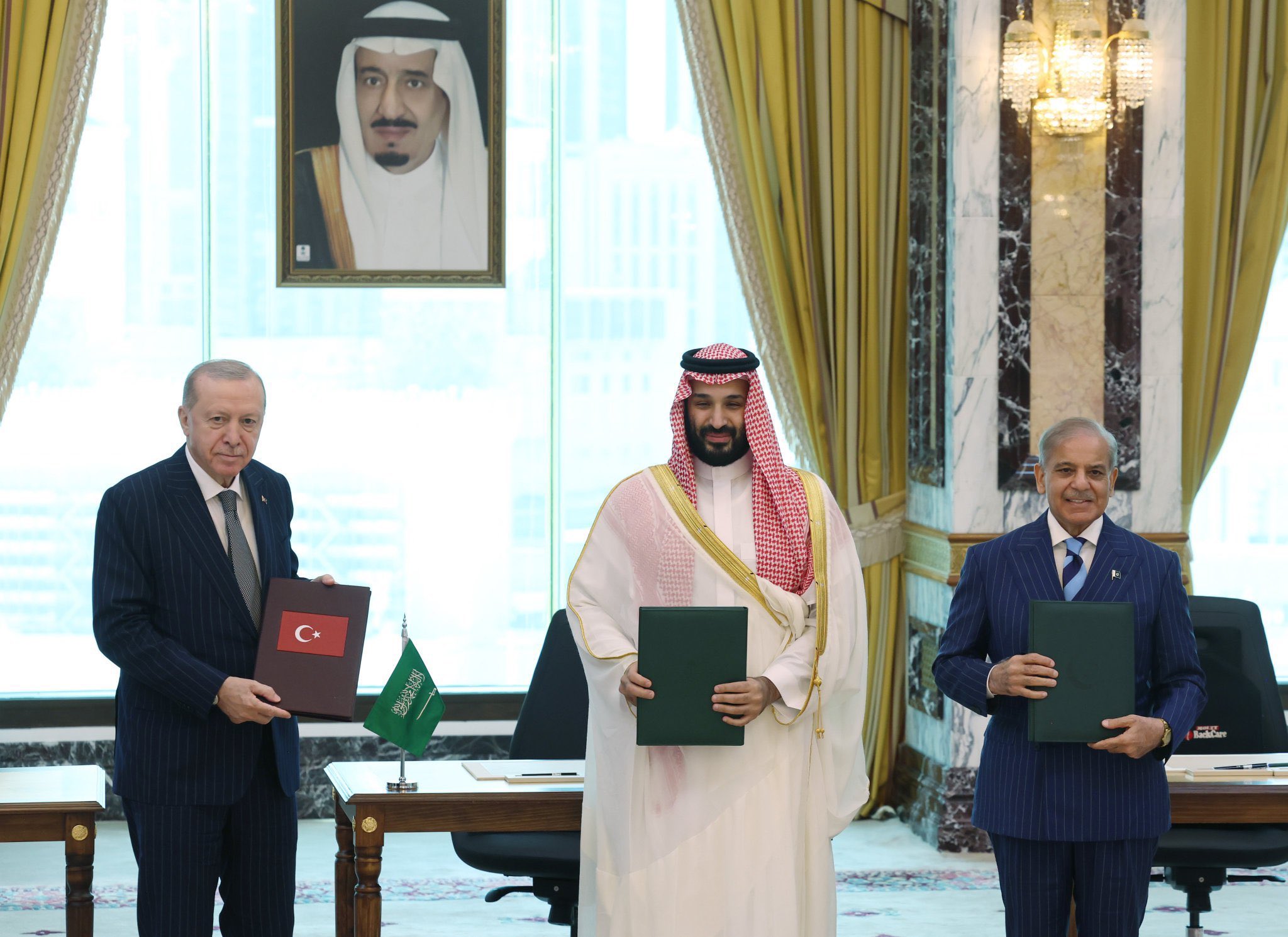
The attack occurred just two days after leaders signed the Mecca Joint Defence Agreement.
Saudi Crown Prince Mohammed bin Salman met with Turkish and Pakistani leaders to seal the deal.
The historic pact states that an attack on one member acts as an attack on all three.
However, neither Turkey nor Pakistan launched an immediate military response following the Jazan strike.
Emergency crews quickly put out the refinery flames without any human casualties reported.
Nevertheless, global analysts now question the real operational power of this new alliance.
Does this treaty promise immediate military action, or is it merely a political gesture?
Also Read : Houthi Attack on Saudi Arabia Injures Civilians Amid Escalating Regional Conflict
Strategic Overview of the Mecca Security Coalition
| Country | Strategic Role in Alliance | Primary Operational Asset |
| Saudi Arabia | Host Nation & Financial Backer | Major Energy Infrastructure & Air Base |
| Turkey | Defense Technology & Drones | Tactical Expertise & NATO Integration |
| Pakistan | Defensive Personnel & Deterrence | Stationed Troops & Air Defense Batteries |
Houthi Rebel Strike Exposes Strategic Gaps in Regional Security Pact
Houthi military spokesmen quickly claimed responsibility for launching the long-range attack drone.
They stated that the strike retaliated against recent regional air operations over Yemen.
Consequently, the incident tested the strategic strength of the Mecca Joint Defence Agreement right away.
The treaty connects three powerful nations across the Middle East and South Asia.
Many observers initially viewed the pact as a new “Islamic NATO” alliance.
However, official treaty terms reveal a much more cautious arrangement among members.
Turkish diplomatic officials clarified that the agreement requires mutual consultation before action.
Therefore, ally military intervention is never automatic when a strike occurs.
Members must first meet to evaluate the scale of aggression together.
As a result, no foreign jets or ground troops deployed to retaliate against Yemen.
Historical Agreements Reveal Limits of Stationed Foreign Forces
Saudi Arabia previously signed a bilateral defense deal with Pakistan in late 2025.
Under that agreement, Islamabad sent thousands of troops and combat jets to the kingdom.
Pakistan stationed personnel, armed drones, and air defense batteries on Saudi soil.
Riyadh paid for the equipment while Pakistani forces provided essential training.
However, those stationed forces primarily fulfilled advisory and defensive roles.
For instance, they did not engage in active combat operations during past attacks.
Similarly, the updated Mecca Joint Defence Agreement relies on this cooperative model.
Host nations pay for military support without forcing allies into direct warfare.
Thus, partner countries maintain strategic freedom while offering valuable advisory support.
Timeline of Recent Security Developments in the Region
- September 2025: Saudi Arabia and Pakistan sign initial mutual defense agreement.
- August 7, 2026: Leaders meet in Mecca to sign the trilateral security pact.
- August 9, 2026: Houthi drone strikes Aramco refinery in Jazan.
- August 11, 2026: Member nations evaluate the incident through diplomatic channels.
Divergent National Priorities Influence Alliance Action in West Asia
Each member of this new alliance brings different geopolitical goals to the table.
Saudi Arabia seeks stronger defense guarantees to protect vital energy infrastructure.
Meanwhile, Turkey aims to expand its defense technology exports across the region.
On the other hand, Pakistan remains focused on its own regional security dynamics.
Consequently, combining these different interests into a single combat force is difficult.
The Mecca Joint Defence Agreement establishes a permanent secretariat in Saudi Arabia.
Additionally, a special council of ministers will coordinate joint training programs.
However, alliance leaders stress that the agreement is purely defensive in nature.
It aims to deter future aggression rather than trigger immediate military conflicts.
Therefore, the quiet response to the Jazan attack reflects deliberate strategic design.
Comparative Breakdown of Trilateral Alliance Features
| Key Security Aspect | 2025 Bilateral Pact | 2026 Mecca Defence Pact |
| Member Countries | Saudi Arabia, Pakistan | Saudi Arabia, Pakistan, Turkey |
| Primary Focus | Training & Troop Deployment | Collective Deterrence & Tech |
| Retaliation Trigger | Case-by-Case Evaluation | Consultation Before Action |
| Permanent Body | None | Permanent Secretariat in KSA |
What Lies Ahead for the Emerging Trilateral Defense Pact
The silence after the Jazan strike shows the clear gap between treaties and combat.
Some critics argue that avoiding retaliation weakens the deterrence power of the alliance.
Conversely, supporters believe measured diplomacy prevents dangerous military escalation.
Signatories plan to increase joint military drills and intelligence sharing soon.
Furthermore, diplomats suggest other regional states might join the agreement later.
However, the alliance must first prove its real value during future security crises.
The Mecca Joint Defence Agreement marks a bold step toward regional self-reliance.
Yet, its ultimate success depends on how members handle ongoing security challenges.
As Middle East tensions rise, global observers will watch this alliance very closely.