
NEW DELHI — The Indian government clarified its official stance regarding digital payments on Saturday. Officials confirmed that the proposed MDR for UPI transactions will be strictly minimal. Moreover, these nominal charges will apply only to a select group of businesses.
Importantly, the government reassured everyday users that all person-to-person (P2P) payments will stay completely free. Consumers who make everyday digital transfers will not incur any direct fees. Consequently, buying groceries, paying cab drivers, or sending money to family will remain entirely charge-free.
An official government statement emphasized that the vast majority of merchants will face zero costs. Specifically, any future Merchant Discount Rate (MDR) will follow strict threshold-based rules rather than blanket applications. Therefore, small local shopkeepers and street vendors will remain fully exempt from these fees.
The primary decision regarding final charge rates rests with the UPI and Services Steering Committee. This influential body operates directly under the National Payments Corporation of India (NPCI). In addition, Parliament is reviewing statutory enabling provisions to establish this framework safely. Ultimately, the move protects lower-value everyday digital payment ecosystems across the entire nation.
Who Will Pay the Proposed MDR for UPI Transactions?
The government is evaluating a selective charge structure for high-value merchant payments. Specifically, officials indicated an MDR between 0.25% and 0.4% may apply to certain transactions above ₹2,000. Furthermore, authorities plan to enforce a rigid upper ceiling on these merchant fees.
Crucially, official estimates show that transactions exceeding ₹2,000 represent only 5% of total UPI volumes. However, this small fraction accounts for nearly 65% of total monetary value processed on the network. Thus, around 95% of all daily UPI transactions will experience zero fee impact. Routine purchases like milk, vegetables, and pharmacy items fall safely below this designated threshold.
Transaction Breakdown
| Transaction Category | Proposed MDR Application Status |
| Person-to-Person (P2P) Transfers | 100% Free for all citizens |
| Small Merchants (< ₹2,000) | Fully Exempt (0% MDR) |
| Large Business Transactions (> ₹2k) | Nominal 0.25% to 0.40% (Capped) |
| Credit / Debit Card Benchmarks | Unregulated up to 2.00% – 3.00% |
Furthermore, merchant discount rates on card transactions typically range up to 2% or 3%. In contrast, the proposed MDR for UPI transactions remains significantly lower than traditional credit card levies. Additionally, businesses usually absorb nominal payment processing fees as standard operational expenses. Therefore, retail consumers will not see extra fees added at checkout counters.
Also Read : FSSAI Enforcement Drive Penalises AWL Agri and Halts PIE Foods Sales
Why Policy Adjustments Are Necessary for Digital Infrastructure
The proposed changes stem from the Taxation and Other Laws (Amendment) Bill, 2026. This crucial bill amends Section 10A of the Payment and Settlement Systems Act, 2007. Consequently, it removes statutory barriers that previously barred banks from charging payment service fees.
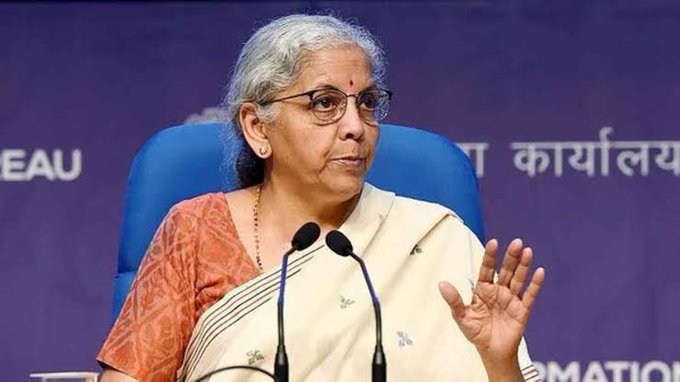
Finance Minister Nirmala Sitharaman clarified that this amendment provides an enabling legal mechanism. She emphasized that MDR applies strictly to commercial merchants rather than end consumers. Moreover, the generated revenue will empower banks and fintech companies to upgrade critical systems. Continuous investments remain vital to enhance cybersecurity, server bandwidth, and fraud prevention measures.
UPI Platform Metrics
| Metric / Feature | UPI Platform Value |
| Monthly Transaction Volume (July) | 23.66 Billion Transactions |
| Monthly Value Processed (July) | ₹29.9 Lakh Crore ($350+ Billion) |
| Global Footprint | Operational in 11 Foreign Countries |
In July alone, UPI processed an astonishing 23.66 billion transactions worth ₹29.9 lakh crore. As a result, maintaining such massive infrastructure solely through government subsidies is no longer practical. Reserve Bank of India Governor Sanjay Malhotra echoed this strategic reality during a press briefing. He noted that maintaining public digital infrastructure requires long-term, self-sustaining financial models.
Dismissing Rumors of External Influence and Market Pressure
The government firmly rejected widespread speculation regarding external international pressure. Specifically, official statements dismissed reports alleging pressure from the United States to favor foreign card networks. Critics had claimed the policy benefited legacy systems like Visa and Mastercard.
Authorities called these claims completely baseless, false, and misleading. The finance ministry highlighted India’s proud history of payment innovation and sovereign tech development. If foreign pressure was effective, India would never have launched UPI back in 2016. Furthermore, the government made UPI completely free for merchants and citizens in January 2020.
Indeed, this decisive zero-cost policy transformed UPI into the world’s largest real-time payment network. Today, India accounts for nearly half of all global real-time digital payment transactions. Therefore, the current policy tweak represents domestic economic prudence rather than foreign compliance. The goal focuses entirely on deepening digital payment infrastructure in rural and semi-urban regions.
Future Outlook for India’s Real-Time Payment Ecosystem
Looking ahead, the NPCI committee will carefully calibrate implementation timelines and precise fee limits. Furthermore, any fee structure will undergo rigorous review before taking effect. Industry experts expect clear guidelines to emerge after Parliament passes the pending legislation.
Meanwhile, UPI continues expanding rapidly across international borders. The system is already active in 11 foreign nations, with dozens more expressing interest. Establishing a balanced revenue framework ensures fintech firms continue innovating aggressively.
Ultimately, the government’s balanced strategy protects small businesses while modernizing national digital architecture. By keeping 95% of payments free, India safeguards digital inclusion. Concurrently, nominal merchant charges secure the long-term sustainability of the world’s premier digital economy.