
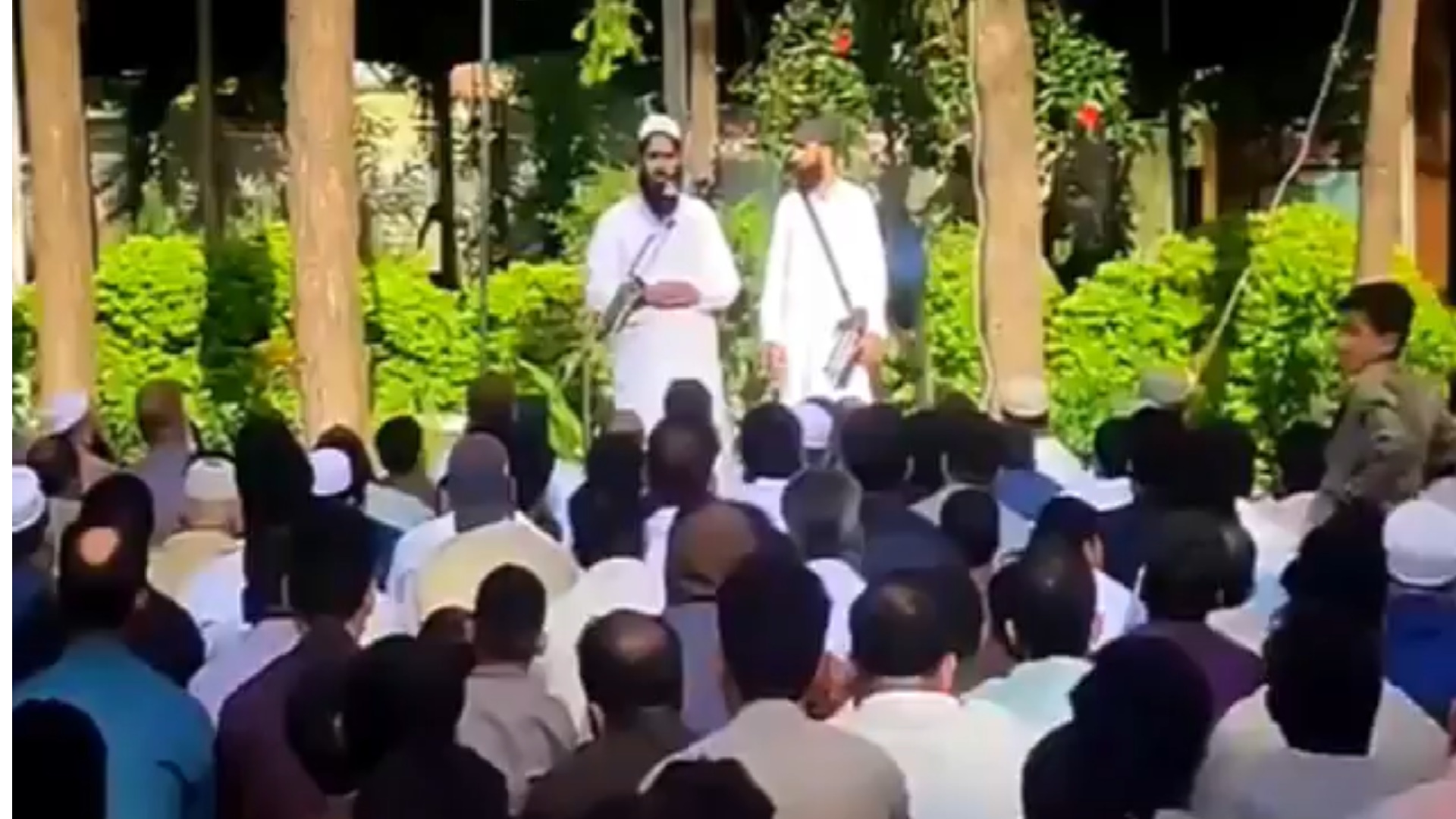
In a dramatic shift for regional security, a senior Lashkar-e-Taiba commander made a startling public admission.
Consequently, public confirmation emerged that over thirty LeT operatives killed in Pakistan fell during targeted attacks since 2020.
Rizwan Hanif, serving as deputy chief of Lashkar’s unit in Pakistan-occupied Jammu and Kashmir, addressed followers recently.
Moreover, video footage circulating on online media platforms captured his lengthy inflammatory address to supporters.
He alleged that external intelligence agencies systematically eliminated high-value terrorist targets across major urban centers.
Specifically, the commander listed several major cities where these mysterious eliminations occurred over recent years.
Furthermore, these locations included Karachi, Peshawar, Rawalpindi, Muzaffarabad, and Rawalakot.
Lashkar-E-Taiba’s First Ever Explosive Admission 🔥🔥🔥
Lashkar-e-Taiba/JKUM terrorist Rizwan Hanif openly admits that more than 30 members of the outfit were eliminated by unknown gunmen (Indian agents), across Peshawar, Karachi, Rawalpindi, Rawalakot and Muzaffarabad over the… pic.twitter.com/gXr0jIeYmH
— OsintTV 📺 (@OsintTV) August 3, 2026
Additionally, the terrorist leader attempted to frame these targeted eliminations as religious persecution against his group.
However, security analysts view this public speech as an attempt to cover up deep operational failures.
Therefore, this official acknowledgement marks an unprecedented breakdown in the group’s perceived security shield inside Pakistan.
| Key Location | Operatives Eliminated | Reported Method | Impact on Terror Outfit |
| Peshawar & Karachi | Multiple High-Value Leaders | Unknown Gunman Model | Loss of urban networks |
| Rawalpindi | Key Logistics Commanders | Precision Strikers | Severed military links |
| Muzaffarabad & Rawalakot | Senior PoK Operatives | Close-Range Attacks | Total operational disruption |
| Overall Pakistan | 30+ Confirmed Members | Targeted Operations | Severe panic among leaders |
Pattern of Targeted Attacks and Unknown Gunmen Operations
For several years, mysterious shootings plagued leadership figures belonging to various banned extremist organizations in Pakistan.
However, the recent admission confirms that numerous LeT operatives killed in Pakistan died through synchronized strikes.
For instance, senior figures involved in major cross-border attacks were eliminated quietly in broad daylight.
Notably, these high-profile eliminations frequently targeted individuals living under false identities as local educators or businessmen.
Moreover, attackers used motorbikes and silenced weapons before escaping seamlessly from heavy surveillance zones.
Consequently, Pakistani law enforcement agencies failed to apprehend the unidentified assailants involved in these incidents.
In response, terrorist groups adopted heightened security measures for their surviving leadership cadres.
Despite these protective steps, the steady stream of targeted eliminations continued across multiple provinces.
Furthermore, intelligence reports indicate that surviving operatives now fear leaving safe houses due to persistent threats.
Therefore, the unknown gunman phenomenon effectively dismantled core operational planning cells within the terrorist network.
Inflammatory Rhetoric and Escalating Sectarian Hate Speech
To divert attention from these structural losses, Hanif engaged in aggressive sectarian hate speech during his speech.
Additionally, he launched verbal attacks against foreign nations while attempting to radicalize local youth.
He insisted that his group would continue armed activities despite international counter-terrorism sanctions.
Furthermore, the commander explicitly rejected peace initiatives supported by global democratic institutions.
Similarly, official military spokespersons in Pakistan recently promoted controversial views regarding regional ethnic communities.
These coordinated media campaigns reflect growing desperation among Pakistan’s state and non-state security apparatus.
However, civil society groups strongly condemned these divisive public statements across digital platforms.
Moreover, international observers monitor these extremist rallies closely due to increasing regional volatility.
Consequently, radical organizations face growing international isolation alongside severe internal leadership shortages.
Thus, inflammatory speeches fail to mask the reality that dozens of LeT operatives killed in Pakistan leaves the group weakened.
Mounting Unrest in Pakistan-Occupied Kashmir and Government Response
This public admission coincides with severe political instability throughout Pakistan-occupied Jammu and Kashmir.
Specifically, civilian populations in Rawalakot and Muzaffarabad staged massive anti-government demonstrations.
Local residents protested rising living costs, heavy taxation, and state-sponsored violence against peaceful assemblies.
In response, Pakistani paramilitary forces launched aggressive crackdowns to suppress civilian rights movements.
However, these violent actions drew severe criticism from international human rights monitors worldwide.
Furthermore, senior government ministers in Islamabad labeled civilian protesters as national enemies rather than engaging in dialogue.
This unyielding government position further alienated local populations across PoJK regions.
Consequently, state narratives portraying Pakistan as a champion of Kashmiri rights suffered irreparable damage.
Meanwhile, extremist groups struggle to recruit local youth who increasingly reject violence.
Therefore, civil unrest and targeted strikes create unprecedented challenges for Pakistani security agencies.
Strategic Implications for Regional Security and Counter-Terrorism
Ultimately, confirmation that numerous LeT operatives killed in Pakistan died since 2020 alters South Asian geopolitical dynamics.
Global counter-terrorism experts note that terror proxy networks are losing their historic immunity inside Pakistani sanctuary cities.
Furthermore, internal fear among terrorist leadership undermines their ability to organize major offensive strikes.
Additionally, financial backing for non-state actors continues to shrink amid broader Pakistani economic troubles.
As a result, proxy warfare strategies face severe resistance from both external pressure and internal unrest.
Moreover, international pressure remains high on Islamabad to disassemble all remaining terrorist infrastructure permanently.
In conclusion, the admissions made by Rizwan Hanif highlight a permanent shift in regional security realities.