
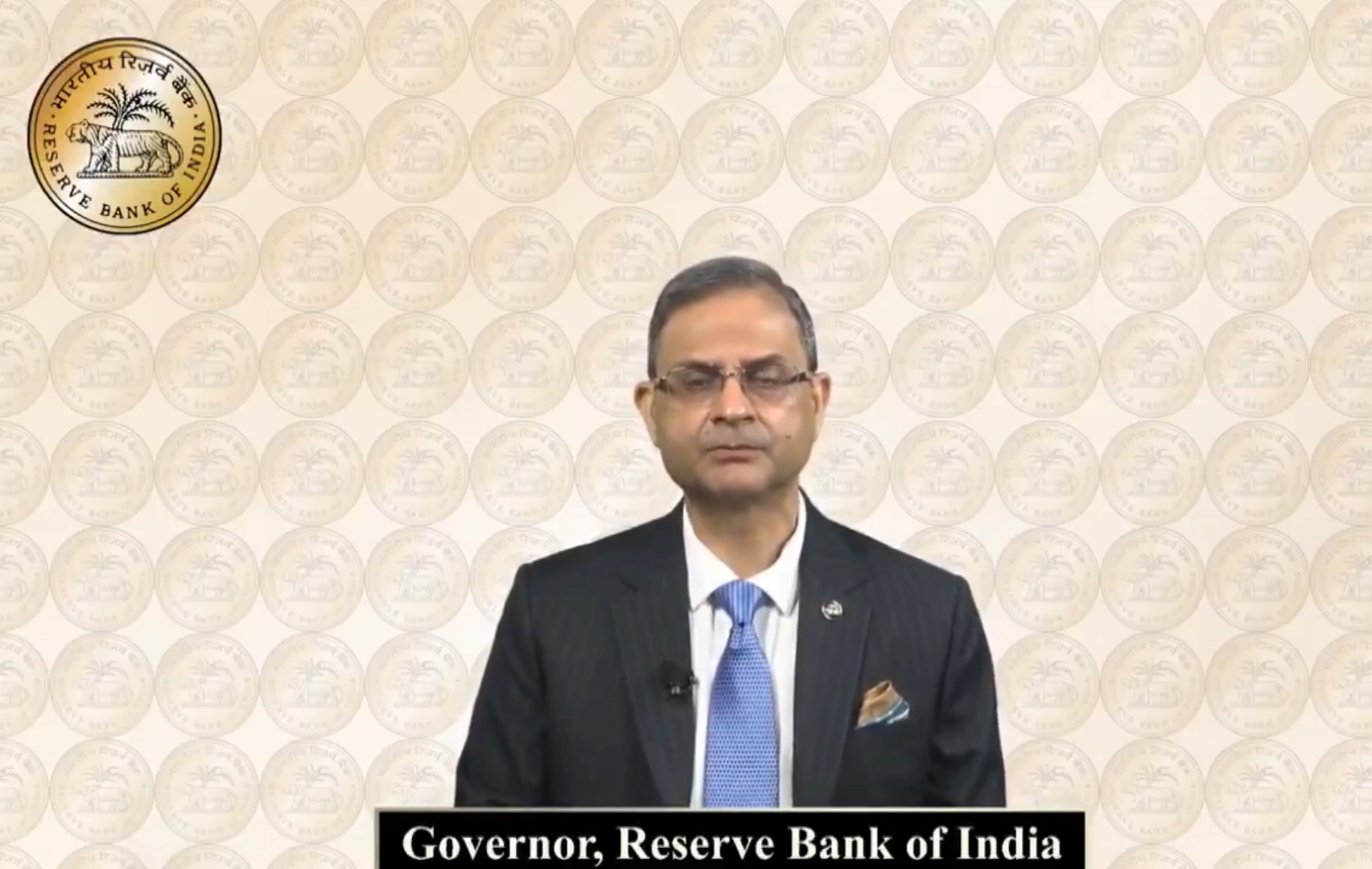
The Reserve Bank of India announced major regulatory reforms during its August monetary policy briefing on Wednesday.
Specifically, the central bank proposed a uniform loan interest rate framework across commercial banks and non-banking financial companies.
RBI Governor Sanjay Malhotra outlined this initiative to streamline credit pricing mechanisms across all regulated entities.
Consequently, retail borrowers and small businesses will experience enhanced clarity when comparing diverse credit offerings.
Moreover, this policy shift eliminates existing structural disparities between traditional banks and specialized non-banking lenders.
Currently, financial institutions apply varying internal methodologies when determining interest charges for prospective loan applicants.
Therefore, establishing a uniform loan interest rate framework creates a level playing field for all credit providers.
Additionally, the central bank introduced revised deposit regulations that will take effect starting October 1, 2026.
Overall, these comprehensive measures aim to protect consumer interests while bolstering long-term financial system stability.
Also Read : Digital Arrest Scam Supreme Court Directions: RBI Ordered to Frame Mule Account SOPs in 4 Weeks
| Regulatory Domain | Existing Policy Framework | Proposed Structural Reform | Key Benefit for Consumers |
| Lending Rate Structure | Separate rules for banks and NBFCs | Uniform loan interest rate framework | Standardized loan pricing comparison |
| Interest Calculation | Divergent day-count conventions | Standardized market practices | Fair and transparent interest charges |
| Reset Dates | Differing EBLR and MCLR resets | Principle-based alignment | Faster monetary policy transmission |
| Fixed Deposits | Branch-level pricing variations | Uniform daily published schedules | Consistent yields across all branches |
Why the Central Bank Proposed a Uniform Loan Interest Rate Framework
For years, Indian borrowers navigated complex lending structures with varying interest calculations across different credit institutions.
Commercial banks mostly rely on Marginal Cost of Funds-based Lending Rates or External Benchmark Lending Rates.
In contrast, non-banking financial companies often follow independent prime lending rate models for their credit portfolios.
Consequently, consumers faced significant difficulty when trying to evaluate the actual cost of competing loan products.
To resolve this issue, the central bank introduced the uniform loan interest rate framework to standardize pricing norms.
Under the new principle-based approach, all regulated entities must align their lending rate mechanisms systematically.
Furthermore, the policy addresses operational variances in day-count conventions and benchmark reset schedules across lenders.
By harmonizing these technical practices, the central bank reduces information gaps between lenders and retail borrowers.
As a result, borrowers can make well-informed financial decisions without encountering hidden structural costs.
Impact on External Benchmarks and Borrower Transparency
The proposed reforms focus heavily on improving monetary policy transmission across the entire financial system.
When the central bank adjusts policy rates, floating-rate loans should reflect those changes promptly for consumers.
However, legacy benchmark models like older prime lending rates delayed interest rate relief for existing borrowers.
Through the uniform loan interest rate framework, the regulator intends to streamline reset frequency rules across institutions.
Additionally, lenders must adopt consistent standards when calculating daily interest charges on outstanding loan balances.
This operational alignment ensures that home loan, auto loan, and personal credit borrowers receive fair treatment.
Moreover, draft operational guidelines will soon be released for public consultation and industry feedback.
Consequently, financial institutions will have adequate time to adjust their technological systems before final implementation.
Industry leaders have welcomed the proposal, noting that clear regulations foster sustainable credit growth nationwide.
Revised Fixed Deposit Rules Effective from October 1
In addition to lending reforms, the central bank announced updated guidelines governing fixed deposit accounts.
These revised deposit rules take effect on October 1, 2026, across all commercial and cooperative banks.
Under the updated mandate, banks cannot charge different interest rates for identical deposits booked on the same day.
Currently, some lenders offer varying yield rates depending on which branch processes the deposit application.
Therefore, the new rule eliminates branch-level pricing disparities, ensuring equal returns for every retail saver.
Furthermore, banks must publish their complete fixed deposit interest rate schedules on their official websites daily.
Specifically, institutions must disclose daily bulk deposit rate updates by ten in the morning each business day.
While retail savers enjoy uniform rates, banks retain flexibility when pricing wholesale bulk deposits based on liquidity needs.
Consequently, these structural updates enhance overall market transparency while maintaining healthy competition among banking institutions.
Macroeconomic Resilience and Future Investment Outlook
While outlining regulatory reforms, Governor Sanjay Malhotra reaffirmed the underlying strength of the Indian economy.
Domestic macroeconomic conditions remain robust, supported by healthy financial institution balance sheets and sustained industrial activity.
Furthermore, comfortable foreign exchange reserves and manageable inflation levels provide a solid buffer against global market volatility.
The Monetary Policy Committee decided to maintain a neutral policy stance during its latest August deliberations.
Consequently, stable interest rate conditions offer predictable borrowing costs for expanding commercial enterprises and individual retail consumers.
Moreover, the uniform loan interest rate framework strengthens public confidence across the broader credit ecosystem.
By combining standardized lending norms with transparent deposit pricing, the regulator reinforces financial fairness for all stakeholders.
As draft guidelines emerge, investors and consumers can look forward to a simpler, more competitive financial environment.