
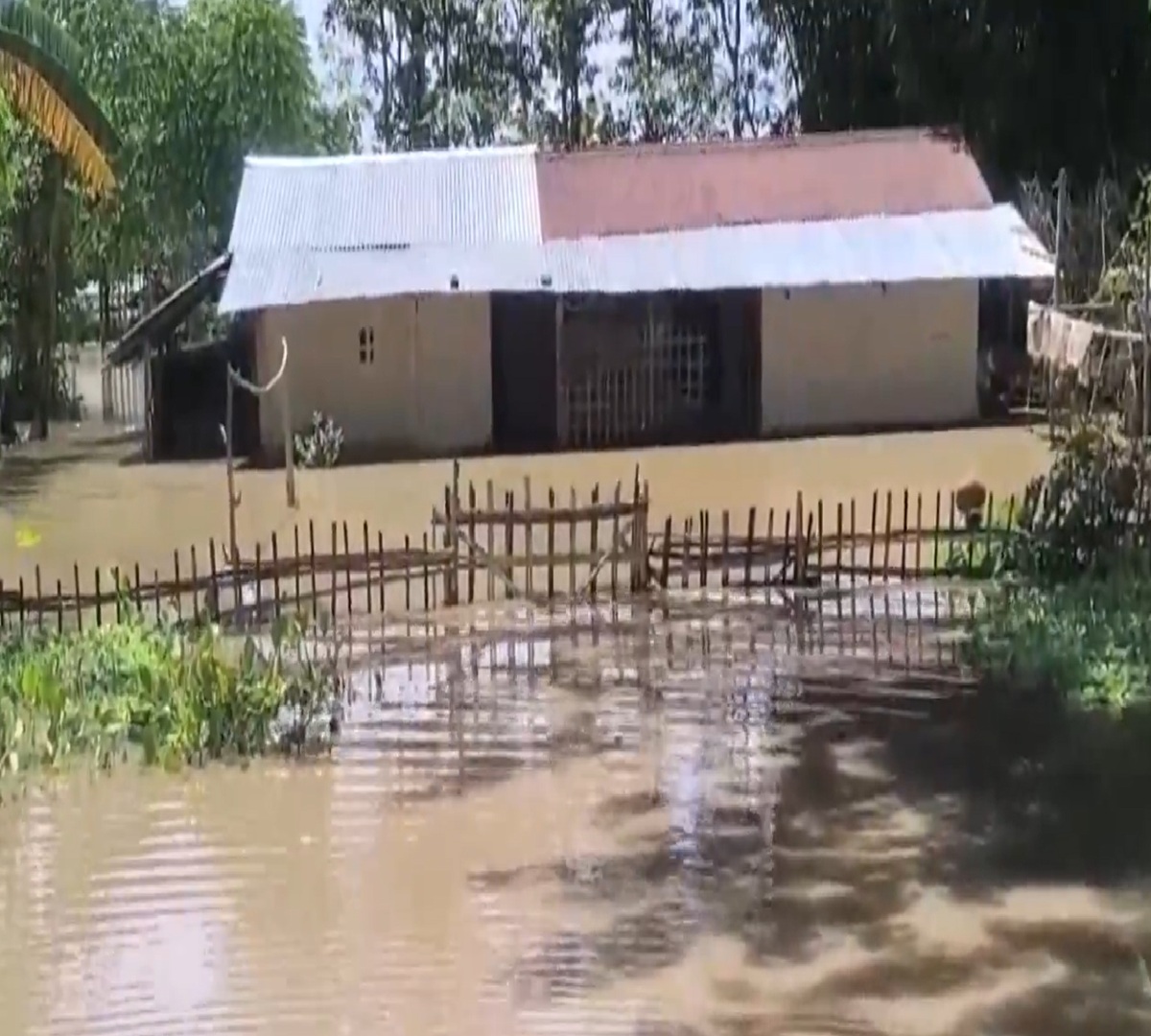
GUWAHATI — The ongoing monsoon crisis deepened in Northeast India today. Official disaster records show that the Assam flood toll rises to 47 after six more individuals died. Additionally, severe inundation continues across eleven affected districts.
Assam Flood Emergency Data Summary
├──► Total Fatalities : 47 confirmed deaths across multiple districts
├──► Missing Citizens : 6 individuals currently untraced
├──► Total Affected : 6,53,000+ residents across 11 districts
├──► Submerged Villages : 939 villages spanning 40 revenue circles
└──► Prime Impact Zone : Sivasagar district with 3.92 lakh affected
Consequently, over 6.53 lakh citizens currently face displacement and property damage. The Assam State Disaster Management Authority (ASDMA) released these alarming updates in its latest bulletin.
Moreover, torrential monsoonal downpours triggered urban waterlogging in Guwahati city. Furthermore, six individuals remain missing in floodwaters across inundated regions. Earlier this week, ASDMA reported ten deaths within a single 24-hour period. Therefore, rescue personnel continue searching for survivors along swollen riverways.
Also Read : Project Kusha Long-Range Missile Test Marks Giant Air Defence Milestone
Regional Devastation Grows as Heavy Inundation Submerges Sivasagar and Surrounding Areas
Sivasagar remains the worst-hit district in the entire state. Specifically, nearly 3.92 lakh residents in Sivasagar face total isolation and structural damage. Meanwhile, neighboring Charaideo district reported over 1.10 lakh affected individuals. Additionally, Jorhat district recorded nearly 97,690 people suffering from rising waters.
District Impact Breakdown
- Sivasagar : 3,92,195 citizens affected across inundated zones
- Charaideo : 1,10,755 residents facing severe flood damage
- Jorhat : 97,690 people suffering from rising river levels
- Golaghat : 25,591 affected individuals requiring relief
- Dibrugarh : 13,390 residents battling local waterlogging
Overall, around 939 villages under 40 revenue circles remain completely submerged. Consequently, families lost standing crops across thousands of agricultural hectares.
Furthermore, authorities report that the Assam flood toll rises due to swift river currents. Therefore, local teams deployed rescue boats to evacuate stranded villagers immediately. Similarly, relief workers distributed clean drinking water and medical kits.
Also Read : Assam Flood 2026: Death Toll Reaches 41 as 6.53 Lakh People Face Severe Deluge
Chief Minister Sarma Identifies Nagaland Cloudburst as Primary Flood Trigger
Assam Chief Minister Himanta Biswa Sarma visited a relief camp in Dergaon yesterday. He described the unfolding disaster as an extremely serious humanitarian situation.
Moreover, Sarma cautioned that casualties might escalate as floodwaters recede. He attributed the sudden surge of water to a massive cloudburst in neighboring Nagaland.
Key Factors Driving the Crisis
├──► Upstream Cloudburst : Heavy rainfall in Nagaland hills sends water downstream
├──► River Breaches : Dikhow and Disang rivers flow above danger levels
├──► Infrastructure Loss : Embankments, bridges, and roadways destroyed
└──► Federal Support : Central inter-ministerial team deployed by Home Ministry
Specifically, water gushing from upstream hill catchments flooded low-lying eastern districts rapidly. Additionally, major rivers like the Brahmaputra continue flowing above danger thresholds.
Union Home Minister Amit Shah called Chief Minister Sarma to discuss emergency assistance. Consequently, the Central Government dispatched a specialized inter-ministerial assessment team. Thus, state and federal agencies coordinate closely to manage relief operations.
Multi-Agency Rescue Operations Mobilize Across Inundated Eastern Districts
Emergency responders work round the clock to reach marooned families. Specifically, the National Disaster Response Force (NDRF) deployed multiple rescue boats. Similarly, State Disaster Response Force (SDRF) teams navigate flooded village tracks daily.
Emergency Relief Operations Summary
- Deployment : NDRF, SDRF, Army, and Air Force personnel on site
- Relief Camps : Scores of active camps housing displaced citizens
- Medical Care : Mobile healthcare units checking flood victims
- Food Supplies : Drones and boats delivering ration packets to isolated pockets
Meanwhile, Indian Army units remain on high standby for emergency airlifts. As the Assam flood toll rises, medical teams treat waterborne illnesses in camps.
Furthermore, authorities use drones to drop essential food supplies in cutoff hamlets. Therefore, stranded villagers receive basic provisions despite washed-out road bridges. Additionally, district administrators established specialized shelters for domestic livestock.
Strategic Focus Turns Toward Rehabilitation and Long-Term Protection
State authorities now focus heavily on post-flood recovery plans. Official reports confirm that the Assam flood toll rises as water levels fluctuate. Consequently, officials prioritize rebuilding damaged river embankments and roads.
Moreover, the state government promised fast-track ex-gratia payments to affected families.
Long-Term Recovery and Safety Roadmap
├──► Financial Relief : Ex-gratia assistance for families of deceased victims
├──► Document Replacement: Free camps to re-issue lost identity cards and papers
├──► Infrastructure Fix: Rebuilding breached embankments along major tributaries
└──► Health Surveillance: Extensive disinfection campaigns to prevent epidemics
Specifically, families of deceased victims receive direct financial compensation. Furthermore, specialized district camps will help residents replace lost legal documents.
Meanwhile, health departments launch aggressive disinfection drives across towns. Therefore, public health workers aim to prevent outbreaks of waterborne diseases. Similarly, local farmers will receive seed subsidies to replant lost crops. Overall, citizens hope for weather improvements as the Assam flood toll rises across districts.