
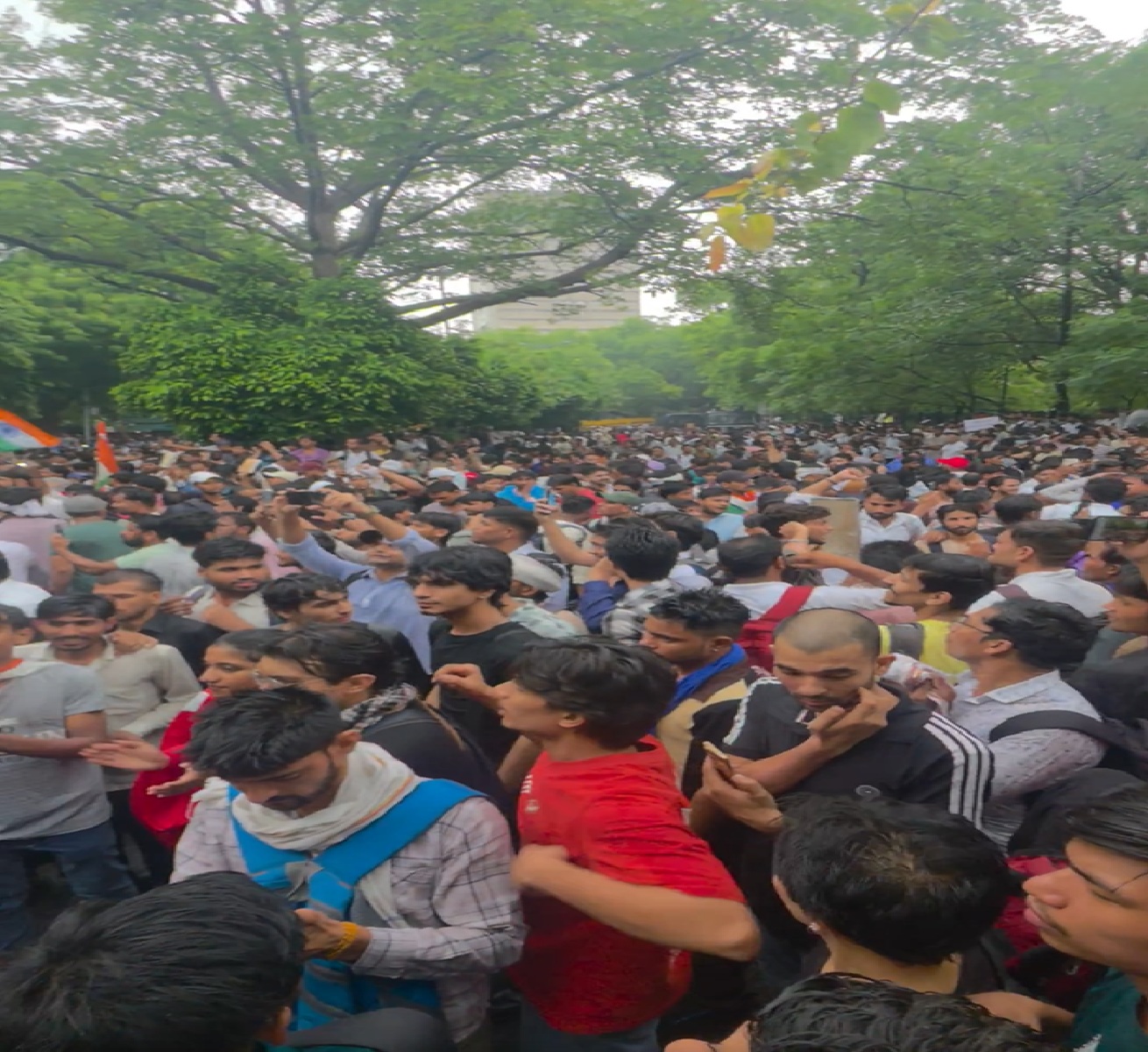
NEW DELHI : A massive political standoff in the national capital took an unexpected turn early Monday morning, July 20, 2026. The youth-led Cockroach Janta Party (CJP) claimed that the Union government reaches out to them for the first time. This surprising communication arrives directly amid a high-stakes, indefinite hunger strike spearheaded by renowned education and climate activist Sonam Wangchuk. For weeks, the authorities maintained a strict public silence regarding the youth-driven demonstrations at Jantar Mantar. However, the immense public pressure generated by the looming “Chalo Sansad” march forced an immediate tactical shift from the administration.
Also Read : Sonam Wangchuk Wife Alleges Illegal Detention at Safdarjung Hospital
Additionally, this backdoor dialogue represents a critical moment in the ongoing national agitation for systemic educational reform. The CJP spokesperson confirmed that senior administrative representatives initiated the contact to discuss the core demands of the protesting group. Moreover, the timing of this outreach is deeply strategic. It comes exactly as both houses of Parliament convene for the highly anticipated Monsoon Session. Tens of thousands of young students, civil activists, and common citizens have converged upon central Delhi. They are unified in demanding absolute accountability for recent widespread competitive examination irregularities, including the controversial NEET paper leaks.
Those who can, should come for a while to Jantar Mantar.. just to convince yourself that all is not hopeless in this country…
The young need a platform, a direction, and a voice… they will rally behind you…
Dont take this lightly, it is a show of anger and frustration… pic.twitter.com/WNxAzlTiJ6
— Komal (@Komal_Indian) July 20, 2026
Furthermore, the grassroots mobilization has clearly caught the political establishment off guard. Observers note that the administration wants to avoid any chaotic visual disruptions near the newly inaugurated Parliament building. Therefore, establishing a direct channel of communication became an absolute priority for internal security planners early this morning. While the exact details of the discussions remain closely guarded, the mere existence of the talks signals a major victory for the organizers. The news that the government reaches out has injected fresh momentum into the massive crowds waiting at the protest site.
Tension Peaks at Jantar Mantar
The atmosphere in central Delhi remains incredibly tense as thousands of determined protesters continue to defy strict police warnings. The Delhi Police previously enforced strict prohibitory orders under Section 163 of the Bharatiya Nagarik Suraksha Sanhita (BNSS). Deputy Commissioner of Police Sachin Sharma publicly reiterated that authorities granted no formal permission for the planned procession. Despite these severe legal warnings, a sea of passionate supporters completely packed the barricaded lanes of Jantar Mantar. Estimates suggest the crowd has swelled significantly, creating a logistical nightmare for local law enforcement agencies.
Moreover, the entire protest movement gained immense emotional intensity after the sudden, dramatic removal of Sonam Wangchuk on Saturday. The 59-year-old activist had been on a grueling, fluid-only fast for 21 consecutive days. Citing a Delhi High Court directive focused on his deteriorating vital parameters, Delhi Police forcibly shifted Wangchuk to Safdarjung Hospital. This sudden medical evacuation sparked an instantaneous wave of fury across the student community. CJP founder Abhijeet Dipke immediately launched his own indefinite hunger strike right from the main stage to fill the vacuum.
[Protest Timeline & Escalation]
│
├──► June 28: Sonam Wangchuk begins indefinite hunger strike over exam leaks.
├──► July 18: Delhi Police forcibly moves a weakened Wangchuk to hospital.
├──► July 18: CJP founder Abhijeet Dipke starts an indefinite fast in response.
└──► July 20: Massive “Chalo Sansad” march proceeds as government opens talks.
Additionally, the physical removal of their ideological leader transformed a localized sit-in into a broader, nationwide civil movement. From his hospital bed, Wangchuk smuggled out an emotional, handwritten appeal via his wife, Gitanjali Angmo. He described his heavily guarded hospital stay as an illegal detention by the state. Furthermore, he urged his young followers to view the current struggle as India’s second freedom movement. This powerful message resonated deeply across digital networks, drawing thousands of fresh volunteers to Delhi overnight.
The Legal Tussle and Health Monitoring
The intensifying street battles are perfectly mirrored by a complex, high-stakes legal battle unfolding within the judicial system. Earlier, the Central Government informed the Delhi High Court of its absolute willingness to manage Wangchuk’s health parameters. Solicitor General Tushar Mehta stated that the state would readily provide every necessary medical assistance based on daily expert reports. Consequently, the high court ordered a strict schedule of daily diagnostic check-ups to ensure the activist’s physical survival.
Furthermore, the medical team at Safdarjung Hospital confirmed that Wangchuk’s vital parameters are currently stable but heavily stressed. The prolonged physiological deprivation has significantly altered his baseline blood chemistry, requiring continuous multi-disciplinary supervision. However, his family has fiercely contested the state-controlled hospitalization process. Angmo formally requested a transfer to a private facility, citing a complete lack of operational transparency. The High Court ultimately denied this interim transfer, ruling that state doctors are acting entirely within legal boundaries.
Meanwhile, the CJP leadership remains deeply skeptical of the sudden official outreach. They emphasize that preliminary discussions mean very little without a concrete, legislative commitment to their five-point reform charter. Their primary demands include the immediate resignation of Union Education Minister Dharmendra Pradhan and comprehensive structural overhauls. The fact that the government reaches out highlights their growing anxiety, but the youth party refuses to back down easily. They assure the public that their historic march will remain entirely non-violent, despite the massive security apparatus.
Re-engineering the National Examination System
Ultimately, the explosive growth of the satirical turned serious Cockroach Janta Party highlights a deep structural crisis. Millions of young Indians are experiencing profound economic frustration due to rampant youth unemployment and frequent exam leaks. The current agitation has effectively forced the government to acknowledge that the status quo is no longer sustainable. Re-establishing institutional trust among the nation’s youth is now an urgent political necessity for the ruling coalition.
Moreover, the outcome of today’s historic march will undoubtedly influence educational policy for generations to come. If the initial backchannel talks yield a formal negotiation framework, it could pave the way for independent oversight bodies. The entire nation watches closely as the government reaches out to these young leaders during a national crisis. The determination of the students at Jantar Mantar proves that the demand for transparency can no longer be ignored.
In conclusion, the dramatic events unfolding in New Delhi mark a defining watershed moment for citizen-led political movements. The combination of Wangchuk’s moral fasting and the CJP’s logistical mobilization has forced the state to the table. Whether this historic outreach translates into genuine structural reform remains to be seen in the coming days. For now, the voices of thousands of students continue to echo powerfully across the heart of the capital.